
Businesses need to monitor work to make sure that they’re meeting milestones. They also need to have a means of communicating that information to their stakeholders. Business report templates are a tool that can do both. Use these free 15…
Read More
Businesses need to monitor work to make sure that they’re meeting milestones. They also need to have a means of communicating that information to their stakeholders. Business report templates are a tool that can do both. Use these free 15…
Read More

Organizations rely on clear documentation when evaluating employee performance, tracking professional development and setting expectations for the future. The performance review templates in this list provide structured documents that help managers conduct fair employee performance reviews while also giving individuals…
Read More

A summary is the document that tells people what they need to know without requiring them to read everything that exists. On a project, summaries do the work of keeping stakeholders informed, getting approvals, documenting decisions and recording what happened…
Read More
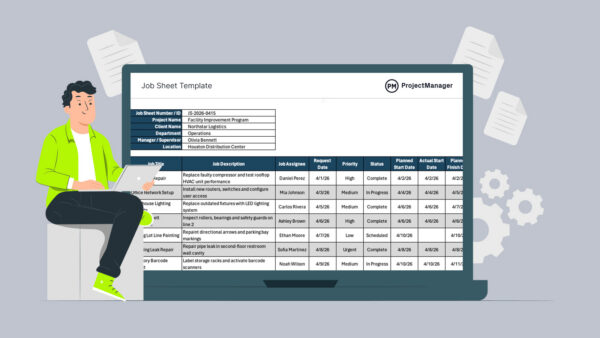
Work doesn’t manage itself. Whether you are tracking hours on a client project, logging daily progress on a construction site, recording what a service technician completed or keeping a running record of every change made to a system, the work…
Read More

Most project teams are good at completing work. Fewer are good at learning from it. When a project ends, whether on time or late, within budget or over it, smoothly or after a string of problems, the institutional knowledge of…
Read More
Freelancing gives you control over your work and your schedule. It does not automatically give you a system for getting paid on time. For most independent professionals, billing is the part of the business that gets the least attention and…
Read More

Marketing teams generate more data than almost any other function in a business. Campaign performance metrics, budget consumption by channel, lead volume, conversion rates, content publishing status, creative asset inventory. The information exists across a dozen platforms and spreadsheets. The…
Read More
Manufacturing operations produce data constantly. Machine cycle times, defect rates, labor hours, material consumption, maintenance logs, production run counts. Every shift generates information that could be used to run the operation more efficiently. Most of it does not get used….
Read More

Construction projects generate a lot of data. Timesheets, cost reports, equipment logs, daily reports, subcontractor schedules, material deliveries. The information exists on every project. The problem is that it is usually scattered across spreadsheets, email threads and site notebooks, which…
Read More
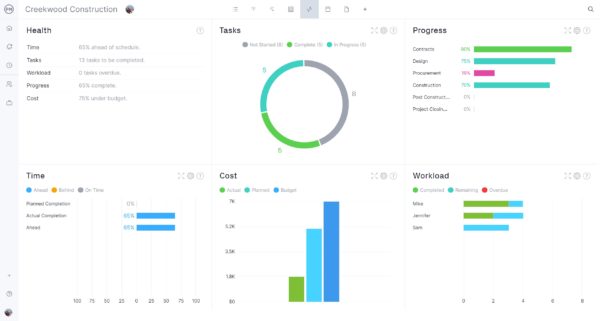
Running a small business means making decisions constantly with incomplete information. Is the business profitable this month? Which expenses are running over budget? Is the team keeping up with the work? Are the numbers moving in the right direction? For…
Read More
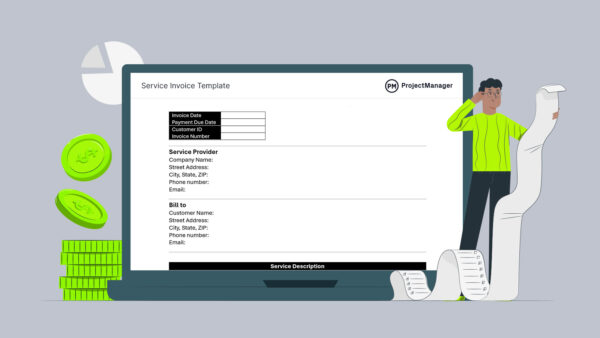
Invoicing is the part of the business cycle that directly determines whether you get paid, and when. Yet it is often the least systematized part of the process. Proposals get templates. Projects get plans. Invoices get rebuilt from scratch each…
Read More
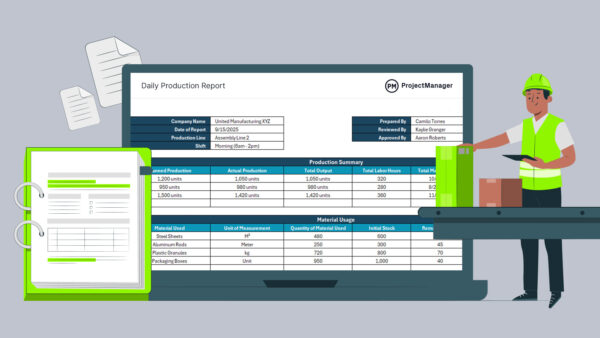
Production reports are how manufacturing teams turn floor activity into decisions. Without a consistent format, reporting becomes inconsistent, problems surface too late and supervisors spend more time assembling data than acting on it. The right templates give production managers a…
Read More
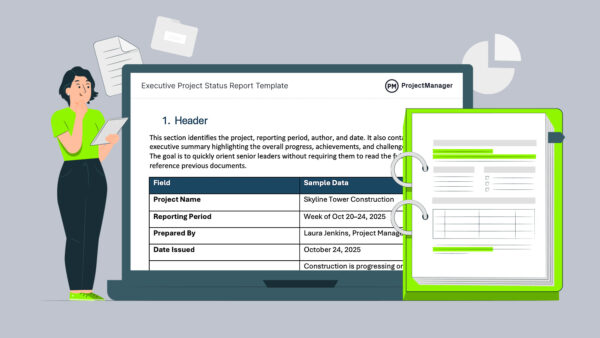
Status reports are how project managers keep stakeholders informed, surface problems early and create accountability across teams. But building one from scratch every week pulls time away from the actual work of managing the project. The right template eliminates that…
Read More