



Last updated: November 4, 2026
You don’t need Microsoft Project to open an MPP file: a Microsoft Project viewer or a project management tool that reads MPP files will open it on Windows, Mac or the web. The top Microsoft Project viewers are Project Plan 365, ProjectManager, Project Viewer 365, Project Reader, Seavus Project Viewer, ProjectLibre, Steelray Project Viewer and Smartsheet. Project Plan 365 fits most people because it reads MPP files free in a browser and saves MPP on a paid plan, ProjectManager suits teams that need to edit a schedule together online and export it back to MPP, Project Viewer 365, Project Reader, Seavus and Steelray suit people who only need to read and print a file, ProjectLibre suits individuals who want a free desktop editor, and Smartsheet suits teams that want to turn an MPP schedule into a shared sheet.
ProjectManager is online project management software that imports MPP files in any browser, lets your team edit the schedule together and exports it back to MPP. Try ProjectManager free for 30 days.
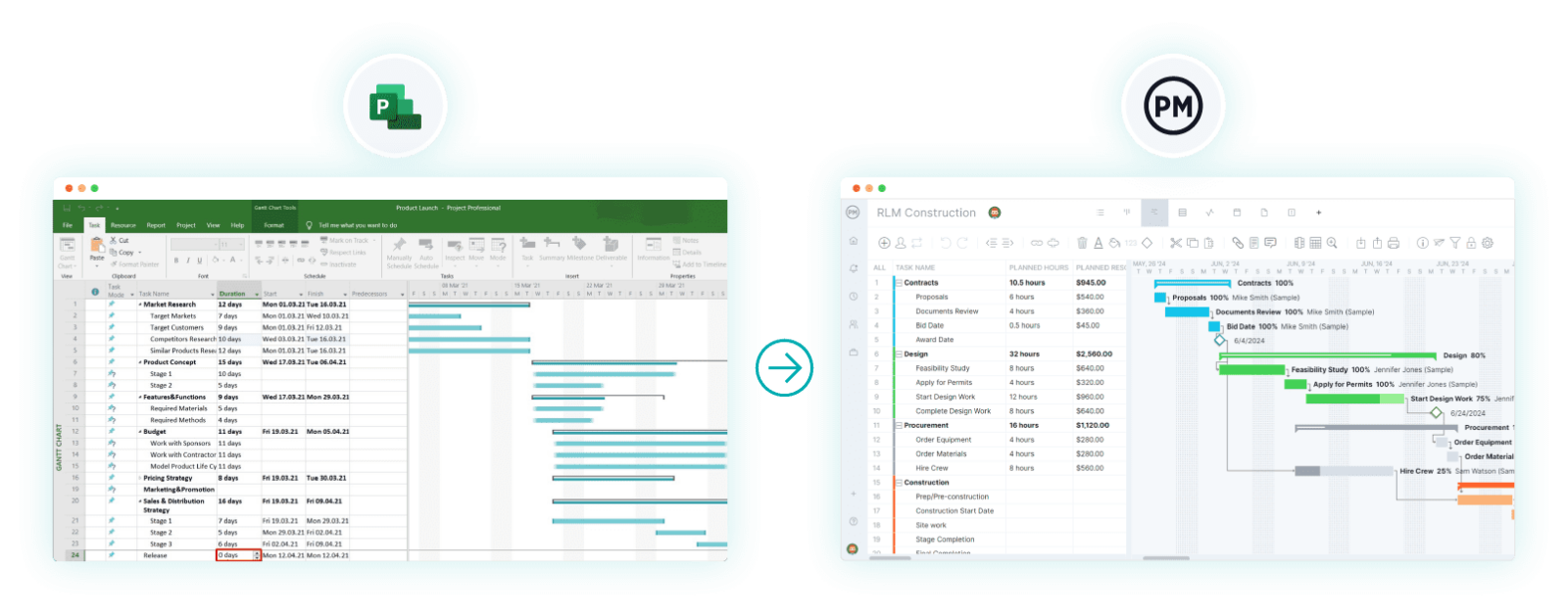
What Is a Microsoft Project Viewer?
A Microsoft Project viewer is software that opens MPP files, the native file format of Microsoft Project, without a Microsoft Project license. People need one because Microsoft Project is expensive and limited to Windows: Project Standard 2024 costs $679.99 and Project Professional 2024 costs $1,129.99 for one Windows PC, and the Project desktop client included with Planner and Project Plan 3 ($30/user/month, paid yearly) also runs only on Windows. Microsoft retired its browser versions, Project for the web on August 1, 2025, and Project Online on September 30, 2026, so there’s no Microsoft option for opening an MPP file in a browser or on a Mac.
Here’s a typical case. A client emails you an MPP schedule, and you don’t have Microsoft Project. You may only need to read the dates and print the Gantt chart, or you may need to update the dates, share the schedule with a subcontractor and send the file back. Those are different jobs, and tools that open MPP files fall into three groups:
- Read-only viewers. Tools such as Project Reader, Seavus Project Viewer and Steelray Project Viewer open an MPP file so you can read, filter and print it. They can’t change the schedule or save an MPP file. They’re inexpensive and suit people who only need to look at the plan.
- Viewers that can edit and save MPP. Project Plan 365 opens an MPP file, lets you edit it in Microsoft Project-style views and saves it back as an MPP file on a paid plan. It works with files, so you share the updated MPP rather than a live online schedule.
- Project management tools that import MPP. ProjectManager, ProjectLibre and Smartsheet import the MPP file into their own project format, where you can edit it and work on it with a team. What matters is what they can send back: ProjectManager exports MPP, while ProjectLibre and Smartsheet export Microsoft Project XML, which Microsoft Project can open but which the other person has to save as MPP.
Before choosing, check which Microsoft Project versions the tool opens, which operating systems it runs on and whether you’ll ever need to send the file back. For more on the file format itself, see what an MPP file is and how to open it.
Microsoft Project Viewers Compared
| Tool | Best for | View | Edit and save as MPP | Export back to MPP | Platforms | Starting price |
|---|---|---|---|---|---|---|
| Project Plan 365 | Most people with an MPP file: read it free, or edit and save MPP on a paid plan | Yes, free read-only mode in a browser | Yes (paid plans) | Yes, saves MPP | Windows, Mac, web, iOS, Android | Free read-only mode; $9.99/user/month (Standard), billed annually |
| ProjectManager | Teams that need to edit an MPP schedule together online and send it back as MPP | Yes, after import | Imports MPP and XML, edits online | Yes, exports MPP (lossless for schedule data); XML also available | Browser (macOS, Windows, Linux), iOS, Android | $15/user/month (Team), billed annually |
| Project Viewer 365 | Reading and printing MPP files on Windows and Mac with a one-time license | Yes | Viewer license: no. Editor subscriptions: edit | Viewer license: no; exports PDF, Excel and XML | Windows, Mac, web, iOS, Android | Free view-only mode; $59.99/user, one-time |
| Project Reader | Low-cost reading, printing and Excel export on Windows | Yes | No, read-only | No | Windows | $29 per installation, one-time |
| Seavus Project Viewer | Reading MPP files in the full set of Microsoft Project views and reports | Yes | No, read-only | No | Windows, Mac | $114/user/year (Windows); $114 one-time (Mac) |
| ProjectLibre | Individuals who want to edit an MPP schedule in a free desktop app | Yes | Opens and edits MPP; saves .pod or Microsoft Project XML | No; Microsoft Project XML only | Windows, Mac, Linux; Cloud in a browser | Free (desktop); Cloud from $9.99/user/month |
| Steelray Project Viewer | Windows users who read both MPP and Primavera P6 files | Yes | No, read-only | No | Windows | $24.95/user/year |
| Smartsheet | Teams that want to turn an MPP schedule into a shared spreadsheet-style plan | Yes, after import | Imports MPP, MPX and XML into a sheet | No; Microsoft Project XML from Gantt sheets | Browser, iOS, Android | $9/user/month (Pro), billed annually |
Prices are list prices as of November 2026 and change often. Check each vendor’s site before buying.
8 Best Microsoft Project Viewers to Open MPP Files
1. Project Plan 365
Project Plan 365 fits most people with an MPP file because it covers both jobs: its free read-only mode opens MPP files in a browser, and its paid plans open, edit and save MPP files in the native format with no import step. It opens files from Microsoft Project 2010 through 2024 and looks much like Microsoft Project, with a Gantt chart, critical path, baselines and views such as Resource Sheet, Team Planner and Network Diagram.
If a client emails you an MPP file and you only need to check the dates, you can open it in the free read-only mode, print it or export it to PDF or Excel. If you need to update the dates and send the file back, a Standard or Business plan lets you save it as an MPP file that the client opens in Microsoft Project as usual. It’s built around files rather than a shared online schedule, so teams pass the MPP file around unless they buy the Business plan for real-time collaboration.

What it does with MPP files: Views MPP files free in read-only mode (print and export to PDF, Excel, image, PowerPoint and XML). Paid plans edit and save MPP files directly and also export Microsoft Project XML.
Best for: Anyone who receives MPP files and wants one app that reads them free and can edit and save them as MPP when needed.
Key features
- Opens and saves MPP files from Microsoft Project 2010 to 2024
- Gantt chart, critical path, baselines, Resource Sheet, Team Planner, Network Diagram and Timeline views
- Opens files from OneDrive, SharePoint Online, Google Drive, Dropbox, Box and iCloud
- Free read-only users (up to 5 on Standard and 10 on Business)
Pros
- Saves native MPP files, so Microsoft Project users get the format they expect
- Free read-only mode works in a browser with nothing to install
- Runs on Windows, Mac, web, iOS and Android with one sign-in
Cons
- The free read-only mode is limited to the Gantt Chart, Task Sheet and Resource Sheet views
- Editing and saving MPP files needs a paid plan, sold only as an annual subscription
- File-based, so real-time collaboration needs the Business plan
Pricing: Free read-only mode. Standard $9.99/user/month and Business $16.19/user/month, billed annually only (shown as 10% off list prices of $10.99 and $17.99). Enterprise by quote. Free trial available.
2. ProjectManager
ProjectManager is online project management software for people who need to do more than read an MPP file: edit it, work on it with a team online and export it back to MPP. It imports MPP files from Microsoft Project into a browser-based project, and its MPP round trip is lossless for schedule data: when you import with “all data” and export back to MPP, the tasks, durations, dates, dependencies and WBS structure stay intact. That’s the main difference from tools that only import MPP into their own format or only export Microsoft Project XML.
Here’s a typical case. A general contractor sends you an MPP schedule. You import it into ProjectManager, update the dates on the Gantt chart, share the project with a subcontractor who updates their tasks from a phone, and then export an MPP file for the contractor’s Microsoft Project. The Gantt chart supports all four dependency types with lag, a critical path filter shows which tasks drive the finish date, and baselines show how far the plan has moved. For a feature-by-feature comparison, see Microsoft Project vs. ProjectManager.
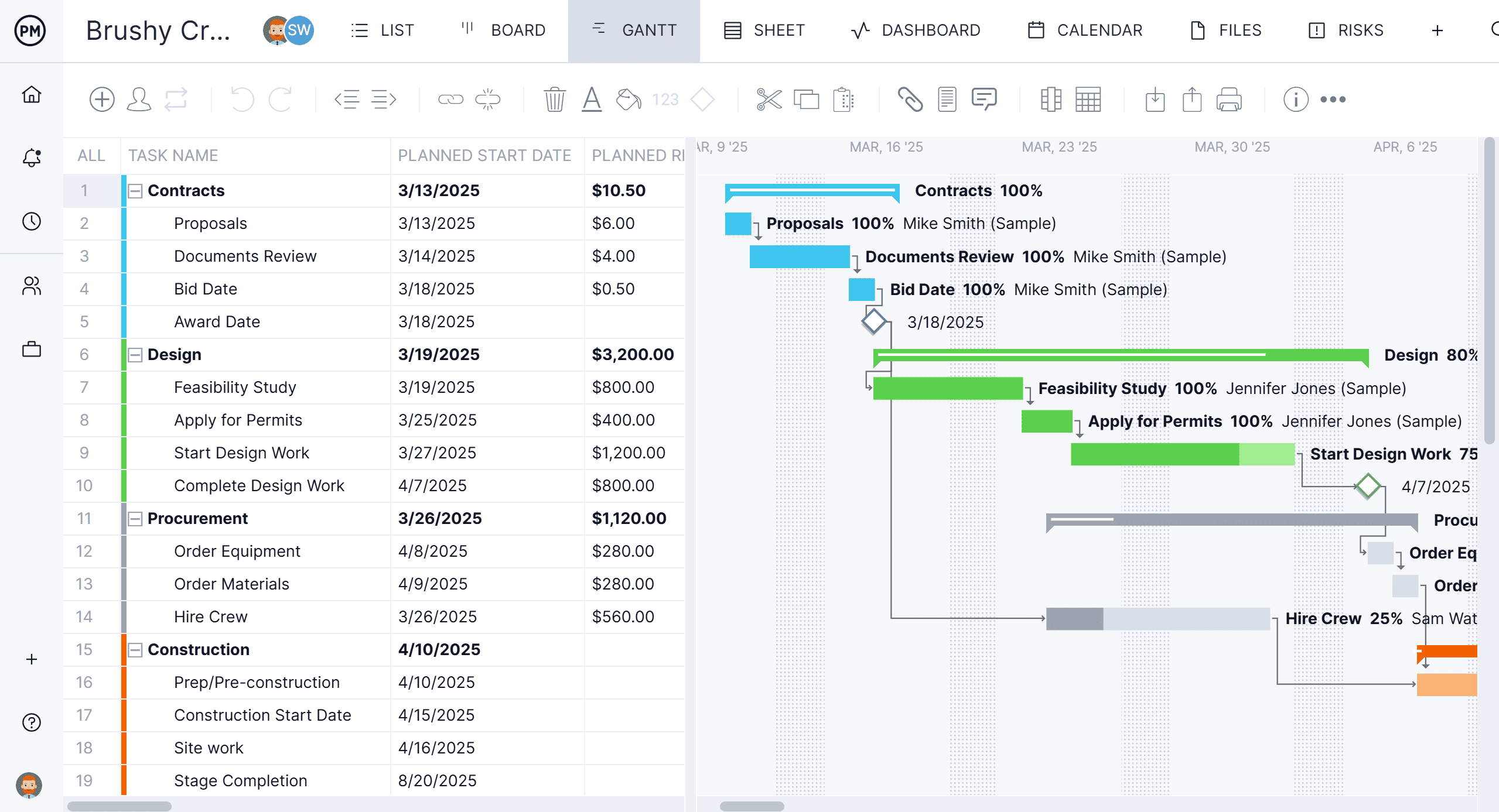
What it does with MPP files: Imports MPP and Microsoft Project XML files, then lets you view, edit and share the schedule online. Exports back to MPP, with Microsoft Project XML, Excel, CSV and PDF as additional options. An “all data” import also brings over assignees, custom columns, task colors and the most recent baseline.
Best for: People and teams who need to edit an MPP file, collaborate on it online and export it back to MPP with the schedule intact, on any operating system, including Mac.
Key features
- MPP import and export that’s lossless for schedule data, plus Microsoft Project XML, Excel and CSV import, and XML, Excel, CSV and PDF export
- Gantt charts with finish-to-start, start-to-start, finish-to-finish and start-to-finish dependencies, plus lag
- Critical path filter and baselines
- Task lists, kanban boards, timesheets and dashboards for the team working on the schedule
- Integrations with Microsoft Teams, Excel, Slack, OneDrive, Google Drive and Dropbox, and with thousands of other apps through Zapier
Pros
- Sends an updated schedule back as an MPP file, so Microsoft Project users don’t need to convert anything
- The same schedule works in a browser on Mac, Windows and Linux and in the iPhone and Android apps
- Published per-user pricing and a 30-day free trial with no credit card
Cons
- Not free, and there’s no free plan; after the trial, you need a paid plan
- Not a lightweight viewer: you create a project and import the file rather than double-clicking it
- Needs an internet connection, and iPad users work in the browser rather than an iPad app
Pricing: Team $15/user/month, Business $28/user/month (billed annually), Enterprise by quote. 30-day free trial.
3. Project Viewer 365
Project Viewer 365 is a Microsoft Project viewer from the company behind Project Plan 365. It opens MPP files from Microsoft Project 2010 through 2024 so you can read, share and print them, and it exports to PDF, Excel and Microsoft Project XML. Its free view-only mode shows the Gantt Chart, Task Sheet and Resource Sheet views, and a one-time license unlocks the full viewer on Windows and Mac.
It suits someone who receives MPP files regularly and wants a desktop viewer they pay for once. For example, a supplier who gets an updated MPP schedule from a customer every month can open it on a Mac or PC, filter for their tasks and print the Gantt chart. Editing is only available through separate editor subscriptions, and the vendor’s site doesn’t say whether those save back to MPP; if you need to send an MPP file back, Project Plan 365 states that it saves MPP.

What it does with MPP files: Views and prints MPP files and exports them to PDF, Excel and XML with the viewer license. Editor subscriptions let you edit schedules.
Best for: People who need to read and print MPP files on Windows or Mac and prefer a one-time license.
Key features
- Opens MPP files from Microsoft Project 2010 to 2024
- Gantt, calendar, resource usage and baseline views, plus a report that compares two projects
- Opens files from OneDrive, SharePoint, Google Drive, Dropbox, Box and iCloud Drive
- Native Mac app (macOS 12 or later) and Windows, web, iOS and Android versions
Pros
- One-time license covers both Windows and Mac
- Free view-only mode for occasional files
- Exports to PDF and Excel for people without a viewer
Cons
- The one-time license doesn’t cover the iOS and Android apps, which need a store subscription
- Overlapping product names and prices across its website and app stores make plans hard to compare
- Sales are final
Pricing: Free view-only mode. One-time license $59.99/user (Windows and Mac, including one year of maintenance). Mac App Store subscriptions: Advanced View-Only $19.99/year, Standard Editor $129.99/year and Business Editor $199.99/year. 30-day free trial.
4. Project Reader
Project Reader from Nagarsoft is a read-only Microsoft Project viewer for Windows. It opens MPP, MPT and Microsoft Project XML files from Project 98 through Project 2024, shows them in six Microsoft Project views and prints any view with print preview and a date range for the Gantt chart. Version 7.1 was released in May 2026.
It suits an office where several people only need to read schedules, such as a site team that receives an MPP file from the project manager each week. It costs $29 per installation as a one-time license, can export tables to Excel and the Gantt chart as an image, and opens files from OneDrive, Google Drive, Dropbox and Box. It can’t edit or save MPP files and doesn’t run on a Mac.
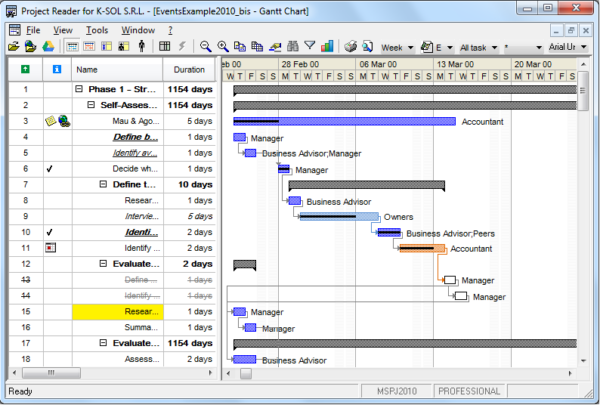
What it does with MPP files: Views, prints and exports MPP files (tables to Excel, the Gantt chart as an image). Read-only, with no MPP save.
Best for: Windows users who need a low-cost, one-time license to read and print MPP files.
Key features
- Opens MPP files from Microsoft Project 98 to 2024, plus MPT and XML files
- Gantt, Tracking Gantt, Task Usage, Resource Usage, Resource Sheet and Team Planner views
- Filters, custom tables and printing of all views
- Opens files from OneDrive, Google Drive, Dropbox and Box
Pros
- Low one-time price per installation
- Confirmed support for Microsoft Project 2024 files
- 30-day free trial with no registration
Cons
- Windows only, with no Mac, web or mobile version
- Read-only, so you can’t update the schedule or send back an MPP file
- Excel export needs Excel installed, and VBA scripting and Project Server support need the Professional edition
Pricing: Standard $29 and Professional $40 per installation, one-time, with volume discounts. Concurrent and company licenses also available. 30-day free trial.
5. Seavus Project Viewer
Seavus Project Viewer, now developed by Synami, is a read-only Microsoft Project viewer for Windows and Mac. The Windows version shows more than 27 Microsoft Project views, tables, filters and groups as they appear in Microsoft Project, along with Microsoft Project reports and graphical reports such as critical and behind-schedule tasks. Version 19.6 was released in October 2026.
It suits project offices whose stakeholders need to read detailed schedules in the same views the project manager uses. A program manager could send MPP files to executives who open them in Seavus, check the critical tasks report and print it, without buying Microsoft Project licenses. Seavus says plainly that it’s a viewer and can’t change the project plan.

What it does with MPP files: Views, analyzes and prints MPP files. Read-only, with no MPP save.
Best for: Stakeholders who need to read MPP files in the full set of Microsoft Project views and reports on Windows.
Key features
- Opens MPP files on Windows, including files from Microsoft Project 2021 and 2024
- More than 27 Microsoft Project views, plus reports and graphical dashboards
- Opens master projects, password-protected plans and files from SharePoint, OneDrive and Google Drive
- Native Mac app with Gantt, Task Sheet and Resource Sheet views, graphical reports and filters
Pros
- Shows schedules much as Microsoft Project does, including reports
- Available for both Windows and Mac
- 15-day free trial with no credit card
Cons
- Read-only, so you can’t update the schedule or send back an MPP file
- The Mac version has fewer views than the Windows version, and its site lists Mac support only up to Microsoft Project 2019 files
- The Windows license is an annual subscription, at a higher price than other read-only viewers
Pricing: Windows single license $114/user/year. Mac single license $114, one-time. Team, company and enterprise licenses by quote. 15-day free trial.
6. ProjectLibre
ProjectLibre is a free, open-source desktop scheduler for Windows, Mac and Linux that opens MPP files and lets you edit them. It looks much like Microsoft Project, with a Gantt chart, WBS, network diagram, critical path, baselines and resource views. It saves in its own .pod format or as Microsoft Project XML, not as MPP.
It suits an individual on a budget who needs to change a schedule, such as a freelancer who receives an MPP file, updates the task dates and sends back an XML file that the client opens in Microsoft Project. The desktop app is for one person working on one project at a time. ProjectLibre’s site lists compatibility with Microsoft Project 2010, 2013 and 2016 files and doesn’t mention newer versions. ProjectLibre Cloud, a paid browser version, also imports MPP files but exports to Excel, CSV and PDF.

What it does with MPP files: Opens and edits MPP files in the free desktop app. Saves as .pod or Microsoft Project XML, not MPP. Prints, and saves reports as PDF, Excel and CSV.
Best for: Individuals who want to edit an MPP schedule in a free desktop app and can send back Microsoft Project XML.
Key features
- Opens MPP files and saves Microsoft Project XML
- Gantt chart, WBS, network diagram, critical path, baselines and earned value
- Desktop app for Windows, Mac and Linux
- ProjectLibre Cloud adds real-time co-editing and resource leveling
Pros
- Free and open source, with no subscription
- Lets you edit the schedule, not just read it
- Runs on Mac and Linux as well as Windows
Cons
- Can’t save MPP files, so the other person has to open the XML file and save it as MPP
- The desktop app is single-user and single-project, with no mobile apps
- Its site doesn’t confirm support for Microsoft Project 2021 or 2024 files
Pricing: Desktop free. ProjectLibre Cloud Core $9.99/user/month and Enterprise $29.99/user/month, billed annually. 7-day free trial of the Cloud version.
7. Steelray Project Viewer
Steelray Project Viewer is a read-only viewer for Windows that opens MPP files directly, with no import or upload. It shows Gantt, Timeline, Task Sheet, Task Usage, Resource Sheet, Resource Usage, Resource Graph, Calendar and Network Diagram views, with filters for the critical path, milestones, dates and resources. The Ultimate edition also opens Primavera P6 files.
It suits Windows users who read schedules from more than one scheduling tool, such as an owner’s representative who receives MPP files from one contractor and P6 files from another. Steelray’s help center says it opens files from Microsoft Project 98 through the present version, but its product page names versions only through Project 2019. It can export the Gantt table or Resource Sheet to CSV or HTML, and annotations stay in the viewer rather than the file.

What it does with MPP files: Views, searches and prints MPP files and exports tables to CSV or HTML. Read-only, with no MPP save.
Best for: Windows users who need to read both Microsoft Project and Primavera P6 files.
Key features
- Opens MPP and Microsoft Project XML files, plus Primavera P6 files in the Ultimate edition
- Nine views, including Network Diagram and Resource Graph
- Filters for critical path, milestones, dates and resources
- Print preview with scaling, page size and headers
Pros
- Low annual price
- Reads Primavera P6 files as well as MPP files
- Regular updates, with version 6.29 released in July 2026
Cons
- Windows only; Mac and Linux support ended in 2021
- Read-only, with no PDF or MPP export
- Annual subscription only, and the product page doesn’t name Microsoft Project 2021 or 2024
Pricing: Viewer for Microsoft Project $24.95/user/year. Ultimate Edition (Microsoft Project and Primavera P6) $35/user/year. Free trial on request.
8. Smartsheet
Smartsheet is a spreadsheet-style work management platform that imports MPP files into a new sheet. It accepts MPP, MPX and Microsoft Project XML files on the Pro plan and above, and a Gantt chart view shows the imported schedule with dependencies. It exports Gantt sheets as Microsoft Project XML, not MPP.
It suits a team that wants to keep working on an MPP schedule in a shared grid with forms and dashboards rather than send files back and forth. It’s a weaker fit for someone who only needs to read a file, since you need a paid plan and owner or admin rights to import, and Smartsheet notes that Microsoft Project constraints aren’t supported on import and that an exported plan may display differently in Microsoft Project.

What it does with MPP files: Imports MPP, MPX and Microsoft Project XML files into a sheet (up to 50 MB). Exports Gantt sheets as Microsoft Project XML.
Best for: Teams that want to turn an MPP schedule into a shared, spreadsheet-style plan and keep working on it there.
Key features
- Direct import of MPP, MPX and XML files; Microsoft Project XML export for Gantt sheets
- Gantt chart with dependencies and critical path highlighting (Pro plan and above)
- Forms, reports and dashboards
- Browser access plus iOS and Android apps
Pros
- Imports MPP files without Microsoft Project installed
- Familiar spreadsheet layout for people who don’t use Microsoft Project
- 30-day free trial
Cons
- Exports Microsoft Project XML, not MPP
- Microsoft Project constraints don’t carry over on import, which can change the row order
- Import needs a paid plan and owner or admin rights, and the desktop app is being retired on or after January 6, 2027
Pricing: Pro $9/user/month billed annually ($12 billed monthly), up to 10 users. Business $19/user/month billed annually ($24 billed monthly), minimum of 3 users. Enterprise by quote. 30-day free trial.
How to Open, Edit and Export an MPP File in ProjectManager
To open an MPP file in ProjectManager, create a project, import the MPP or Microsoft Project XML file in your browser and check the schedule logic. To send it back, use the Export button on the Gantt or sheet view and choose MPP. You don’t need Microsoft Project or Windows installed.
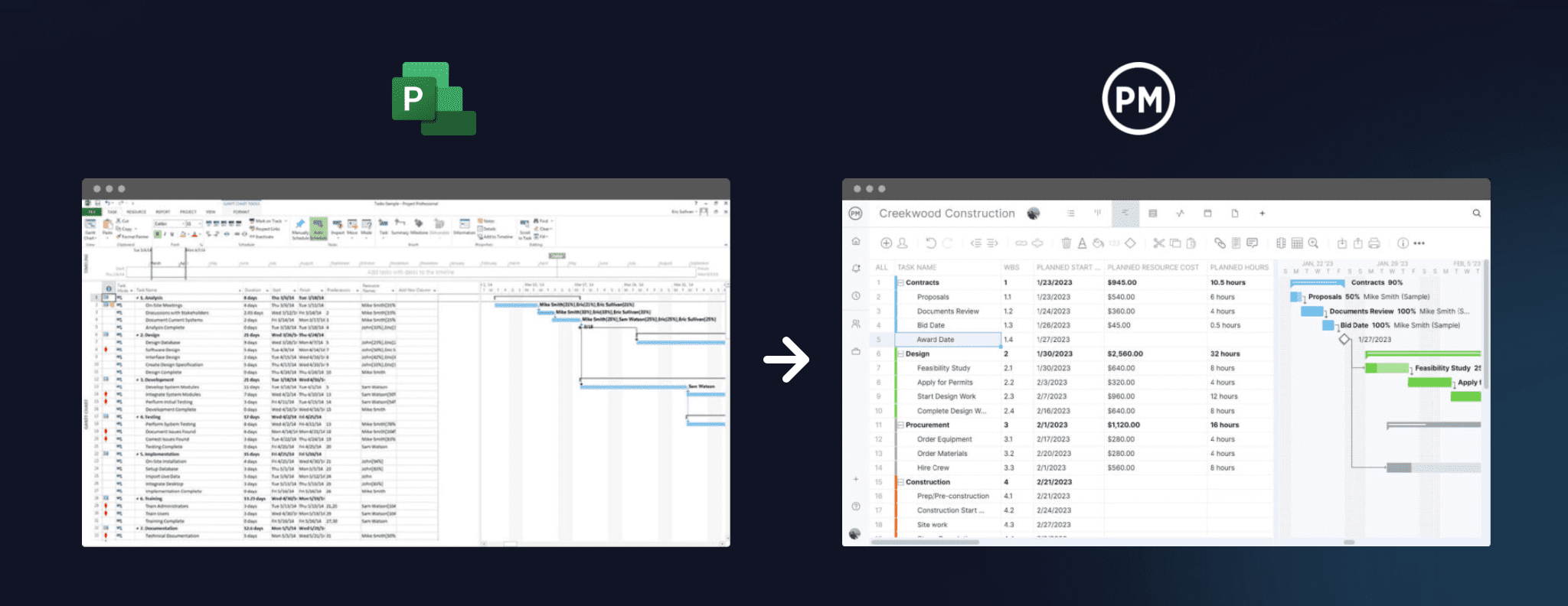
- Start a free trial. Start a 30-day free trial of ProjectManager. No credit card is needed.
- Import the file. Choose Import File when creating a project, or click the import icon on the Gantt ribbon of an existing project. Click select file and upload your MPP or XML file.
- Choose where it goes. Import into a new project or an existing one. If you import into an existing project, choose Keep and append with the imported data or Replace with the imported data. Replace removes everything already in the project.
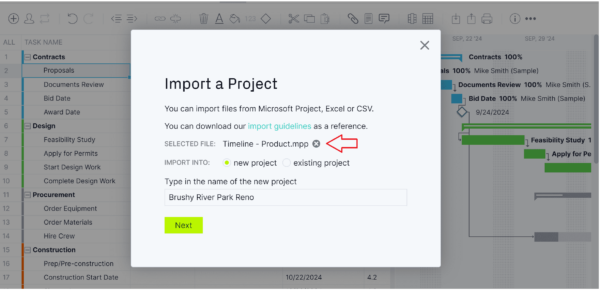
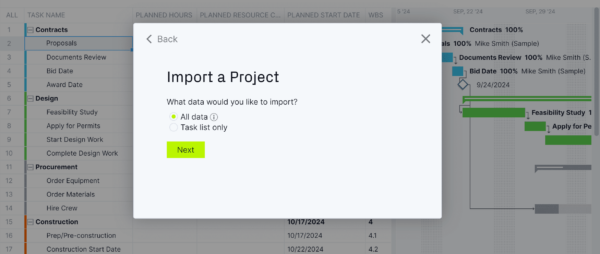
- Choose what to import. Choose Task list only to bring over the task structure and dates, or All data to also bring over assignees, dependencies and planned task data. Use All data if you plan to send the file back as MPP.
- Check the logic. Compare the task count, finish date and dependencies with the original file, then turn on the critical path filter on the Gantt chart and check that it matches the critical path in Microsoft Project.
- Edit and share the schedule. Update dates, durations and assignments on the Gantt chart, and invite your team so they can update their tasks in a browser or the mobile apps.
- Export it back to MPP. Click the Export button on the project’s Gantt or sheet view and choose MPP. You can include actual dates in the export. Microsoft Project XML, Excel, CSV and PDF are also available if someone needs another format.
- Send the file. Email or share the MPP file. The recipient opens it in Microsoft Project with your updates.
What MPP File Versions Does ProjectManager Open?
ProjectManager opens MPP files from every version of Microsoft Project from 2003 onward, including:
- Microsoft Project 2024
- Microsoft Project 2021
- Microsoft Project 2019
- Microsoft Project 2016
- Microsoft Project 2013
- Microsoft Project 2010
- Microsoft Project 2007
- Microsoft Project 2003
It also imports Microsoft Project XML files, and Excel and CSV files from other tools.
Got an MPP file and no Microsoft Project? Start a free 30-day trial, import the file in your browser and export it back to MPP when you’re done. Try ProjectManager free.
Microsoft Project Viewer FAQ
How do I open an MPP file without Microsoft Project?
Open it in a Microsoft Project viewer or in a tool that imports MPP files. For a quick look, Project Plan 365’s free read-only mode opens MPP files in a browser. Project Viewer 365, Project Reader, Seavus Project Viewer and Steelray Project Viewer open them on a desktop. ProjectManager, ProjectLibre and Smartsheet import them so you can edit the schedule. For more ways to open the file, see how to open MPP files.
Is there a free Microsoft Project viewer?
Yes. Project Plan 365 has a free read-only mode in the browser, and Project Viewer 365 has a free view-only mode; both limit you to the Gantt Chart, Task Sheet and Resource Sheet views. ProjectLibre’s desktop app is free and open source and opens MPP files. Project Reader has a 30-day free trial, and Seavus Project Viewer has a 15-day free trial.
Can I edit an MPP file without Microsoft Project?
Yes. Project Plan 365 (paid plans) edits MPP files and saves them as MPP. ProjectManager imports MPP files, lets you edit them online and exports them back to MPP. ProjectLibre and Smartsheet let you edit an imported MPP schedule but save or export it as Microsoft Project XML, not MPP. Read-only viewers such as Project Reader, Seavus Project Viewer and Steelray Project Viewer can’t edit MPP files.
Can I open MPP files on a Mac?
Yes. Microsoft Project desktop runs only on Windows, but Project Plan 365, Project Viewer 365 and Seavus Project Viewer have native Mac apps, ProjectLibre’s desktop app runs on Mac, and ProjectManager and Smartsheet open MPP files in a browser on a Mac. See the Microsoft Project alternatives for Mac and how to run Microsoft Project on a Mac.
Can I convert an MPP file to Excel?
Yes. Import the MPP file into ProjectManager and export the project to Excel or CSV, or open it in Project Plan 365 or Project Viewer 365 and export to Excel. Project Reader exports tables to Excel on Windows. If you have Microsoft Project, you can also export the file to Excel from Microsoft Project.
Related Content
- 8 Best Microsoft Project Alternatives (2026)
- Best Microsoft Project Alternatives for Mac (2026)
- Microsoft Project for Mac: How to Run MS Project Files on Mac
- MPP File Extension: What Is It & How to Open It
- What Is Microsoft Project? Uses, Features and Pricing
- Microsoft Project Online: Pros, Cons and Free Alternatives
- 10 Microsoft Project Management Tools Compared (2026)
- Microsoft Project: Plans, Training and How to Download
- Visor de Microsoft Project: mejores opciones
