



Before construction begins, teams face decisions that can make or break execution. A well-timed constructability review helps uncover risks early, align design with field realities and prevent costly rework once work is underway.
What Is Constructability?
Constructability is a construction project attribute that measures how easily and efficiently a design can be built. Instead of focusing only on how something looks on paper, it reflects whether construction methods, sequencing and site conditions have been fully considered. This becomes critical when complexity or constraints could impact execution.
Why Constructability Matters in Construction Projects
Even well-designed projects can fail if they cannot be built efficiently. Constructability matters because it connects design decisions with real execution conditions, helping teams avoid delays, reduce rework and control costs. By addressing buildability early, projects run smoother, safer and with fewer surprises once construction begins.
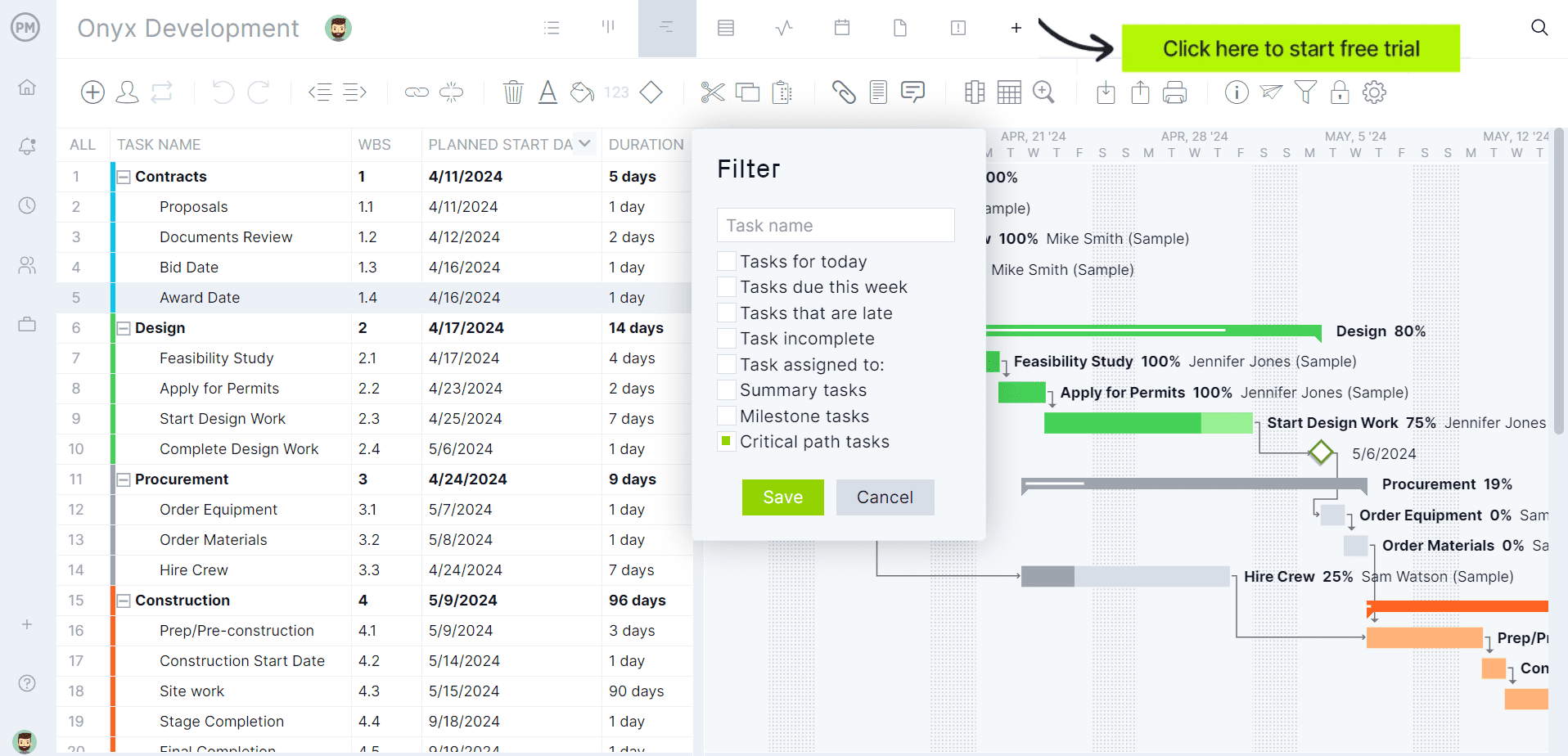
ProjectManager is award-winning construction project management software that gives construction companies tools to ensure projects are completed on time, within budget and within scope. It allows project managers to create detailed construction schedules, estimate costs, allocate resources, set budgets, track progress and compare estimated versus actual project outcomes using real-time dashboards and reports to quickly identify delays or cost overruns. Get started with ProjectManager for free today.
Examples of Constructability Issues
A constructability issue arises when a design or plan cannot be executed efficiently under real-world conditions. These issues typically stem from coordination gaps, unrealistic assumptions or overlooked constraints that disrupt sequencing, increase costs or introduce unnecessary risks during construction.
- Conflicting drawings between disciplines: Structural, mechanical and electrical plans overlap or contradict each other, creating confusion and requiring rework during construction.
- Unrealistic construction sequencing: Tasks are planned in an order that is not feasible, forcing crews to redo work or wait for dependencies.
- Limited site access for equipment: Equipment cannot be brought onto the site due to space constraints or poor planning.
- Oversized materials without installation clearance: Components are too large to maneuver into place given site limitations or structural constraints.
- Missing or unclear design details: Incomplete specifications force field teams to make assumptions, increasing the risk of errors and inconsistencies.
- Incompatible construction methods: Selected methods do not align with site conditions, available labor or equipment capabilities.
- Poor coordination between trades: Different subcontractors interfere with each other’s work due to lack of planning and communication.
- Unrealistic labor assumptions: The schedule assumes crew sizes or productivity levels that are not achievable in real conditions.
- Material availability constraints ignored: Specified materials have long lead times or limited supply, delaying construction progress.
- Unsafe construction approaches: Planned methods expose workers to avoidable hazards due to lack of safety planning during design.
What Is a Constructability Review?
A constructability review is a project evaluation process that assesses how feasible a design is to build. Rather than relying on drawings alone, it brings together cross-functional input from designers, engineers and contractors to examine practical constraints and construction sequencing in detail. This need typically arises when design complexity or challenging site conditions could impact execution. By working through these factors early, teams can reduce field issues and improve coordination. Ultimately, it ensures that construction methods, materials and timelines align with real-world capabilities before work begins.
What Is the Purpose of a Constructability Review?
At its core, a constructability review aims to ensure that project designs can be executed efficiently under real-world conditions, minimizing risk, reducing unnecessary costs and aligning design intent with construction methods, available resources and project timelines before fieldwork begins.
- Identify design conflicts early: Reviewing drawings and specifications helps detect inconsistencies, clashes or missing details that could disrupt construction sequencing and delay progress.
- Improve construction sequencing: Evaluating how work will be performed allows teams to optimize task order, reduce downtime and avoid inefficient workflows during execution.
- Enhance cost control: Spotting impractical design elements early helps prevent change orders, rework and unexpected expenses that can impact the project budget.
- Align stakeholders: Bringing designers, engineers and contractors together ensures everyone shares a realistic understanding of how the project will be built.
- Validate material and equipment choices: Assessing availability and suitability of materials and tools ensures procurement decisions support efficient construction activities.
- Reduce safety risks: Reviewing construction methods helps identify potential hazards and incorporate safer approaches into the project plan before work starts.
- Support accurate scheduling: Evaluating construction feasibility helps refine the project timeline by accounting for real-world constraints, dependencies and resource availability.
When Should a Constructability Review Be Performed?
Timing matters because late feedback is expensive to implement. A constructability review should be performed during the design phase, ideally at multiple milestones such as conceptual, schematic and detailed design stages, before procurement and construction begin. Conducting reviews early allows teams to influence decisions while changes are still manageable, preventing costly revisions once execution is underway.
Who Performs the Constructability Review of a Project?
Responsibility typically sits with the general contractor or construction manager, as they are ultimately accountable for how the work gets built in the field. While designers produce the plans, execution risk falls on those managing construction, which makes them best positioned to lead the constructability review and challenge assumptions before construction begins.
- Design engineers and architects: They participate by clarifying design intent, resolving ambiguities and adjusting plans when constructability concerns reveal impractical or conflicting design elements.
- Specialty subcontractors: Trade contractors contribute hands-on expertise by evaluating whether specific systems can be installed efficiently given site conditions, sequencing and available labor.
- Project managers: They help connect constructability findings to the project timeline, budget and resource plan, ensuring recommendations align with overall project objectives.
- Estimators and cost engineers: These professionals assess how design decisions impact cost assumptions, helping validate whether the project budget reflects real construction conditions.
- Field supervisors or superintendents: Their involvement brings practical jobsite insight, allowing teams to anticipate logistical challenges, safety concerns and coordination issues before work begins.
What Does a Constructability Review Cover?
Instead of focusing on a single aspect of the project, a constructability review looks across multiple dimensions that influence how work will actually be performed. These areas help teams identify risks, improve coordination and ensure that design decisions translate smoothly into construction activities.
Design Completeness and Coordination
Drawings and specifications are examined to confirm they are detailed, consistent and free of conflicts. This includes identifying missing information, overlapping systems or discrepancies between disciplines that could create confusion during the construction process. The goal is to ensure that all project documentation supports a clear and buildable scope of work.
Construction Methods and Sequencing
Attention is placed on how the work will be executed step by step. Teams analyze installation methods, required equipment and the logical order of activities to avoid inefficiencies or delays. By reviewing sequencing early, it becomes easier to identify constraints and adjust plans to support a smoother construction workflow.
Site Conditions and Logistics
Physical conditions on the construction site are evaluated to understand how they impact construction. This includes access points, material storage, space limitations and environmental constraints. Considering logistics early allows teams to plan around restrictions that could otherwise disrupt operations or slow down progress during execution.
Materials and Equipment Feasibility
Selected materials and equipment are reviewed to confirm they are available, suitable and practical for the project conditions. This includes evaluating lead times, handling requirements and compatibility with construction methods. Ensuring feasibility at this stage helps prevent procurement issues and supports more reliable project scheduling.
Schedule and Resource Alignment
The project timeline is assessed alongside labor and resource availability to confirm that planned activities are realistic. This involves identifying dependencies, potential bottlenecks and resource constraints that could affect progress. Aligning these elements early helps create a schedule that reflects actual construction conditions rather than assumptions.
Safety and Risk Planning
Beyond feasibility, teams evaluate how construction activities introduce safety risks and how those risks can be mitigated. This includes reviewing access points, high-risk tasks, temporary protections and method-related hazards. Addressing these factors early helps prevent incidents, ensures compliance with safety standards and supports a more controlled construction environment.
Constructability Review Checklist
With the main areas clearly outlined, the next step is to break them down into specific actions teams can take. The checklist below translates each category into practical activities that help identify issues, validate assumptions and ensure the project can be executed efficiently in real-world conditions.
Design Completeness and Coordination
- Review all drawings for inconsistencies: Compare architectural, structural and MEP drawings to identify conflicts, missing dimensions or misaligned elements that could cause confusion during construction.
- Verify level of design detail: Ensure plans and specifications provide enough information for construction teams to execute work without relying on assumptions or field improvisation.
- Check for scope gaps: Identify any missing components or unclear responsibilities between trades that could result in disputes or change orders later in the project.
- Confirm interdisciplinary coordination: Evaluate how different building systems interact to avoid clashes, such as overlapping ductwork, piping or structural elements.
- Validate constructible design solutions: Assess whether design choices can realistically be built given standard construction practices, tools and field conditions.
Construction Methods and Sequencing
- Define the construction approach: Determine how each major component will be built, including installation techniques, required equipment and labor considerations.
- Analyze activity sequencing: Review the logical order of tasks to prevent rework, avoid bottlenecks and ensure efficient workflow throughout the project.
- Identify critical dependencies: Highlight activities that rely on the completion of others to ensure sequencing supports continuous progress without unnecessary delays.
- Evaluate constructability of complex elements: Break down challenging design features to confirm they can be built safely and efficiently with available methods.
- Assess feasibility of prefabrication or modularization: Consider opportunities to simplify construction by shifting work off-site where it improves efficiency and reduces risk.
Site Conditions and Logistics
- Assess site access and constraints: Evaluate entry points, traffic flow and physical limitations that could impact material delivery, equipment movement and crew operations.
- Plan material storage areas: Identify appropriate locations for storing materials without interfering with ongoing work or creating safety hazards on-site.
- Review site layout and staging: Organize temporary facilities, equipment placement and work zones to support efficient operations and minimize disruptions.
- Evaluate environmental conditions: Consider weather, terrain and surrounding infrastructure that may affect construction methods or project timelines.
- Coordinate logistics with construction phases: Align site usage and access plans with different stages of the project to avoid congestion and operational conflicts.
Materials and Equipment Feasibility
- Confirm material availability: Check whether specified materials can be sourced within required timeframes to prevent procurement delays.
- Evaluate equipment requirements: Identify necessary machinery and tools, ensuring they are suitable for the site and available when needed.
- Review handling and installation needs: Assess how materials will be transported, stored and installed, especially for large or sensitive components.
- Analyze supplier constraints: Consider vendor limitations, lead times and delivery schedules that could impact construction progress.
- Validate compatibility with construction methods: Ensure selected materials and equipment align with the chosen construction approach and do not introduce inefficiencies.
Schedule and Resource Alignment
- Review the project timeline: Evaluate whether the schedule reflects realistic durations based on construction methods, sequencing and site conditions.
- Identify resource constraints: Assess labor availability, crew sizes and skill requirements to ensure the project can be staffed effectively.
- Analyze critical path activities: Focus on tasks that directly impact the project timeline to ensure they are feasible and properly supported.
- Evaluate workload distribution: Check that resources are allocated evenly to avoid overloading teams or creating periods of inactivity.
- Align schedule with procurement and logistics: Ensure material delivery and equipment availability are synchronized with planned construction activities.
Safety and Risk Planning
- Identify high-risk construction activities: Review tasks such as heavy lifting, working at heights or confined spaces to anticipate potential hazards.
- Evaluate site-specific safety constraints: Consider how site layout, access points and environmental conditions may introduce additional safety risks.
- Plan temporary safety measures: Determine requirements for scaffolding, guardrails, barriers and other protections needed during construction.
- Assess method-related risks: Analyze how chosen construction techniques may increase or reduce exposure to hazards for workers.
- Ensure compliance with safety standards: Verify that planned construction activities meet applicable safety regulations and best practices before work begins.
How to Improve Constructability
Improving constructability requires deliberate decisions during planning and design that align with field conditions. By focusing on practicality early, teams can simplify execution, reduce uncertainty and avoid costly adjustments later.
- Involve contractors early in the design phase: Bringing construction teams into early discussions helps identify impractical design decisions before they are finalized and harder to change.
- Simplify complex design elements: Reducing unnecessary complexity in layouts, connections or systems makes construction more straightforward and minimizes execution risks.
- Standardize components and construction methods: Using repeatable designs and familiar techniques allows crews to work more efficiently and reduces the learning curve on-site.
- Incorporate prefabrication where feasible: Shifting work off-site can improve quality, reduce on-site congestion and streamline installation during construction.
- Plan for realistic site constraints: Designing with actual site limitations in mind ensures that access, storage and equipment movement are accounted for from the start.
- Coordinate design decisions with procurement timelines: Aligning specifications with material availability prevents delays caused by long lead times or supply chain issues.
- Use constructability feedback loops throughout design: Continuously reviewing and refining plans based on field input helps maintain alignment between design intent and execution realities.
Free Related Construction Project Management Templates
We’ve created dozens of free construction project management templates for Excel, Word and Google Sheets.
Construction Scope of Work Template
This construction scope of work template helps define deliverables, responsibilities and acceptance criteria while outlining timelines, resources and costs. By structuring tasks clearly, it ensures alignment across stakeholders and supports constructability by preventing scope gaps, miscommunication and execution issues before construction begins.
Construction Management Plan Template
This construction management plan template organizes scope, schedule, resources and risk into a single document that guides execution. It helps align stakeholders, coordinate procurement and enforce safety and quality standards, ensuring that construction activities follow a structured plan grounded in real-world constraints and project requirements.
Project Execution Plan Template
This project execution plan template structures tasks, timelines, resources and costs to guide project delivery from start to finish. It helps teams coordinate responsibilities, track progress and manage performance, ensuring that plans translate into actionable steps that can be executed efficiently under real-world construction conditions.
ProjectManager Is an Award-Winning Construction Project Management Software
ProjectManager is award-winning construction project management software built to support projects from preconstruction through closeout. It includes a robust set of features such as Gantt charts, timesheets, workload management charts and real-time dashboards and reports. The platform also offers unlimited cloud-based document storage and AI-driven project insights that help teams manage construction documents and track project activities. Watch the video below to see how it works.
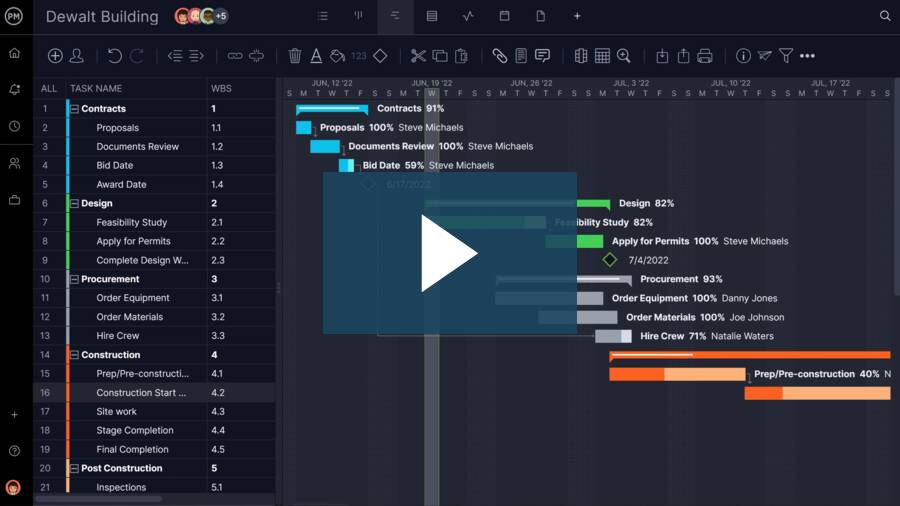
ProjectManager is online construction project management software that empowers teams to plan, manage and track their projects in real time. We connect architects and engineers in the office with your work crew on the job site so they can share files and comments to foster better collaboration. Get started with ProjectManager today for free.
