Construction teams rely on clear updates to keep projects moving forward. A solid construction progress report helps track work completed, flag issues early and align teams and stakeholders. With effective construction progress reporting, you gain visibility into schedules, costs and performance so everyone knows where the project stands and what comes next. Let’s explore this topic so you and your team can generate more effective reports.
What Is a Construction Progress Report?
A construction progress report is a structured update that tracks how a construction project is performing against its plan. It documents completed work, current activities, upcoming tasks and any issues affecting schedule, cost or scope. Effective construction progress reporting gives stakeholders clear visibility into timelines, budgets and risks so project managers can make informed decisions and keep work moving forward.
What Is the Purpose of a Construction Progress Report?
The purpose of a construction progress report is to clearly communicate how a project is advancing compared to the plan. It documents completed work, ongoing activities, upcoming tasks and any issues affecting schedule, cost or quality. Construction progress reporting helps project managers identify risks early, support better decision-making and keep stakeholders aligned. These reports also create a historical record that supports accountability, change orders and future planning across the full project lifecycle.
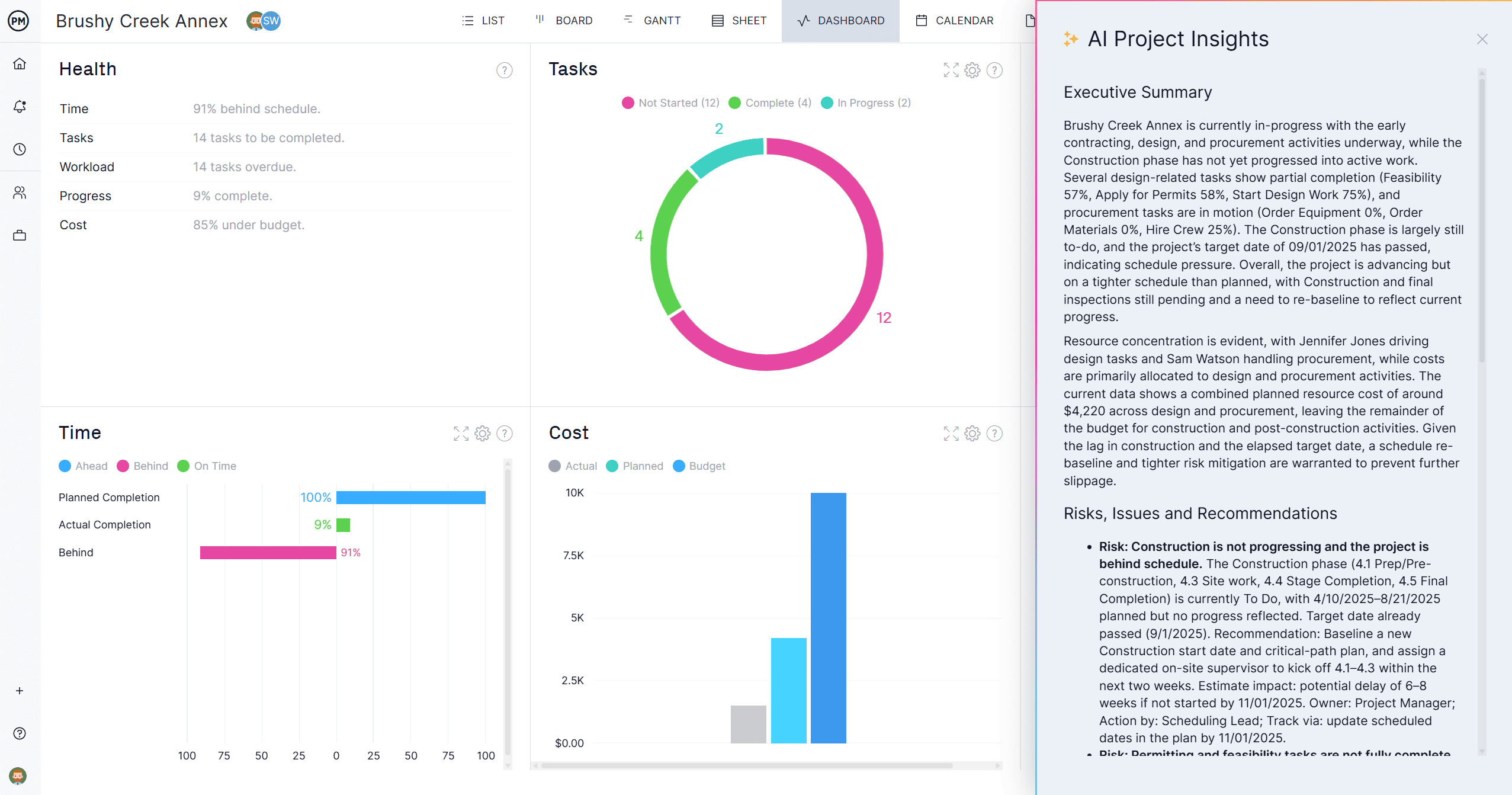
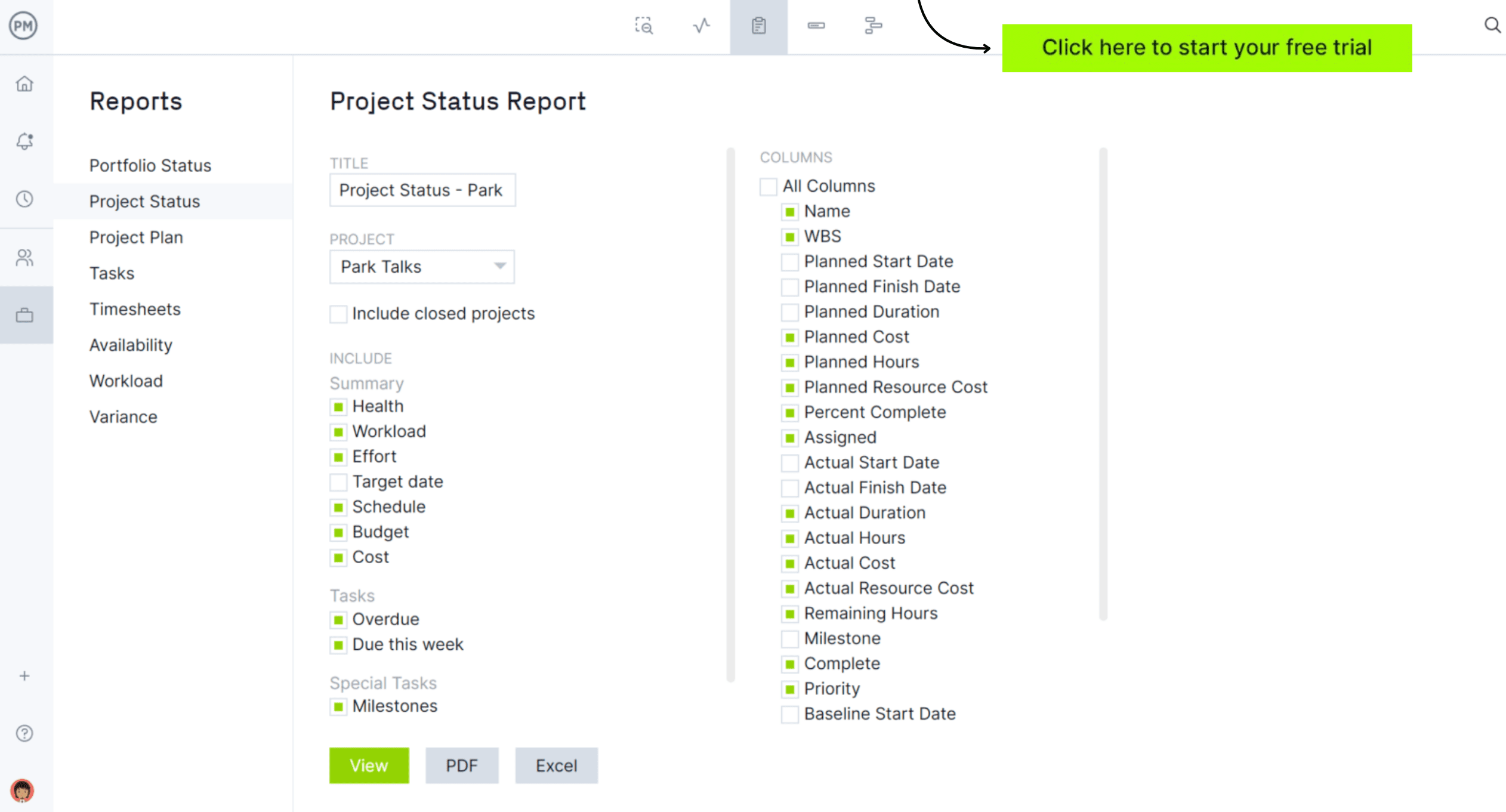
To make the reporting process even easier, utilize ProjectManager. In addition to project views like the Gantt chart, kanban board, calendar and task list, we also have dashboards and reports that automatically collect live project data. In a few clicks, utilize AI Project Insights for in-depth analyses on your projects and generate a custom progress report to share with stakeholders. Get started with a free 30-day trial.
Who Makes the Construction Progress Report?
The construction project manager, site superintendent or construction manager usually creates the construction progress report. In some cases, engineers, inspectors or project controls teams contribute data related to schedule, costs or quality. While one person usually owns the report, accurate construction progress reporting relies on input from multiple team members, including subcontractors and field crews. This collaboration ensures the report reflects real-time conditions rather than assumptions or outdated information.
When to Make a Construction Progress Report
Construction progress reports are typically created on a weekly or monthly basis, depending on project size and contract requirements. Weekly reports help track short-term progress, labor productivity and site issues, while monthly reports support higher-level reviews of schedule, budget and milestones. Additional construction progress reporting may be required after major project phases, change events or delays. Consistent timing helps teams compare performance over time and address issues before they escalate.
What Should Be Included in a Construction Progress Report?
A strong construction progress report gives stakeholders a clear snapshot of where the project stands, what has been completed and what comes next. These sections help standardize construction progress reporting so updates are easy to review, compare and act on throughout the project lifecycle.
Executive Summary
The executive summary provides a high-level overview of the current project status. It highlights major accomplishments, schedule or budget impacts and key risks without going into excessive detail. This section allows owners, executives and project sponsors to quickly understand overall progress and identify areas that may need attention.
Work Completed
This section documents all tasks and activities finished during the reporting period. It should reference completed milestones, closed work orders and approved inspections. Clear documentation of completed work supports accurate billing, confirms scope progress and creates a reliable historical record for future construction progress reporting.
Work In Progress
Work in progress outlines active tasks that are underway but not yet complete. It should describe current phases, percent complete and any coordination between trades. This section helps project managers track momentum, identify potential delays and ensure team members stay aligned on daily and weekly priorities.
Look-Ahead Schedule
The look-ahead schedule focuses on upcoming work over the next one to four weeks. It highlights planned activities, required resources and upcoming dependencies. Including this section improves short-term planning, supports coordination across teams and helps prevent schedule conflicts before they impact construction progress.
Related: 25 Free Excel Construction Templates
Construction Schedule Status
This section compares planned timelines against actual performance. It identifies tasks ahead of schedule, behind schedule or at risk. Clear schedule status reporting supports better decision-making and allows construction project managers to make adjustments before delays escalate into larger project issues.
Issues, Risks and Constraints
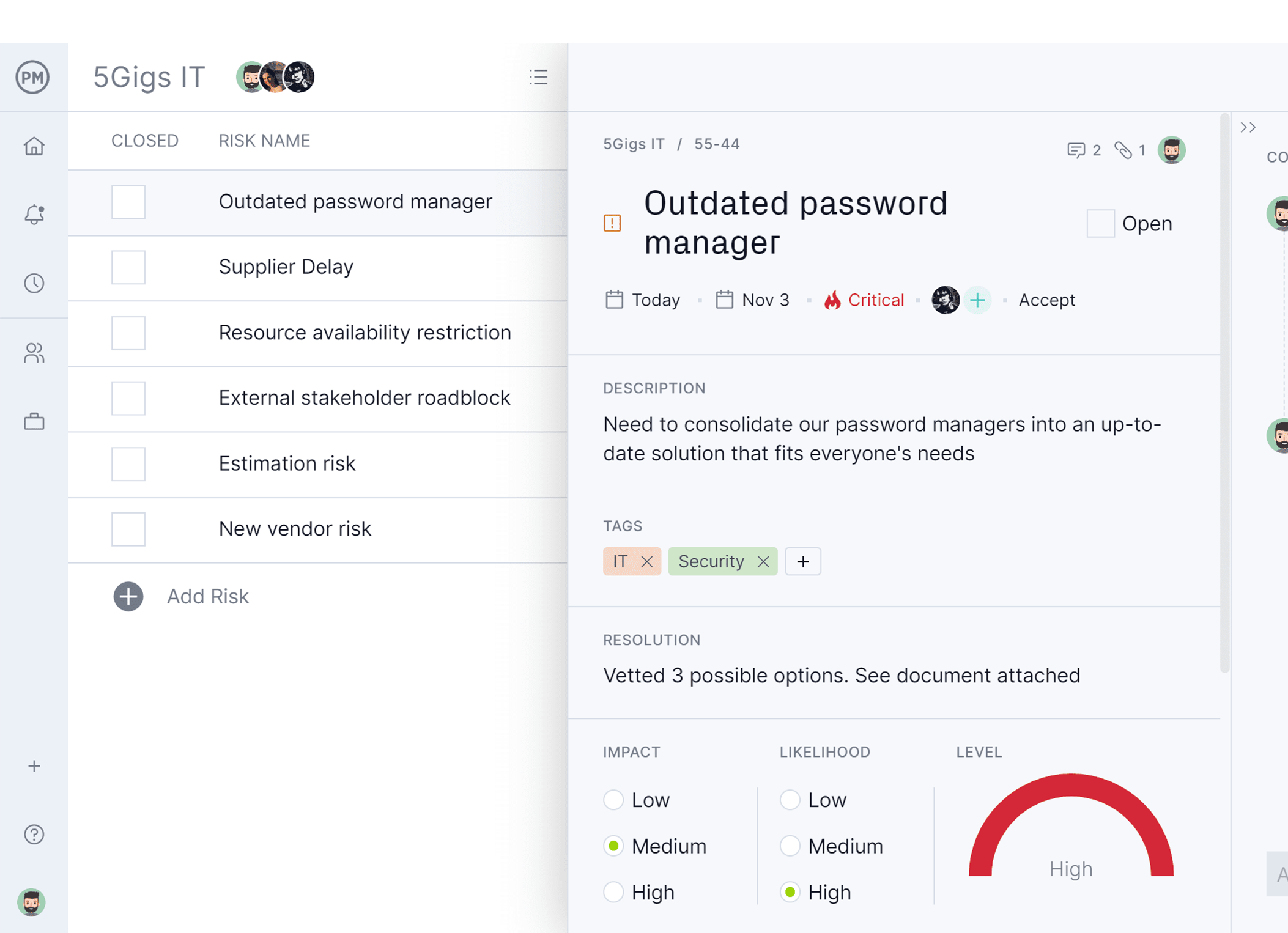
Here, teams document current issues, potential risks and known constraints affecting progress. This may include material delays, labor shortages or permitting challenges. Capturing these items in a construction progress report promotes transparency and helps leadership prioritize problem-solving efforts early.
Change Events
Change events track pending and approved changes that impact scope, cost or schedule. This section should summarize change requests, their status and potential impacts. Consistent documentation protects project teams, supports claims management and keeps construction progress reporting accurate and defensible.
Quality Inspections
This section summarizes inspections completed, results and any corrective actions required. Tracking quality inspections ensures work meets specifications and standards. It also helps prevent rework, supports compliance audits and reinforces accountability across contractors and subcontractors.
Safety Summary
The safety summary reports incidents, near misses and safety observations from the reporting period. It may also note toolbox talks or corrective actions taken. Including safety data reinforces its importance and helps construction managers proactively address hazards before they escalate.
Photos and Documentation
Photos and supporting documents provide visual confirmation of progress and site conditions. This section strengthens the construction progress report by adding context and clarity. Well-organized documentation also creates a reliable audit trail and improves communication with stakeholders who are not onsite regularly.
Related: 39 Construction Documents (Templates Included)
Construction Progress Report Example
This construction progress report example documents the current status of a five-story residential building project. It summarizes work completed during the reporting period, ongoing construction activities and overall execution status to provide stakeholders with a clear and factual view of on-site progress.
Reporting Period & Project Snapshot
| Project name | Five-Story Residential Building |
| Location | 456 Residential Avenue |
| Reporting period | 01/08/2025 – 07/08/2025 |
| Project phase | Structural framing – Levels 2 and 3 |
| Prepared by | Project Manager |
Executive Summary
Construction activities progressed as planned during the reporting period. Structural framing for Levels 2 and 3 continued without major disruptions, and concrete curing for Level 2 slabs was completed. No safety incidents were reported. Minor weather delays were experienced, but did not affect the critical path.
Work Completed During This Period
| Trade / Area | Completed activity | Status | Completion date |
| Concrete works | Pouring and curing of Level 2 floor slab | Complete | 03/08/2025 |
| Structural framing | Column and beam installation – Level 2 | Complete | 05/08/2025 |
| Site logistics | Material staging and crane repositioning | Complete | 06/08/2025 |
Work Currently in Progress
| Trade | Activity | Level / Area | Current status |
| Structural framing | Beam and slab formwork installation | Level 3 | In progress |
| Reinforcement | Rebar placement for Level 3 slab | Level 3 | In progress |
Overall Progress Summary
As of the end of the reporting period, structural works are progressing in accordance with the baseline schedule. Levels 1 and 2 structural elements are complete, and Level 3 construction activities are actively underway with no critical delays identified.
Look-Ahead (Next Reporting Period)
The following activities are planned for the next reporting period to maintain momentum and support upcoming structural milestones.
| Planned activity | Trade | Level / Area | Planned start | Planned finish |
| Concrete pour for Level 3 slab | Concrete | Level 3 | 09/08/2025 | 10/08/2025 |
| Formwork installation for Level 4 | Structural framing | Level 4 | 11/08/2025 | 14/08/2025 |
| MEP rough-in layout | Mechanical / Electrical | Levels 1–2 | 12/08/2025 | 16/08/2025 |
Schedule Status
Overall schedule performance remains aligned with the approved baseline. Structural activities are tracking on plan, with minor weather-related disruptions absorbed through built-in float.
| Milestone | Planned date | Actual / forecast date | Status |
| Level 2 structural completion | 05/08/2025 | 05/08/2025 | Completed |
| Level 3 slab pour | 10/08/2025 | 10/08/2025 | On track |
| Level 4 framing start | 11/08/2025 | 11/08/2025 | On track |
Issues and Constraints
The following items were identified during the reporting period. None currently pose a critical risk to schedule or execution.
| Issue ID | Description | Impact | Action/owner |
| I-01 | High winds temporarily halted crane operations | Minor productivity loss | Resequence activities – Site superintendent |
| I-02 | Delayed delivery of rebar accessories | No schedule impact | Expedited shipment confirmed – Procurement |
Change Events Impacting Progress
No approved scope changes affected construction progress during this reporting period. One potential design clarification is under review but has not resulted in work stoppage.
| Change reference | Description | Status | Impact on progress |
| CE-01 | Balcony edge detail clarification | Under review | None to date |
Quality Control and Inspections
Quality assurance activities during the reporting period focused on verifying structural work compliance and readiness for upcoming concrete pours. All completed inspections met design and code requirements.
| Inspection type | Level / Area | Date | Result | Remarks |
| Structural inspection | Level 2 | 04/08/2025 | Passed | No deficiencies noted |
| Formwork inspection | Level 3 | 06/08/2025 | Passed | Approved for concrete placement |
Safety Summary
Site safety performance remained strong during the reporting period. All personnel adhered to established safety protocols, and no incidents or near misses were recorded.
| Safety metric | Value | Notes |
| Man-hours worked | 1,120 | All trades combined |
| Recordable incidents | 0 | — |
| Toolbox talks conducted | 3 | Fall protection and crane safety |
Benefits of Thorough Construction Progress Reporting
Consistent construction progress reporting keeps everyone aligned, informed and accountable throughout the project lifecycle. Clear reports improve decision-making by highlighting schedule status, budget impacts and emerging risks before they become costly problems. They also create a reliable record of work completed, changes and approvals, which supports compliance audits and dispute resolution. For construction teams, thorough reporting reduces time spent chasing updates, strengthens communication with stakeholders and helps projects stay on track, on budget and built to plan.
Free Construction Project Management Templates
We have hundreds of free project management templates on our site; they are a mixture of templates for Word, Excel, Google Sheets and more. Below are a few examples related to construction project management.
Construction Scope of Work Template
A construction scope of work template defines what tasks are included, who’s responsible and how success is measured. It supports accurate construction progress reporting by setting clear expectations upfront, reducing scope creep and making it easier to track completed work against planned deliverables throughout the project lifecycle.
Construction Management Plan Template
This template outlines the process for executing, monitoring, and controlling a construction project. It supports a strong construction progress report by documenting processes for scheduling, communication, quality and risk management, giving stakeholders a clear reference point for evaluating progress and decision making.
Construction Schedule Template
A construction schedule template maps tasks, timelines and dependencies in one place. It plays a critical role in construction progress reporting by showing planned versus actual progress, identifying delays early and helping teams adjust resources and sequencing to keep the project moving forward.
How ProjectManager Helps with Construction Progress Reporting
ProjectManager makes construction progress reporting easier, faster and more accurate by giving teams a central platform to track, update and share status in real time. With customizable dashboards and reports, construction managers can visualize progress against baseline schedules, highlight work completed and communicate updates to stakeholders without manual spreadsheets.
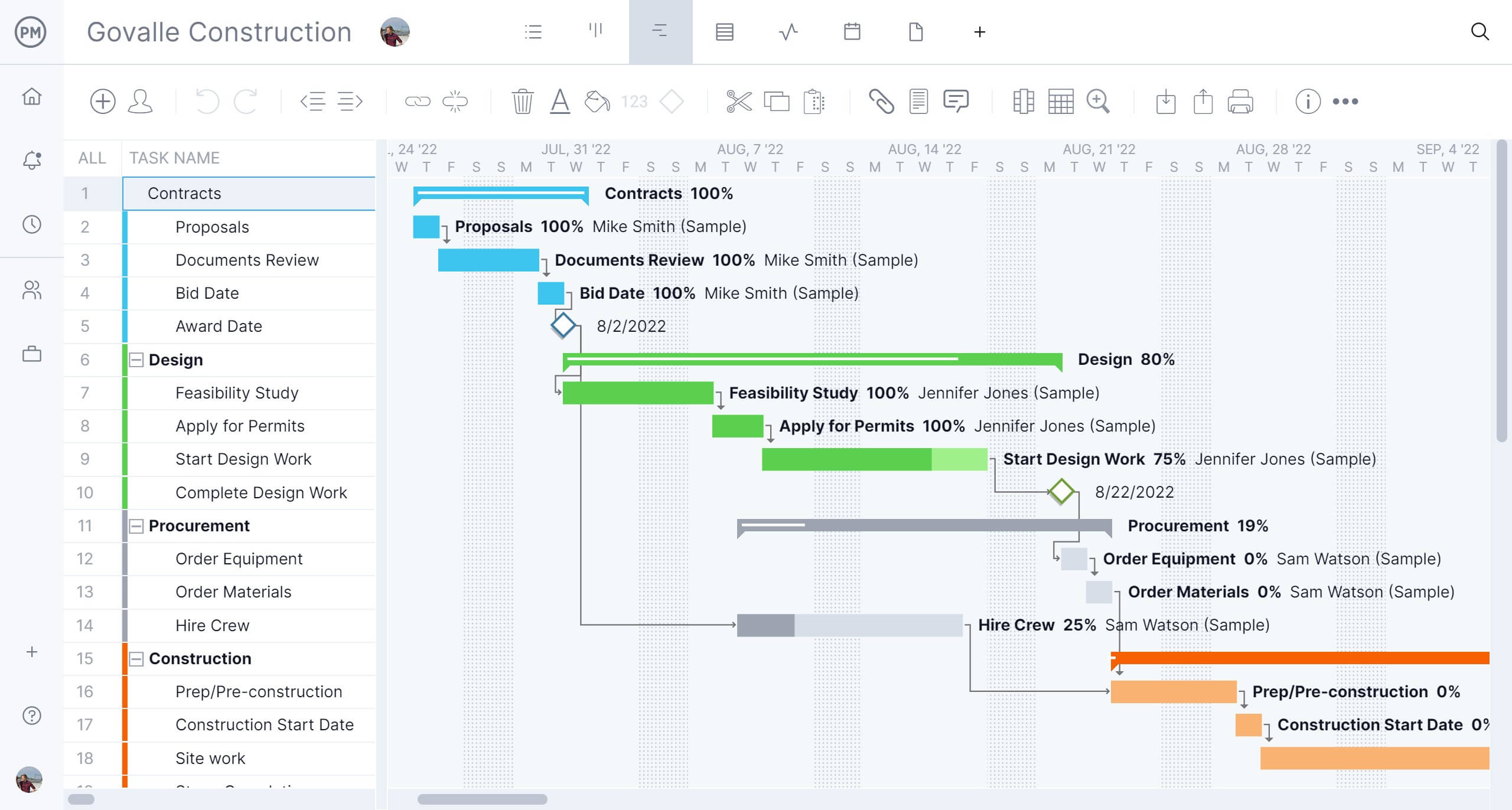
Track Construction Schedules in Real Time
Integrated task lists and Gantt charts allow teams to link actual progress directly to the construction schedule, making look-ahead forecasting and status reporting simple. Mobile access lets crews upload photos, log issues and update work in progress right from the jobsite. Built-in document management and version control ensure that all photos, inspection reports and safety summaries are organized and attached to the right report.
Oversee Project Health with Dashboards
Because data updates in real time, your construction progress report always reflects the latest information, helping improve communication, reduce errors and support data-driven decisions throughout the project lifecycle. Use the AI-powered dashboard alongside powerful reports to ensure quality at every stage.