



Turning ideas into results requires more than motivation. The right goal-setting strategies help individuals and teams define clear objectives, track progress and stay focused on meaningful outcomes across projects, initiatives and long-term strategic plans.
What Are Goal-Setting Strategies?
When teams move from vague ambitions to clearly defined outcomes, they rely on goal-setting strategies to guide planning and execution. A goal-setting strategy provides a structured way to define objectives, measure progress and coordinate work across people and timelines. Instead of relying on intuition, teams use a goal-setting strategy to translate priorities into measurable targets, milestones and actionable plans.
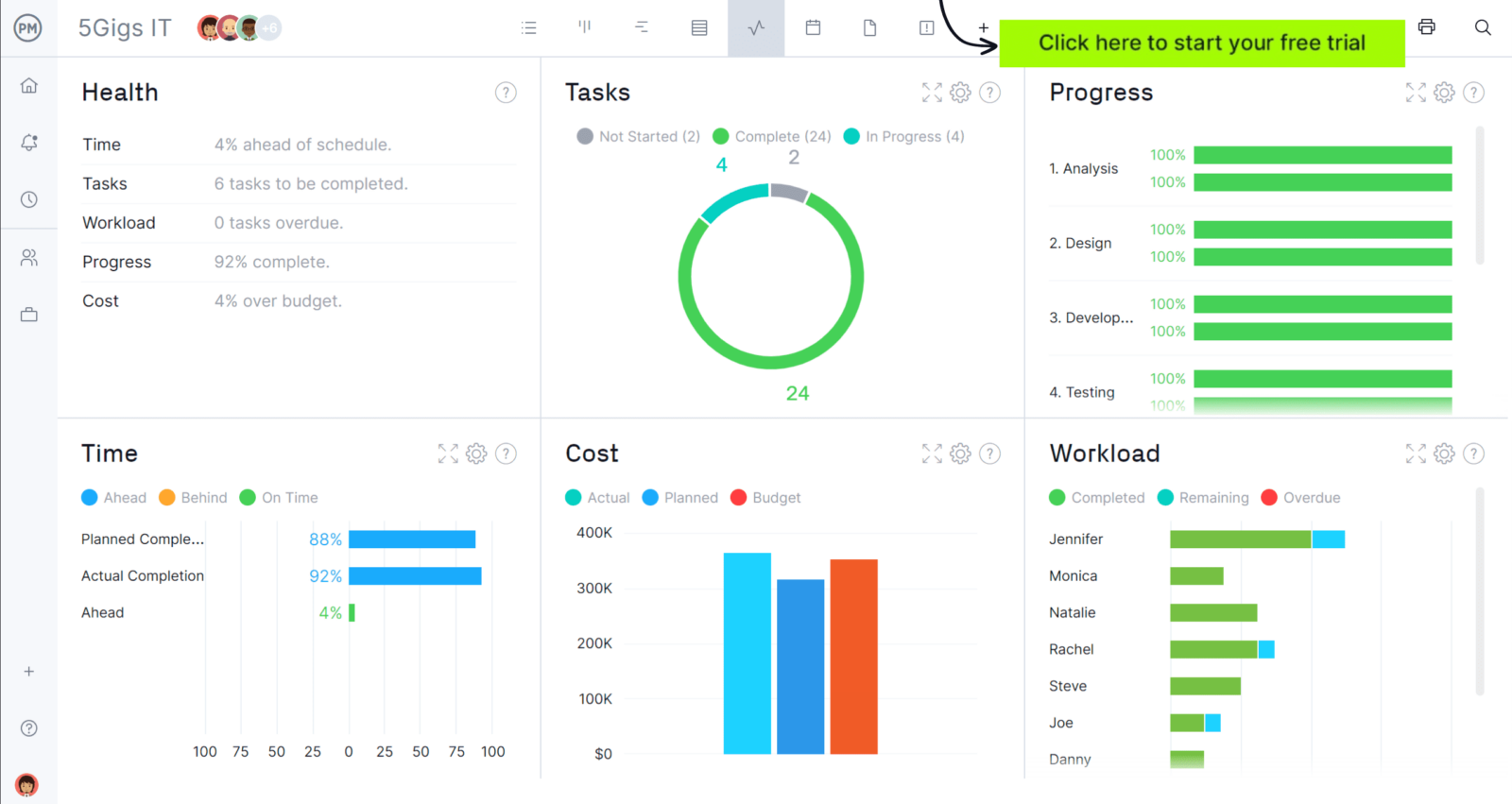
Once goals are defined, teams need tools to plan the work and track progress. ProjectManager is an award-winning project management software that helps turn goal-setting strategies into executable plans by organizing tasks, building project timelines and monitoring progress in real time. Teams can track milestones, manage resources and visualize progress through dashboards and Gantt charts, ensuring their goals stay aligned with schedules, budgets and priorities. Get started for free today.
When to Use Goal-Setting Strategies
Whether planning a project timeline, launching a new initiative or improving team performance, goal-setting strategies provide the structure needed to turn priorities into measurable objectives. Managers, professionals and organizations use these frameworks whenever goals must be clearly defined, progress must be tracked and teams must stay aligned around shared outcomes.
Here are some common scenarios for the use of goal-setting strategies.
- Project planning environments where managers must translate high-level business objectives into measurable project goals, milestones and deliverables within a defined project timeline.
- Performance management programs where employees and supervisors align individual objectives with organizational priorities, ensuring work contributes directly to strategic outcomes.
- Strategic planning sessions in which leadership teams establish long-term objectives and define measurable performance targets that guide company initiatives.
- Product development roadmaps where teams define launch goals, development milestones and performance metrics that track progress toward release targets.
- Sales and marketing planning processes where revenue targets, campaign goals and performance metrics must be clearly defined and monitored.
- Personal productivity systems used by professionals who want to structure priorities, track progress and stay focused on meaningful outcomes.
- Operational improvement initiatives where departments set measurable efficiency targets, cost reduction goals or quality benchmarks to guide continuous improvement.
15 Goal-Setting Strategies for Individuals and Teams
We’ve gathered the most widely used goal-setting strategies for individuals and teams across industries, we hope they’re helpful for you or your team.
1. SMART Goals
Among the most widely recognized goal-setting strategies, SMART goals help teams transform broad objectives into clearly structured targets. The framework requires goals to be specific, measurable, achievable, relevant and time-bound. By applying these criteria, teams ensure project goals include defined outcomes, measurable metrics and a clear project timeline, which makes progress easier to monitor and manage.
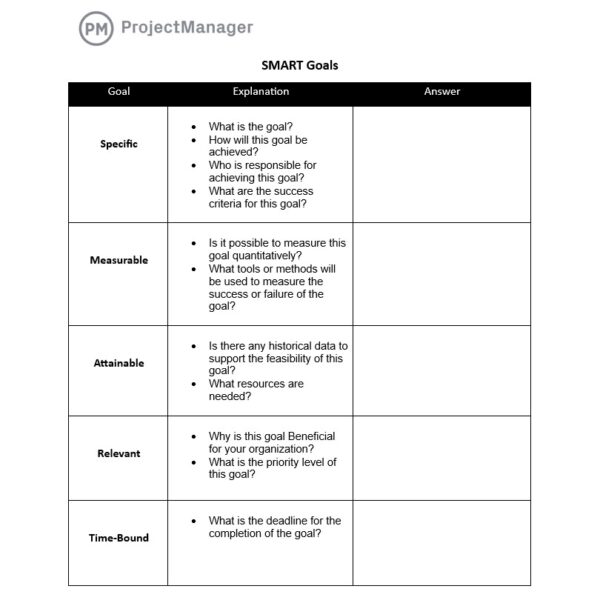
Across industries, SMART goals appear most often in project planning, performance management and strategic execution. Managers use this goal-setting strategy when defining project milestones, performance targets or operational objectives that must be tracked over time. Because the structure emphasizes measurable outcomes and deadlines, SMART goals are especially useful when progress must be monitored regularly.
- Clarifies project objectives by turning broad intentions into measurable targets that teams can realistically plan around.
- Improves project planning because clearly defined outcomes make it easier to structure milestones and timelines.
- Helps teams track progress using performance metrics instead of relying on subjective assessments.
- Encourages accountability by assigning specific results and deadlines to individuals or project teams.
- Supports better decision-making because measurable goals reveal whether strategies and action plans are working.
2. OKRs (Objectives and Key Results)
OKRs are a goal-setting strategy that connects ambitious objectives with measurable results that prove progress. Teams define a qualitative objective describing what they want to achieve, then attach several key results that measure success. Because each key result must be quantifiable, OKRs make it easier to track performance, evaluate execution and align day-to-day work with strategic priorities.
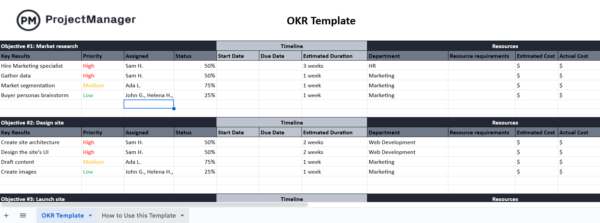
Fast-growing organizations and technology companies frequently rely on this goal-setting strategy when aligning teams around quarterly priorities. Leadership sets high-level objectives while departments define measurable key results that support them. Product teams, marketing departments and operations groups commonly use OKRs to coordinate initiatives, monitor performance metrics and keep execution aligned with strategic goals.
- Aligns departments around shared objectives so teams understand how their work supports company strategy.
- Creates measurable progress indicators through key results that track outcomes rather than activity.
- Encourages ambitious thinking by allowing teams to pursue challenging objectives with measurable benchmarks.
- Improves transparency because teams can easily see which objectives are progressing and which need attention.
- Strengthens accountability by linking strategic priorities to clear performance metrics and measurable results.
3. CLEAR Goals
Designed for collaborative and adaptive work environments, CLEAR goals represent a goal-setting strategy that prioritizes flexibility and team engagement. The acronym stands for collaborative, limited, emotional, appreciable and refinable. Instead of focusing strictly on rigid targets, CLEAR goals emphasize teamwork, manageable progress and continuous adjustment as projects evolve.
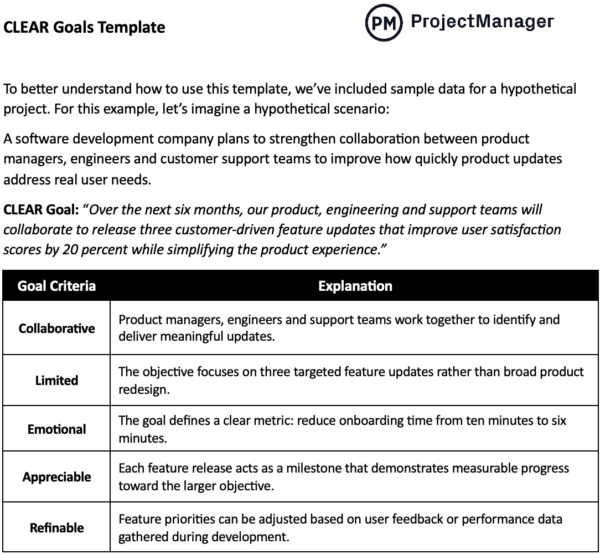
Agile teams and cross-functional project groups often adopt this goal-setting strategy when work requires collaboration and frequent adjustments. Because CLEAR goals can be refined as circumstances change, they are commonly used in product development, innovation projects and environments where teams must adapt quickly to feedback, evolving priorities and new project constraints.
- Encourages collaboration by ensuring goals are shared across teams rather than owned by individuals.
- Keeps objectives manageable by breaking complex outcomes into smaller, achievable milestones.
- Builds motivation by connecting goals to meaningful outcomes that teams genuinely care about.
- Supports adaptability because teams can refine goals as project conditions or priorities change.
- Improves engagement since collaborative goals strengthen alignment and commitment among team members.

4. HARD Goals
Another goal-setting strategy designed to strengthen motivation is the HARD goals framework. The acronym stands for heartfelt, animated, required and difficult. Instead of focusing only on measurable targets, this approach emphasizes emotional commitment and meaningful outcomes. When teams care deeply about an objective, they are more likely to push through challenges and maintain momentum during demanding projects.
Leadership teams, entrepreneurs and innovation-driven organizations often rely on this goal-setting strategy when pursuing ambitious initiatives. Because HARD goals emphasize emotional investment and challenging outcomes, they frequently appear in transformation projects, startup environments and high-growth companies where teams must stay motivated while tackling complex objectives and uncertain project timelines.
- Strengthens motivation because goals connect directly to meaningful outcomes that people genuinely care about achieving.
- Encourages teams to pursue ambitious objectives that push performance beyond routine operational targets.
- Builds resilience by preparing teams mentally for difficult work and long project timelines.
- Improves commitment because emotionally meaningful goals create stronger ownership across project teams.
- Helps leaders inspire teams by framing goals around purpose instead of only metrics.
5. WOOP
WOOP is a goal-setting strategy developed from psychological research on motivation and behavior change. The framework stands for wish, outcome, obstacle and plan. Instead of focusing only on desired results, this method forces teams or individuals to identify likely obstacles and define practical responses before work begins, improving preparation and execution.
Professionals often apply this goal-setting strategy when planning personal development goals, productivity improvements or small project initiatives. Coaches, managers and individuals use WOOP during planning sessions to identify potential barriers early, which helps teams create realistic action plans and maintain progress when challenges inevitably appear during project execution.
- Improves planning by identifying likely obstacles before work begins instead of reacting later.
- Encourages realistic expectations by forcing teams to confront potential risks and limitations early.
- Strengthens problem-solving because teams already prepare responses to common project challenges.
- Supports personal productivity by linking goals with practical action plans and contingency thinking.
- Helps teams maintain momentum because obstacles are anticipated rather than becoming unexpected disruptions.
6. Locke & Latham Goal-Setting Theory
In many workplaces, the foundation of modern goal-setting strategies comes from Locke and Latham’s goal-setting theory. The approach shows that people perform better when goals are specific, challenging and supported by feedback. Rather than vague expectations, teams work toward clearly defined targets, track progress regularly and stay committed because objectives are meaningful and realistically attainable.
Organizations most often apply this goal-setting strategy in performance management systems and structured project planning. Managers rely on it when defining employee objectives, tracking performance metrics or aligning departmental targets with company strategy. The framework also appears in training programs that teach leaders how to set challenging yet achievable project goals.
- Improves performance because clearly defined and challenging goals push teams to increase focus and effort.
- Encourages consistent feedback cycles that help teams adjust work before small issues become major delays.
- Strengthens commitment since team members understand exactly what results they are responsible for achieving.
- Supports better performance tracking through measurable outcomes instead of vague expectations or assumptions.
- Helps managers design structured goal-setting strategies that align employee performance with strategic priorities.
7. Backward Goal Setting
Instead of starting with tasks, backward goal setting begins with the final outcome and works in reverse to determine the steps required to reach it. This goal-setting strategy identifies the desired result first, then defines milestones, deliverables and actions needed to achieve that result within a defined project timeline.
Project managers frequently apply this goal-setting strategy when planning complex initiatives that involve multiple phases. Construction schedules, product launches and strategic roadmaps often use backward planning to identify milestones and dependencies. Starting with the final objective helps teams clarify what must happen first to reach the ultimate goal.
- Clarifies planning by defining the final objective before identifying milestones and required tasks.
- Improves project scheduling because milestones naturally emerge from the final delivery target.
- Helps teams identify dependencies between activities that affect the project timeline.
- Reduces confusion since everyone understands the final outcome driving the entire action plan.
- Strengthens execution planning by aligning daily tasks with long-term project goals.
8. BHAG (Big Hairy Audacious Goal)
Some organizations rely on extremely ambitious goal-setting strategies to drive long-term growth, and the BHAG framework represents one of the boldest examples. A Big Hairy Audacious Goal is a large, inspiring objective that pushes an organization far beyond incremental improvement. Instead of focusing on short-term performance metrics, this goal-setting strategy emphasizes visionary outcomes that motivate teams for many years.
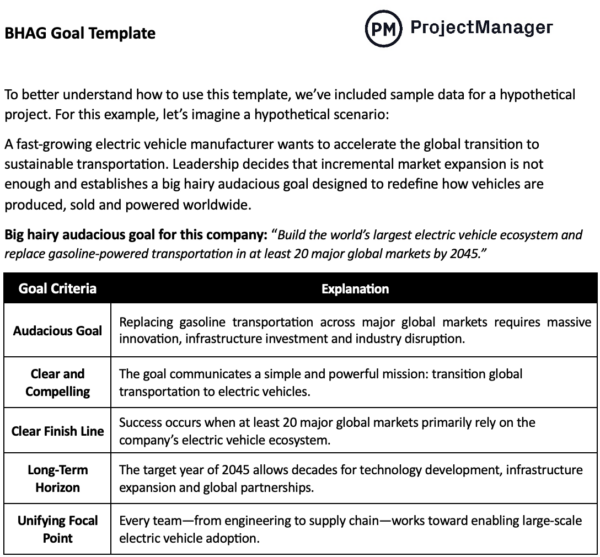
Executives and founders most often use this goal-setting strategy during strategic planning cycles or when defining long-term organizational direction. BHAGs frequently appear in corporate vision statements, transformation initiatives and growth strategies where leadership wants to inspire teams with a bold destination rather than incremental performance targets or short project milestones.
- Creates strong organizational alignment by giving teams a single ambitious objective that guides long-term strategy.
- Inspires employees because bold goals often generate excitement and emotional commitment across departments.
- Encourages innovation since reaching ambitious objectives requires creative thinking and new problem-solving approaches.
- Provides a clear strategic direction that helps organizations prioritize initiatives and long-term investments.
- Strengthens company culture by rallying teams around a shared mission that feels meaningful and challenging.
9. MBO (Management by Objectives)
Another widely used goal-setting strategy in business environments is Management by Objectives, commonly known as MBO. Introduced by Peter Drucker, this approach focuses on aligning employee goals with organizational priorities. Managers and employees work together to define clear objectives, track measurable progress and evaluate performance based on whether those objectives are achieved.
Many organizations apply this goal-setting strategy within performance management systems and annual planning cycles. Department leaders establish objectives that support company strategy, while employees define individual goals that contribute to those outcomes. The approach is especially common in corporate environments where performance reviews and measurable targets guide employee development.
- Aligns individual employee objectives with broader organizational goals and strategic priorities.
- Improves accountability because each employee clearly understands the outcomes they are responsible for delivering.
- Encourages collaboration between managers and employees during the goal-setting and review process.
- Supports measurable performance evaluation through clearly defined objectives and performance metrics.
- Helps organizations translate strategic priorities into actionable targets across teams and departments.
10. FAST Goals
Unlike traditional goal-setting strategies that rely on static annual objectives, FAST goals focus on visibility, ambition and continuous discussion. The framework stands for frequently discussed, ambitious, specific and transparent. Teams using this goal-setting strategy review progress regularly, adjust priorities when needed and maintain clear visibility into performance metrics, ensuring objectives stay relevant throughout the project timeline.
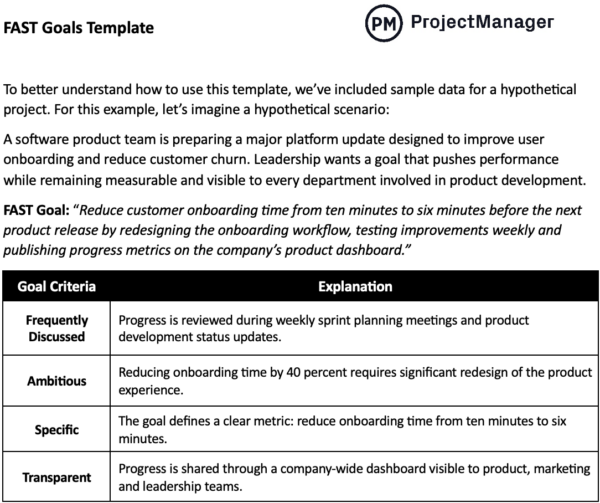
Modern organizations, especially technology companies and agile teams, commonly adopt this goal-setting strategy when working in fast-changing environments. FAST goals are particularly useful in product development, innovation initiatives and dynamic project planning contexts where priorities evolve quickly and teams need frequent feedback instead of rigid annual goal reviews.
- Encourages frequent progress reviews that keep goals visible and actively managed throughout project execution.
- Promotes transparency by making performance metrics and objectives visible across teams and departments.
- Supports ambitious thinking by encouraging teams to pursue challenging goals instead of conservative targets.
- Improves alignment because regularly discussed goals keep teams focused on shared priorities.
- Helps organizations adapt quickly when priorities shift during complex projects or evolving strategies.
11. GROW Model
The GROW model is a structured goal-setting strategy widely used in coaching and leadership development. The framework guides conversations through four stages: goal, reality, options and will. By examining the current situation and exploring possible actions before committing to a plan, teams and individuals develop clearer objectives and practical action steps.
Managers, mentors and coaches frequently use this goal-setting strategy during performance discussions and development planning sessions. It is especially common in leadership coaching, employee development programs and project retrospectives where teams evaluate current progress, identify improvement opportunities and define clear next steps for future work.
- Encourages structured thinking that helps teams move from vague ideas to clear objectives.
- Improves decision-making by examining the current situation before defining action plans.
- Promotes creative problem-solving by exploring multiple options before choosing a path forward.
- Strengthens accountability because individuals commit to specific actions during the final planning stage.
- Supports leadership development by teaching managers how to guide productive goal-setting conversations.
12. Golden Circle
Rather than starting with tasks or metrics, the Golden Circle is a goal-setting strategy that begins with purpose. Popularized by Simon Sinek, the framework organizes thinking into three layers: why, how and what. Teams first define the reason behind an objective, then determine the approach and finally the measurable outcomes that support the mission.
Organizations most often apply this goal-setting strategy during strategic planning, leadership alignment and brand development initiatives. Executives and founders use it to clarify purpose before defining strategic objectives. Marketing teams, product leaders and innovation groups also rely on the Golden Circle when shaping initiatives that must connect goals with mission.
- Strengthens motivation by linking project goals and strategic objectives to a clear organizational purpose.
- Helps teams prioritize initiatives that truly support the organization’s mission and long-term strategy.
- Improves communication because stakeholders understand the reasoning behind major project objectives.
- Encourages consistent decision-making by aligning daily work with a clearly defined organizational purpose.
- Creates stronger brand and leadership messaging by connecting goals with meaningful organizational values.
13. PACT Goals
Unlike traditional outcome-focused goal-setting strategies, PACT goals emphasize consistent action and progress. The acronym stands for purposeful, actionable, continuous and trackable. Instead of defining a single final target, this goal-setting strategy focuses on behaviors that move work forward over time, helping teams build sustainable momentum across long project timelines.
Professionals often use this goal-setting strategy when managing productivity systems, long-term projects or personal development plans. Because PACT goals prioritize ongoing actions rather than one-time results, they appear frequently in habit-building programs, performance improvement initiatives and project environments where consistent effort drives measurable progress.
- Encourages consistent progress by focusing on repeatable actions rather than one-time results.
- Helps teams maintain momentum throughout long project timelines and complex initiatives.
- Improves accountability because ongoing actions are easier to track and evaluate regularly.
- Supports sustainable performance by emphasizing steady effort instead of short bursts of activity.
- Creates measurable progress indicators that reveal whether consistent work is producing meaningful results.
14. Milestone Goal Setting
Large objectives often become manageable when teams break them into stages, which is exactly how milestone goal setting works as a goal-setting strategy. Instead of focusing only on the final outcome, this approach divides a project into key milestones that represent important progress points. Each milestone marks a measurable step toward completing the overall goal.
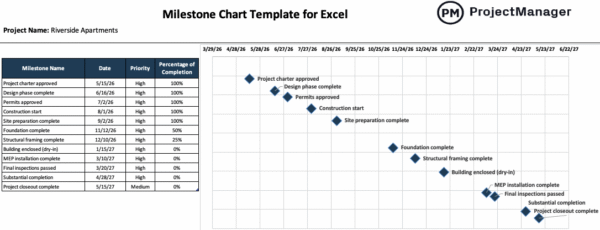
Project managers frequently rely on this goal-setting strategy when planning complex initiatives with multiple phases. Construction schedules, product development roadmaps and large operational projects commonly use milestone planning. By structuring goals around milestones, teams gain clearer visibility into project progress and can identify delays before they affect the final delivery date.
- Improves project visibility because milestones provide clear checkpoints within the overall project timeline.
- Helps teams manage complex initiatives by breaking large goals into achievable progress stages.
- Supports better schedule tracking since each milestone represents a measurable project achievement.
- Allows managers to detect delays early and adjust resources before deadlines are threatened.
- Creates stronger team motivation by celebrating progress as milestones are completed.
15. Outcome vs. Process Goals
Different types of objectives require different ways of measuring success, which is why outcome and process goals form a useful goal-setting strategy. Outcome goals focus on the final result, such as reaching revenue targets or completing a project milestone. Process goals concentrate on the actions and behaviors that drive progress toward those outcomes.
Sports coaches, performance managers and project leaders commonly use this goal-setting strategy when balancing results with daily execution. While outcome goals define the destination, process goals guide the behaviors needed to get there. Teams often apply this approach in performance improvement initiatives and operational projects where consistent actions influence measurable outcomes.
- Improves focus by separating controllable actions from final results that may depend on external factors.
- Helps teams maintain motivation because progress can be measured through daily execution habits.
- Encourages disciplined work routines that support long-term performance improvements.
- Reduces frustration when outcomes depend on variables beyond the team’s direct control.
- Strengthens project execution by linking measurable results with consistent operational behaviors.
ProjectManager Is an Award-Winning Project Management Software
ProjectManager offers robust project management features that are ideal for bringing goal-setting strategies to life, such as Gantt charts, task lists, workload management charts, timesheets and real-time dashboards and reports. In addition to that, it’s also equipped with AI project insights, online team collaboration features and unlimited file storage that further help project managers ensure nothing falls through the cracks. Watch the video to learn more!
If you need a tool to help you manage projects from start to finish, then sign up for our software now at ProjectManager. Our online software can help project managers plan, track and oversee projects as they unfold. Sign up for a free 30-day trial today!
