



Software development teams rarely struggle because of a lack of ideas. More often, confusion creeps in when priorities shift, delivery plans become blurry, releases pile up and everyone interprets “next” differently. That’s where roadmap planning becomes essential. Done right, it brings clarity to moving parts, aligns expectations and keeps software development and digital product management projects pointed in a deliberate direction.
What Is Roadmap Planning In Software Development?
Roadmap planning in software development is the structured process of deciding what a product or system will deliver, in what sequence and over what timeline. It connects business goals, customer needs and technical effort into a visible plan that teams can rally around. Rather than listing tasks, it highlights outcomes, major initiatives and release targets so developers, product managers and stakeholders understand where the product is headed and why.
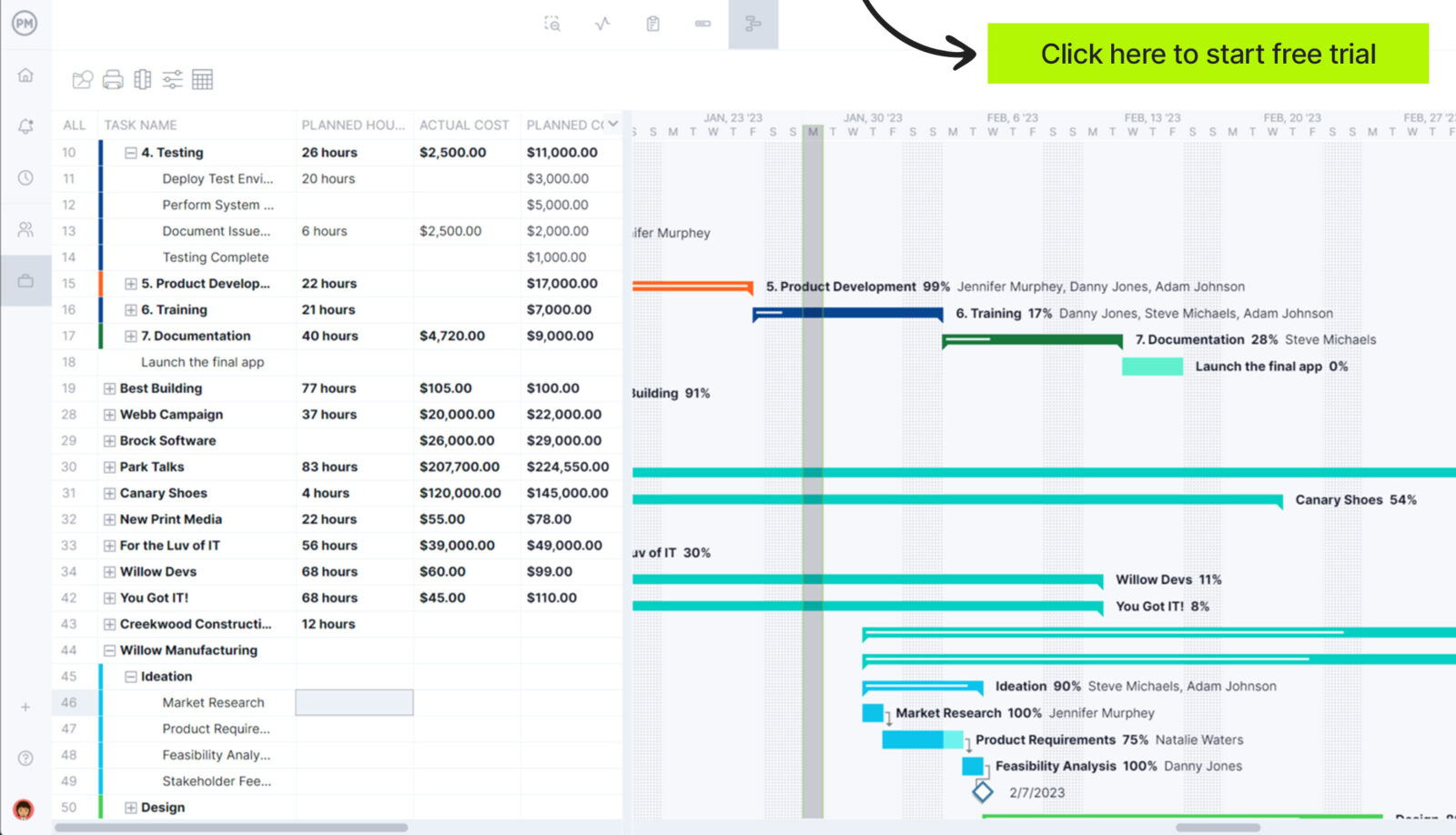
ProjectManager is an award-winning project portfolio management software that offers advanced planning, scheduling and tracking tools for software development, digital product management and IT teams, allowing them to create visual roadmaps for their delivery plans, allocate resources, track costs and manage waterfall and agile workflows. Additionally, ProjectManager integrates with Jira, Azure Devops and features an open API that facilitates integration with other software development tools. Get started for free today.
What Is the Purpose of Roadmap Planning In Software Development?
Across software development and digital product management teams, roadmap planning acts as a practical way to coordinate priorities and communicate direction. It’s used in a variety of scenarios such as, for example, when launching new products, scaling platforms, modernizing legacy systems or aligning multiple teams under shared goals.
Types of Roadmap Planning In Software Development
The definition of roadmap planning can be further divided into specific categories within the software development field.
Agile Roadmap Planning
Agile roadmap planning is the process of creating a flexible, high-level iterative project plan that outlines product goals, themes and anticipated releases while allowing for iterative adjustments. Instead of fixed long-term commitments, it emphasizes outcomes, evolving priorities and continuous feedback, aligning product strategy with sprint-based development cycles and incremental delivery.
Software development teams typically use this approach when:
- Launching a new SaaS product and releasing an MVP in phases while validating assumptions with early adopters.
- Running short sprint cycles to experiment with feature improvements and measure user engagement.
- Building a startup product where priorities shift quickly based on customer or investor feedback.
- Operating in a continuous delivery environment with frequent releases and evolving scope.
- Responding to competitive pressure that requires rapid reprioritization of features and timelines.
Product Roadmap Planning
Product roadmap planning is the structured approach to defining and sequencing product features, enhancements and releases over time. It aligns customer needs, business objectives and technical capacity into a visual timeline that communicates strategic direction to stakeholders while guiding development teams toward measurable product outcomes.
Product management teams rely on this type of roadmap planning in situations such as:
- Planning a major product expansion that introduces new modules or service tiers.
- Setting annual product strategy themes and organizing feature delivery across quarters.
- Coordinating multiple development teams working toward shared revenue or growth goals.
- Preparing for a market launch that requires tight alignment between product, marketing and sales.
- Balancing customer-requested enhancements against longer-term strategic initiatives.
Technology Roadmap Planning
Technology roadmap planning is the process of mapping the evolution of systems, platforms and technical capabilities to support long-term business strategy through IT projects. It identifies infrastructure upgrades, architecture changes and innovation initiatives over time, ensuring technology investments align with organizational goals, scalability requirements and emerging industry trends.
This roadmap planning style is common in projects like:
- Migrating from on-premise systems to cloud infrastructure over multiple rollout phases.
- Modernizing legacy platforms by transitioning to microservices or container-based architectures.
- Scaling backend systems to support projected increases in users or transaction volume.
- Introducing new technical capabilities such as AI-driven features or advanced analytics engines.
- Standardizing infrastructure and tooling after a merger or acquisition.
Get your free
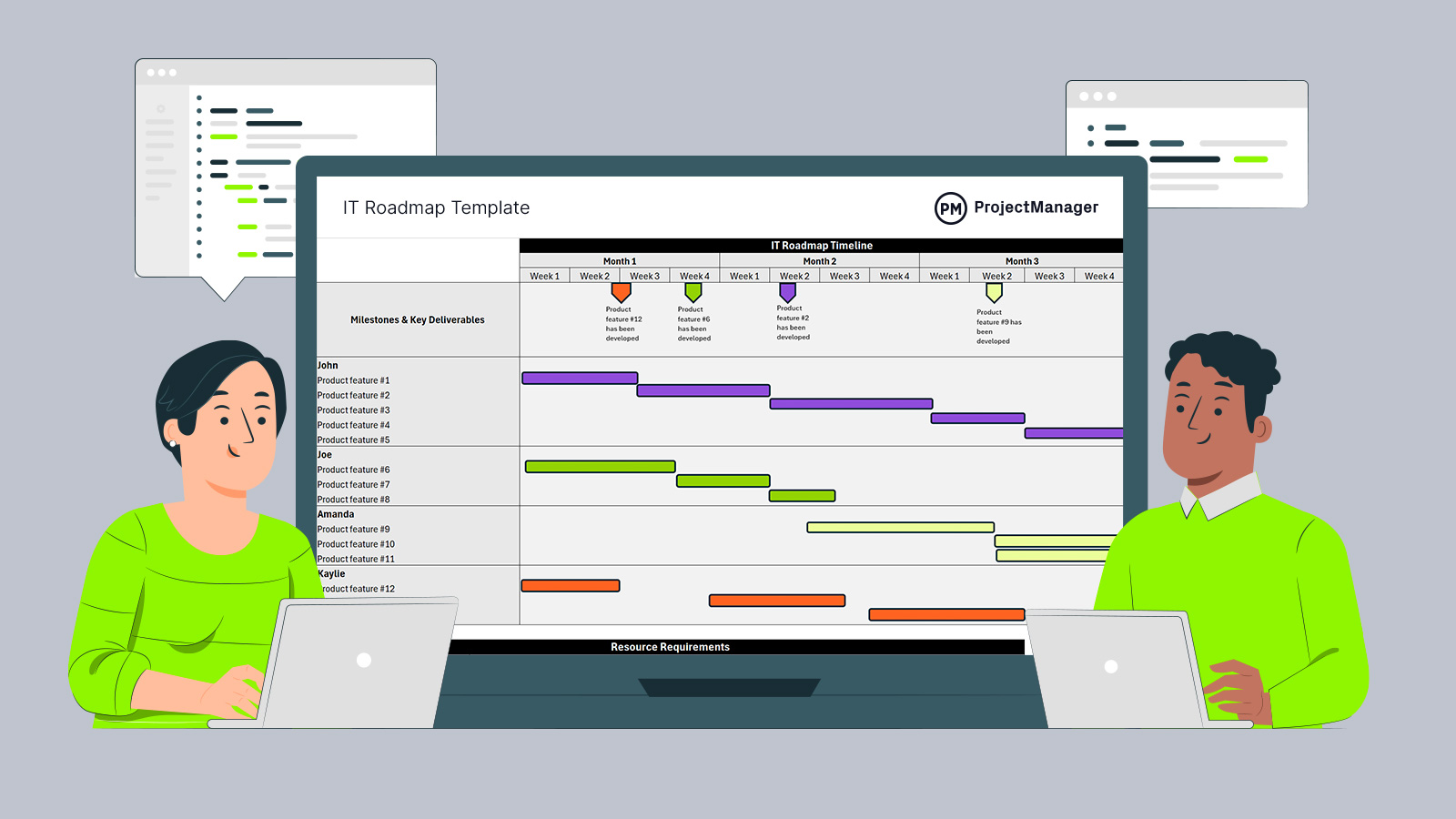
IT Roadmap Template
Use this free IT Roadmap Template to manage your projects better.
Get the template
Technical Roadmap Planning
Technical roadmap planning is the process of defining and sequencing engineering initiatives such as system improvements, refactoring efforts, integrations and architectural upgrades. It focuses on internal technical priorities rather than customer-facing features, ensuring platform stability, scalability and performance evolve in alignment with long-term product strategy.
In practice, software development teams apply this type of roadmap planning in scenarios such as:
- Reducing accumulated technical debt that is slowing delivery and increasing production defects.
- Executing a large-scale refactoring initiative to improve code quality and maintainability.
- Integrating enterprise systems or third-party APIs that require backend restructuring.
- Hardening security controls to meet new compliance or regulatory standards.
- Improving system reliability through performance optimization and infrastructure tuning.
Benefits of Roadmap Planning In Software Development
Now let’s zoom into 10 specific benefits software organizations can get from roadmap planning.
- Creates clear direction by outlining major initiatives and release targets so teams understand what they are building and why it matters.
- Improves prioritization by forcing trade-off discussions between features, technical improvements and capacity constraints before work begins.
- Aligns stakeholders by providing a shared visual plan that executives, product managers and engineers can reference during planning conversations.
- Reduces scope creep by defining planned outcomes and sequencing, making it easier to evaluate whether new requests should be included.
- Strengthens release predictability by connecting planned initiatives to realistic timelines and team capacity assumptions.
- Supports cross-team coordination by highlighting dependencies between features, systems and shared resources.
- Increases transparency by giving leadership visibility into progress, risks and upcoming delivery milestones.
- Enhances customer communication by offering a structured way to share upcoming improvements and expected release windows.
- Encourages long-term thinking by balancing immediate sprint work with broader product and platform goals.
- Improves resource allocation by helping managers match workload, staffing and budget decisions to strategic roadmap priorities.
What Should a Software Development Roadmap Include?
A strong software roadmap does more than display dates on a timeline. It connects strategy to execution by showing what the team is working toward, how work is grouped and when meaningful progress is expected. The elements below represent the core components that make a roadmap actionable and clear.
- Strategic themes: High-level focus areas that reflect business priorities and guide how initiatives support long-term product and company objectives.
- Initiatives: Broad bodies of work that deliver measurable outcomes, often spanning multiple teams and tying directly to strategic themes.
- Epics or feature groups: Large units of development work that break initiatives into manageable deliverables organized around functional capabilities.
- Release windows: Time frames during which planned features or improvements are expected to be delivered to customers.
- Milestones: Significant checkpoints that mark meaningful progress, such as major releases, beta launches or compliance approvals.
- Dependencies: Relationships between initiatives or systems that determine sequencing and influence when work can realistically begin or finish.
- Assumptions: Documented expectations about scope, capacity, market conditions or technical feasibility that influence roadmap decisions.
How to Create a Roadmap in Software Development
Building a roadmap requires more than listing features on a timeline. It’s a structured process that connects strategy, customer needs and delivery capacity into a realistic plan. The steps below outline how software teams move from high-level goals to a sequenced roadmap that supports predictable releases and measurable outcomes.
1. Define product vision and strategic objectives
Start by clarifying what the product is meant to achieve and how it supports business goals. Product managers work with leadership to define measurable objectives, target outcomes and success criteria. Without a clear vision, roadmap decisions become reactive. This step anchors future prioritization in strategy rather than short-term pressure.
At this stage, teams often need supporting research before finalizing direction. AI-based Solve features can help by researching product, GTM, pricing, market validation, or business strategy questions and turning the findings into a structured recommendation.
2. Gather and prioritize initiatives
Next, collect potential initiatives from customer feedback, internal stakeholders, technical teams and market research. Evaluate each idea based on impact, effort and alignment with strategic objectives. Prioritization discussions should focus on value and feasibility, ensuring the roadmap reflects meaningful outcomes rather than a simple list of feature requests.
3. Identify dependencies and constraints
Before assigning dates, teams review technical dependencies, integration requirements and resource constraints. Some initiatives may rely on platform upgrades or external vendors. Recognizing these factors early prevents unrealistic commitments. This step helps sequence work logically and reduces the risk of delays caused by overlooked technical limitations.
4. Estimate capacity and timelines
With priorities clarified, engineering leaders assess team capacity, historical velocity and upcoming workload. Rough timeline estimates are developed based on available resources and known complexity. The goal is not perfect precision but realistic forecasting. Aligning planned work with actual capacity improves delivery predictability and protects against overcommitment.
5. Sequence initiatives into releases
Finally, initiatives are grouped into release targets or time-based increments. Teams consider dependencies, capacity and business milestones when determining order. The roadmap should communicate clear phases without locking into rigid detail. Once sequenced, the roadmap becomes a living plan that guides execution while allowing thoughtful adjustments over time.
6. Validate with stakeholders
Before finalizing the roadmap, product managers review it with engineering leaders, executives and key stakeholders. These conversations test assumptions, confirm strategic alignment and surface overlooked risks. Validation ensures priorities reflect real business needs and delivery realities. It also builds shared ownership, reducing friction when trade-offs inevitably arise.
7. Publish and communicate the roadmap
Once validated, the roadmap should be shared in a clear, accessible format. Product leaders walk teams and stakeholders through goals, sequencing and expected release windows. Effective communication focuses on intent and outcomes, not just dates. Transparency builds trust and sets realistic expectations about what will be delivered and when.
8. Review and update regularly
Roadmaps are not static documents. Market shifts, customer feedback and technical discoveries require adjustments over time. Teams revisit the roadmap on a regular cadence to reassess priorities, capacity and timelines. Updating it thoughtfully ensures plans stay relevant while maintaining strategic direction and delivery discipline.
Who Is Responsible for Roadmap Planning In Software Development?
Inside most software companies, the product manager carries ultimate accountability for roadmap planning and for how accurate, realistic and strategically aligned the roadmap is. Although planning is collaborative, this role owns prioritization decisions, reconciles competing inputs, validates assumptions and ensures the roadmap reflects customer needs, business goals and actual delivery capacity.
- Product Manager: Defines product direction, gathers stakeholder input, prioritizes initiatives based on business value and customer impact and ultimately decides what makes it onto the roadmap and what gets deferred.
- Engineering Manager: Evaluates technical feasibility, estimates complexity, identifies architectural constraints and confirms whether proposed initiatives align with team capacity and long-term technical strategy.
- Project or Delivery Manager: Converts roadmap themes into realistic timelines, manages cross-team dependencies, monitors sequencing risks and ensures execution plans support the intended release schedule.
- UX or Product Design Lead: Brings user research insights into planning discussions, validates problem definitions and ensures upcoming initiatives meaningfully improve usability and overall product experience.
- Executive Sponsor (VP of Product or CTO): Reviews roadmap direction, challenges assumptions and confirms alignment with company strategy, growth targets and organizational priorities.
Roadmap Planning Tools for Software Development Teams
Software development teams rely on specialized tools to plan, visualize and share roadmaps that connect work to delivery timelines and strategic goals.
Jira
Jira is a widely used roadmap planning tool because it combines backlog management with planning views that span teams and projects. Using Jira Plans (Advanced Roadmaps), teams can schedule work over time, map dependencies and explore different scenarios while keeping the roadmap tied to real Jira work items. This keeps roadmap planning closely linked to execution.
- Plans (Advanced Roadmaps): Build a single roadmap that spans multiple projects and teams using a shared planning view.
- Scheduling and timeline planning: Place epics and higher-level work on a timeline to communicate target windows and sequencing.
- Dependency mapping: Visualize dependencies between work items to spot sequencing conflicts and blockers.
- Capacity allocation: Allocate team capacity in the plan so timelines reflect delivery constraints, not just wishful dates.
- Scenario modeling: Compare plan scenarios to understand tradeoffs when scope, dates or staffing changes.
- Jira Product Discovery connection: Use product discovery ideas as a field in plans, link ideas to delivery work and group roadmap items by ideas.
Microsoft Azure DevOps
Microsoft Azure DevOps supports roadmap planning through Delivery Plans in Azure Boards. Delivery Plans provides a calendar-style view that pulls work items from multiple team backlogs, making it easier to coordinate delivery schedules, review upcoming work and keep stakeholders aligned within the DevOps ecosystem.
- Calendar view across teams: Visualize work items scheduled over time from multiple team backlogs in one plan.
- Multi-team aggregation: Include up to 20 team backlogs in a single delivery plan to coordinate cross-team work.
- Work items spanning iterations: Show backlog items across several iterations to understand timing across sprint boundaries.
- Drag-and-drop date changes: Reset start and target dates directly in the plan to reflect updated delivery timelines.
- Edit items from the plan: Add or edit backlog items directly from the delivery plan view.
- Rollup progress: View rollup progress for Features and Epics to get a high-level status view.
- Dependency visibility: View dependencies between work items to highlight sequencing and potential blockers.
- Stakeholder viewing: Share delivery plans so stakeholders can review roadmap timing without changing the plan.
ProjectManager
ProjectManager approaches roadmap planning for software development teams through a full project portfolio management (PPM) lens. Instead of limiting teams to backlog sequencing, it allows software organizations to build portfolio-level roadmaps, monitor project performance in real time and manage resources, budgets and timelines together. This broader visibility helps software development and digital product management teams align delivery plans with capacity, financial constraints and strategic priorities across multiple initiatives.


Additionally, ProjectManager integrates with over 1000 business and project management apps including Jira and Azure Devops and features an open API that facilitates integration with other software development tools.
- Portfolio roadmap view: ProjectManager lets teams visualize multiple projects on a single portfolio roadmap, showing timelines, milestones and dependencies so leaders can see how initiatives align with broader strategic objectives.
- Project and portfolio dashboards: Real-time dashboards provide instant visibility into progress, schedule health, workload distribution and budget performance at both the individual project and portfolio level.
- Resource management and workload charts: Built-in workload management tools allow managers to balance assignments across teams, prevent overallocation and adjust staffing plans directly based on roadmap priorities.
- Cost tracking and budget monitoring: As hours are logged and tasks progress, actual costs are tracked against planned budgets, giving roadmap planning financial visibility that development-only tools typically lack.
- Integrated timesheets: Team members submit timesheets that feed into performance dashboards and reports, ensuring roadmap decisions are grounded in real effort data rather than estimates alone.
- Multiple execution views: Teams can switch between Gantt charts, kanban boards, task lists and calendars, allowing roadmap plans to connect seamlessly with day-to-day execution workflows.
- Advanced PPM reporting: Portfolio-level reporting and analytics help executives evaluate roadmap performance, forecast resource capacity and identify risks across all active software initiatives.
Watch the video below to learn more!
Free Related Software Development Templates
We’ve created over 100 free project management templates for teams across industries. Here are some ProjectManager templates that can help with roadmap planning in software development.
Agile Sprint Plan Template
This agile sprint plan template helps software teams plan and manage sprint work by moving prioritized user stories from the product backlog into active development stages using a kanban-style board. Teams can assign owners, set due dates, define priorities, break stories into subtasks and track sprint progress in real time while keeping work aligned with iteration goals.
Product Roadmap Template
This product roadmap template helps software teams visualize upcoming features, releases and strategic initiatives on a timeline. It allows teams to map dependencies, define milestones, identify sequencing risks and track high-level progress so stakeholders can see how product strategy connects to engineering execution and planned delivery windows.
