



What Is Job Planning?
Job planning is a structured process used to define, organize and prepare the work required to complete a specific job. It is commonly used in operations-driven environments to break down tasks, assign resources and establish a clear sequence of work before execution begins. Job planning is one of the most important parts of the larger job management process.
By outlining what needs to happen and in what order, teams reduce delays, avoid rework and improve coordination across people, materials and equipment. A well-planned job creates predictability, making it easier to control timelines, manage costs and respond to changes without disrupting progress.
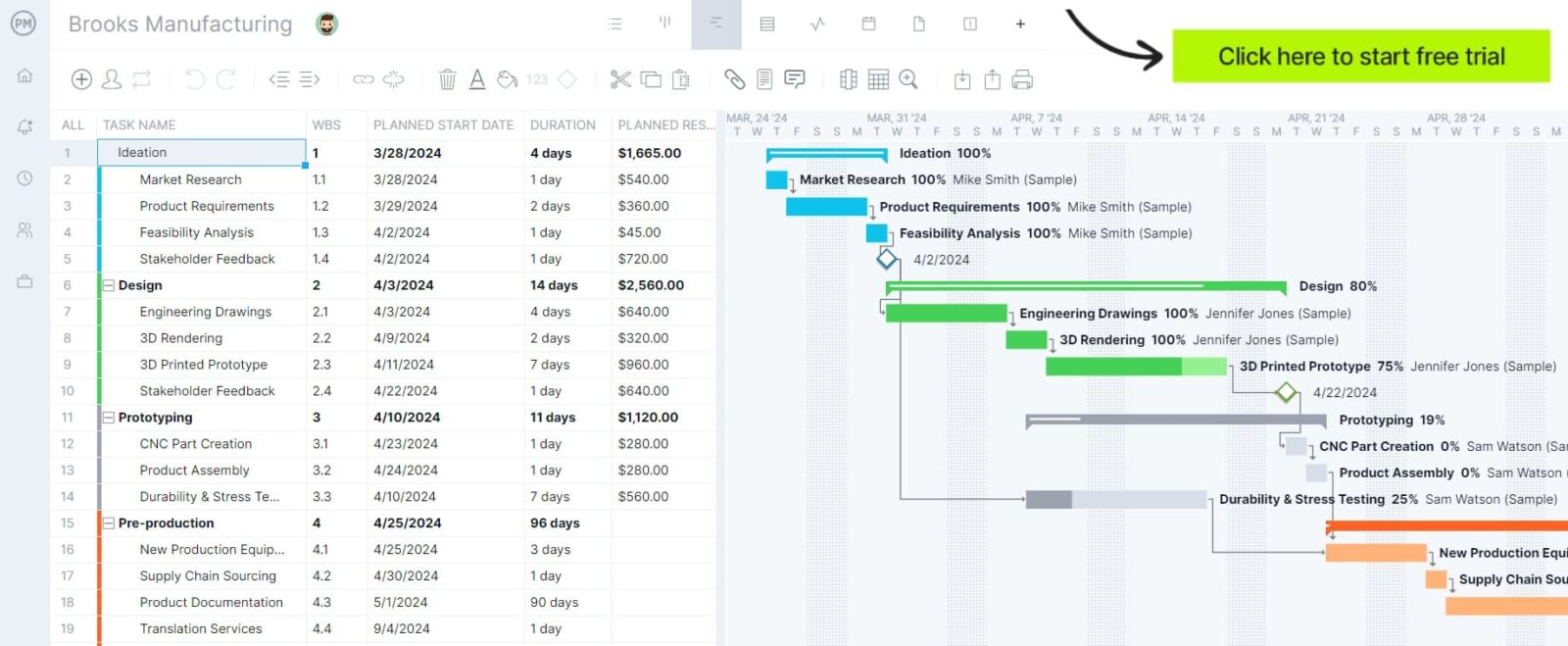
ProjectManager is an award-winning project management software that helps teams across industries plan, schedule and track work from start to finish. Create detailed job plans, manage resources, monitor costs and compare planned versus actual performance with a full suite of powerful tools including Gantt charts, kanban boards, real-time dashboards and much more. Get started for free today.
What Is a Job Plan?
A job plan is a detailed document that outlines the tasks, resources and steps required to complete a specific job. It is commonly used by teams to guide execution, ensuring that work is performed consistently, safely and according to defined requirements.
Instead of relying on verbal instructions or assumptions, a job plan provides a clear reference for what needs to be done, who is responsible and how the work should be carried out. This level of detail helps standardize processes, improve accountability and reduce the risk of errors during execution.
What Industries Use Job Planning?
Any environment where work is delivered through defined tasks and repeatable processes benefits from job planning. Industries that rely on coordination between teams, equipment and materials use it to control execution, minimize downtime and maintain consistent output across different types of jobs.
Construction Job Planning
On a construction project, multiple crews, trades and dependencies must align to keep work moving. Job planning ensures that materials arrive on time, equipment is available and tasks are sequenced correctly. Without it, delays cascade quickly, causing idle labor and cost overruns that are difficult to recover from once the schedule slips.
Manufacturing Job Planning
Inside a production planning environment, every job must fit into a broader workflow that includes machines, labor and inventory. Job planning defines how each task moves through the process, preventing bottlenecks and idle time. Clear plans also help maintain consistent output, reduce waste and ensure that production targets are met without disrupting operations.
IT and Software Development Job Planning
In software environments, work often depends on dependencies, handoffs and iterative development cycles. Job planning helps teams break down features into actionable tasks, assign responsibilities and coordinate releases. Without clear planning, teams risk misalignment, missed deadlines and rework caused by unclear requirements or poorly sequenced development efforts.
Maintenance and Field Service Job Planning
When maintaining equipment or responding to service requests, timing and preparation are critical. Job planning ensures technicians have the right tools, parts and instructions before arriving on-site. This reduces repeat visits, shortens downtime and improves service quality by allowing work to be completed efficiently in a single, well-coordinated effort.
Get your free
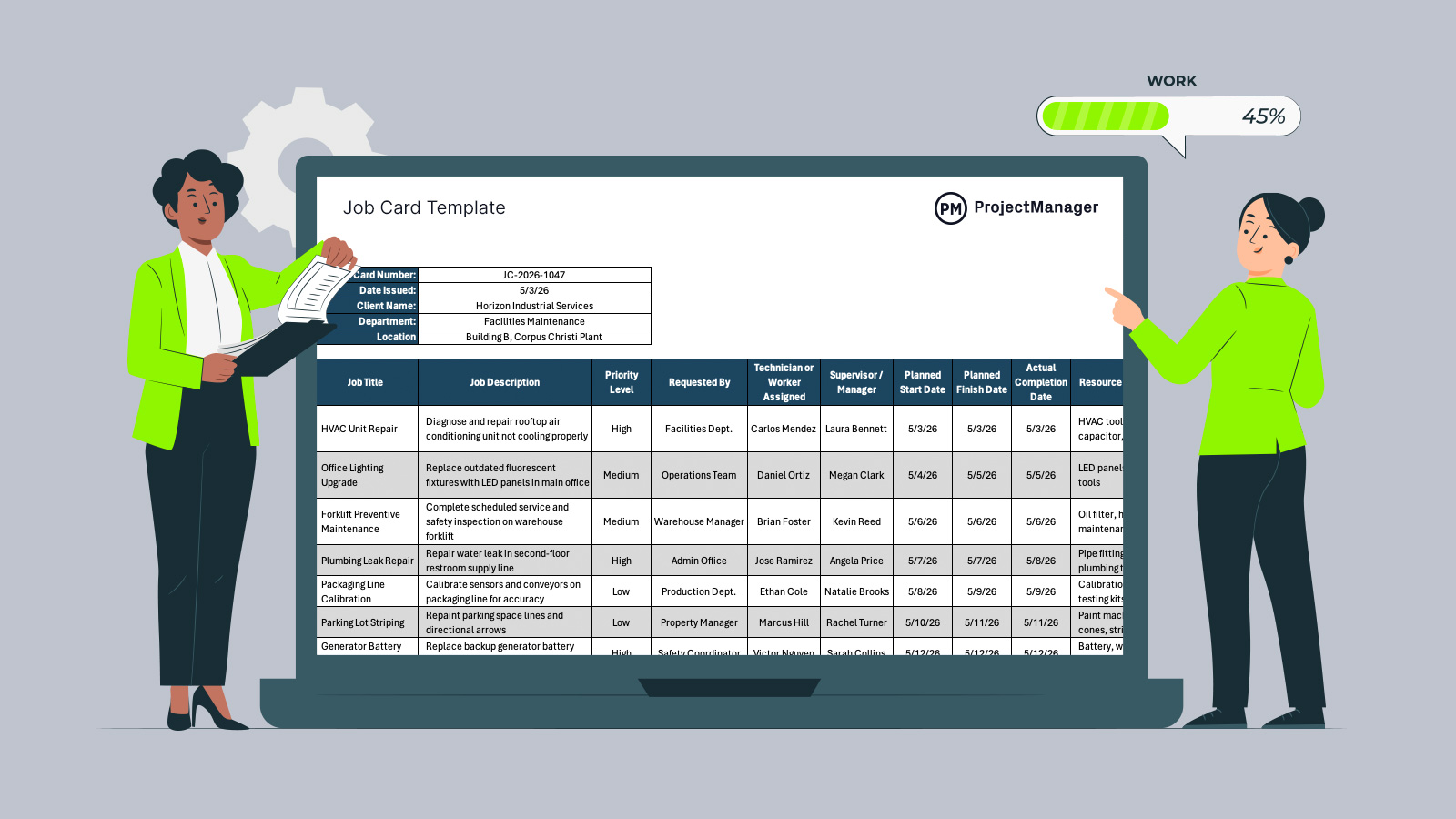
Job Card Template
Use this free Job Card Template for Excel to manage your projects better.
Why Job Planning Matters
Across industries where work is executed through defined tasks, job planning acts as the backbone of reliable operations. Whether coordinating crews, managing production runs or dispatching service teams, it brings structure to how work gets done. Without it, delays, cost overruns and inconsistent outcomes become far more likely, especially when multiple variables must align.
- Effective job planning reduces downtime by ensuring labor, materials and equipment are aligned before work begins, preventing crews or machines from sitting idle while waiting for missing inputs.
- Clear planning improves cost control by defining resource requirements upfront, helping teams avoid unnecessary spending, rushed procurement and inefficient allocation of labor and materials.
- Well-structured job planning increases productivity by giving teams a clear sequence of tasks, minimizing confusion and enabling faster execution without constant supervision or clarification.
- Consistent planning strengthens quality outcomes by standardizing how work is performed, reducing variability and ensuring that each job meets expected specifications and performance requirements.
- Accurate job planning enhances scheduling reliability by identifying dependencies early, allowing teams to sequence tasks properly and avoid disruptions that can ripple across operations.
- Strong planning improves communication by creating a shared reference point, ensuring everyone involved understands responsibilities, timelines and expectations before execution starts.
- Detailed job planning reduces risk by identifying potential issues in advance, allowing teams to prepare contingencies and avoid safety incidents, delays or operational failures during execution.
What Should Be Included in a Job Plan?
A strong job plan mirrors how work is actually prepared and executed, capturing decisions made during planning and translating them into clear, actionable elements. Each component should connect directly to how teams define objectives, scope the work, coordinate execution and measure performance once the job is underway.
- Goals and Objectives: Establishes the primary outcome the job must achieve along with supporting objectives that guide execution, including defined KPIs and success metrics used to evaluate quality, performance and completion results.
- Scope of Work: A scope of work is a document that defines what work is included and excluded, providing a structured outline of tasks that must be completed so teams clearly understand expectations before execution begins.
- Task Dependencies: Relationships between tasks, including finish-to-start, start-to-start, finish-to-finish and start-to-finish task dependencies, ensuring work is sequenced correctly to avoid delays and conflicts.
- Deliverables: Specifies the tangible outputs produced during or after the job, defining what must be completed and handed off at different stages of execution.
- Milestones: Marks key checkpoints in the job plan timeline, allowing teams to track progress, validate completion of major phases and maintain alignment with planned deadlines.
- Team and Roles: Defines the individuals or crews responsible for executing tasks, ensuring the right skills are assigned and accountability is clearly established across all activities.
- Stakeholder Requirements: Documents internal and external stakeholders, their expectations, level of influence and interest, ensuring that the job aligns with their needs and success criteria.
- Execution Timeline: Establishes task durations, sequencing and overall job schedule, providing a clear roadmap for when work should start, progress and be completed.
- Risk Identification and Mitigation Plan: Highlights potential risks that could impact execution and defines proactive measures to reduce or eliminate those risks before they affect the job.
- Resource Allocation: Identifies the labor, equipment, tools and materials required for each task, ensuring availability and proper distribution across the job.
- Cost Estimates: Breaks down expected expenses related to resources, allowing teams to plan budgets and compare actual costs during execution.
Job Plan Example
Imagine a team preparing a job plan to install and commission a new piece of equipment at an operational site. The work must be completed within a fixed timeframe, with minimal disruption to ongoing operations. Below is how key components of a job plan might be documented using realistic, structured sample data.
Job Plan Goals and Objectives
| Goal | Objective | Target Outcome |
| Install equipment successfully | Complete installation within 5 days | On-time completion |
| Ensure system performance | Achieve full operational capacity | 100% performance output |
| Maintain safety standards | Zero incidents during execution | Full compliance with safety protocols |
Job Plan Scope of Work
| Task | Dependency Type | Predecessor | Deliverable | Milestone |
| Site preparation | – | – | Prepared work area | Site ready |
| Equipment delivery | Finish-to-Start | Site preparation | Equipment on-site | Delivery completed |
| Equipment installation | Finish-to-Start | Equipment delivery | Installed equipment | Installation complete |
| System testing | Finish-to-Start | Equipment installation | Test results report | Testing approved |
| Final commissioning | Finish-to-Start | System testing | Operational system | Project complete |
Team Roles and Responsibilities
| Team Member | Role | Responsibility | Skill Set |
| J. Ramirez | Project lead | Oversee execution and coordination | Project management |
| S. Patel | Technician | Perform installation tasks | Mechanical systems |
| A. Nguyen | Electrician | Handle wiring and connections | Electrical systems |
| M. Torres | QA inspector | Validate testing and compliance | Quality assurance |
Job Schedule
| Task | Start Date | End Date | Duration (Days) |
| Site preparation | 06/01/26 | 06/01/26 | 1 |
| Equipment delivery | 06/02/26 | 06/02/26 | 1 |
| Equipment installation | 06/03/26 | 06/04/26 | 2 |
| System testing | 06/05/26 | 06/05/26 | 1 |
| Final commissioning | 06/06/26 | 06/06/26 | 1 |
Job Plan Resource Requirements
| Task | Resource Type | Resource Name | Quantity | Unit Cost | Total Cost |
| Equipment installation | Labor | Technicians | 2 | $300/day | $600 |
| Equipment installation | Equipment | Lifting crane | 1 | $500/day | $500 |
| Electrical setup | Labor | Electrician | 1 | $350/day | $350 |
| System testing | Tools | Testing kit | 1 | $150 | $150 |
| All tasks | Materials | Cables and fittings | – | $400 | $400 |
Job Planning Process: How to Make a Job Plan
Turning a job plan into something teams can actually execute requires a structured approach. Each step builds on the previous one, moving from defining outcomes to organizing work, assigning people and preparing for execution without gaps, confusion or unnecessary risk.
1. Define the Goals and Objectives for the Job Plan
Every job plan starts by identifying the primary outcome the work must achieve. That goal sets direction, but it is not enough on its own. Teams also need to define supporting objectives that break that outcome into measurable targets. These objectives clarify what success looks like across quality, timing and performance. Once both levels are established, KPIs and success metrics must be defined to track progress. With these elements in place, teams can evaluate whether the job was executed effectively or fell short.
2. Define the Scope of the Job Plan
With clear goals in place, the next step is to define the scope of work that will achieve them. This means outlining exactly what tasks are included, what deliverables must be produced and what is intentionally excluded. A well-defined scope also identifies task dependencies, key milestones and logical sequencing so work can flow without disruption. By structuring the job at this level, teams gain clarity on execution while avoiding scope creep, confusion and misalignment once the work begins.
4. Assemble a Team
After the scope of work is fully defined, attention shifts to selecting the right people to execute it. Each role should align with the skills required by the tasks outlined in the job plan. Building a capable team at this stage ensures that work can be carried out efficiently, without delays caused by missing expertise or unclear responsibilities.
5. Identify Key Stakeholders
Every job plan involves stakeholders who influence outcomes or are affected by the results. These can include internal teams, clients, suppliers or leadership. Identifying them early allows teams to understand their level of interest, decision-making power and expectations. Beyond delivering on time and within budget, success is often measured by how well the job meets stakeholder needs. Managing communication and aligning execution with those expectations reduces friction, avoids rework and increases overall satisfaction with the final outcome.
5. Create a Job Schedule
Once the structure of the work is clear, a job schedule can be developed to map out when each task will be performed. A job schedule defines task durations, sequencing and timing, allowing teams to coordinate activities, manage dependencies and ensure that the job progresses in a controlled and predictable manner.

6. Identify Risks and Make a Risk Mitigation Plan
No job plan is free from uncertainty, and even well-prepared work can face unexpected disruptions. Risks may affect scope, schedule, costs or quality, so identifying them early is critical.
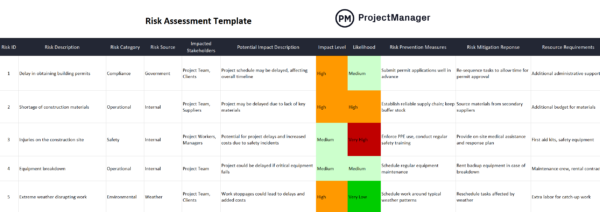
Teams should use a risk register to log all potential risks, evaluate their impact and likelihood and define mitigation strategies to reduce exposure. Planning for risks in advance allows teams to respond quickly when problems arise, minimizing delays and preventing small issues from escalating into major disruptions during execution.
7. Assign Resources for the Completion of Tasks
With tasks defined and sequenced, resources must be assigned to ensure work can be executed. This includes human resources such as technicians, operators or engineers, as well as non-human resources like materials, equipment and tools. Proper allocation ensures that each task has what it needs when it needs it.
8. Estimate Resource Costs
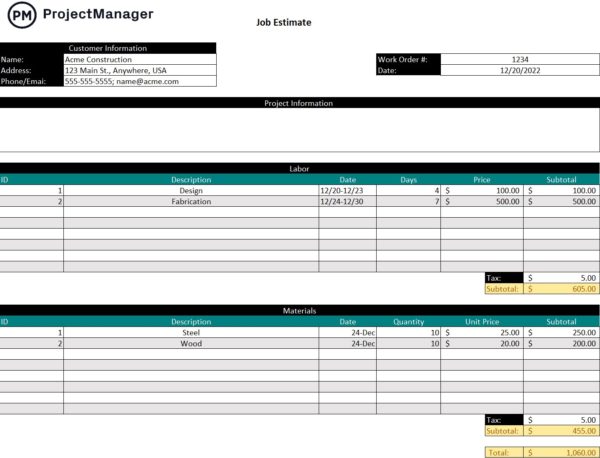
After identifying required resources, teams can estimate the costs associated with labor, materials and equipment. These estimates form the basis of the job budget and help guide financial planning. Because actual costs often vary, it is important to track spending throughout execution and compare it against initial estimates.
9. Monitor Progress, Costs and Timelines
Even the most detailed job planning cannot eliminate all variability during execution. Progress, job costs and timelines must be continuously monitored to detect deviations early. Tracking performance allows teams to identify delays, cost overruns or emerging issues and take corrective action before they significantly impact the job.
What Tools Can Be Used for Making a Job Plan?
Choosing the right tools makes job planning easier to structure, visualize and manage. Different tools serve different purposes, from sequencing tasks to tracking execution, and are often used together to give teams full control over planning and delivery.
Gantt Charts
When sequencing tasks and managing timelines, Gantt charts provide a clear visual representation of the job plan. They show task durations, dependencies and milestones across a timeline, making it easier to coordinate activities and adjust schedules when needed. This level of visibility helps teams prevent delays and maintain control over execution from start to finish.

Kanban Boards
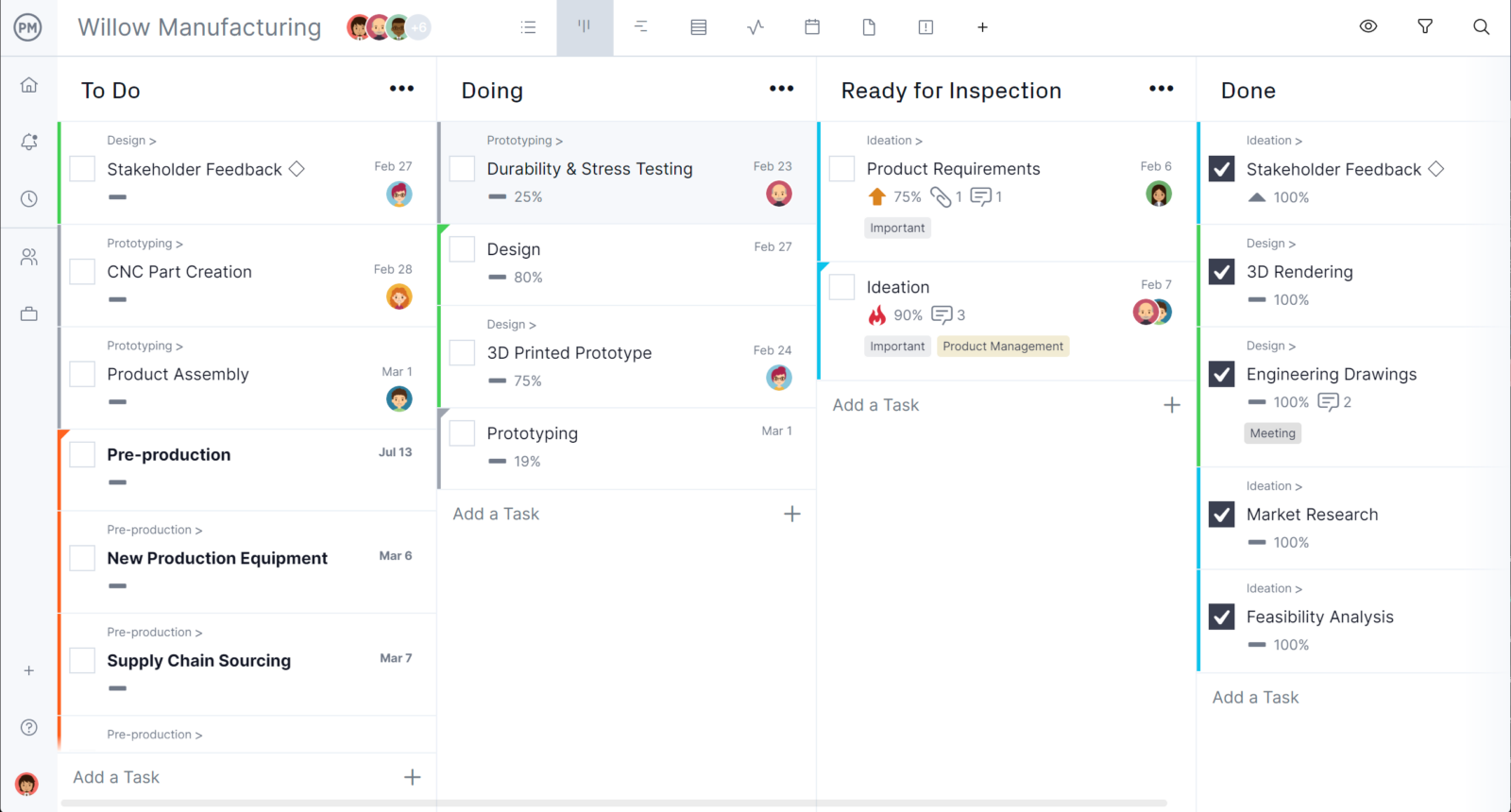
For teams focused on workflow management, Kanban boards offer a simple way to track tasks as they move through different stages of execution. Tasks are organized into columns that reflect progress, helping teams identify bottlenecks and manage workloads. This approach keeps work flowing efficiently and provides real-time visibility into the status of each task.
Task Lists
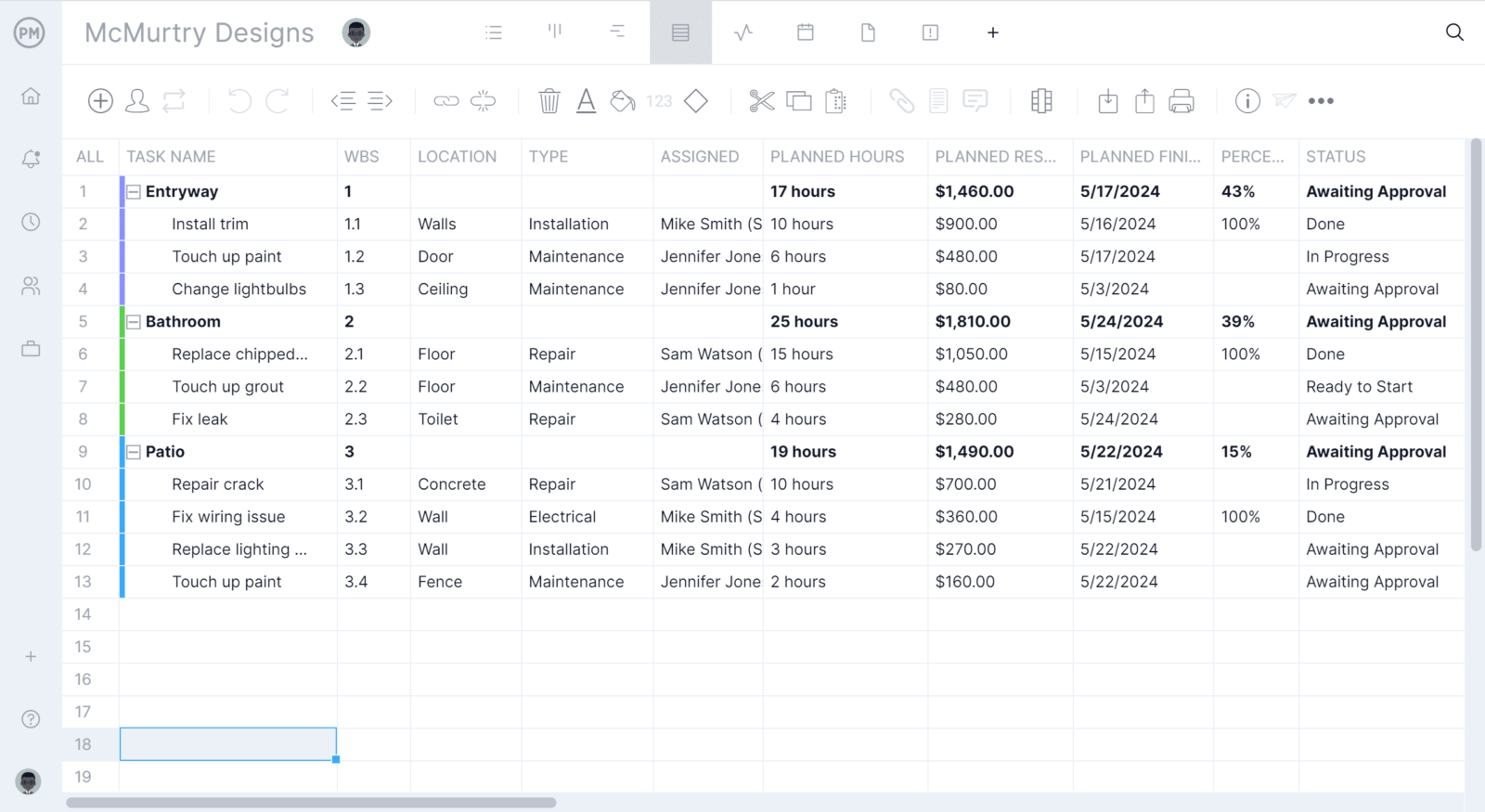
At a more granular level, task lists help break down the job plan into actionable items that can be assigned and tracked individually. Each task includes details such as responsibilities, deadlines and status, ensuring accountability across the team. This structure supports day-to-day execution by keeping everyone aligned on what needs to be done next.
Free Job Planning Templates
We’ve created over 100 free project management templates for Excel, Word and Google Sheets. Here are some that can help with job planning.
Job Card Template
A job card template captures task details, assigned personnel, materials used and work instructions, helping teams standardize execution, track progress and maintain clear documentation for each job performed.
Gantt Chart Template
A Gantt chart template helps teams plan job schedules by mapping tasks, durations and dependencies on a timeline, making it easier to coordinate work, track progress and manage deadlines.
Kanban Board Template
A Kanban board template organizes tasks into visual workflow stages, allowing teams to track progress, manage workloads and identify bottlenecks while maintaining continuous flow throughout job execution.
ProjectManager Is a Robust Job Planning Software
ProjectManager is an online project management solution that provides a complete set of job planning, scheduling and tracking tools, including Gantt charts, kanban boards, task lists and real-time dashboards and reports. With these features, teams across industries can build detailed job schedules, assign resources and monitor progress, costs and timelines.
ProjectManager also delivers AI-powered project insights to support better decision-making and connects with over 100 tools like Microsoft Project, Acumatica and Power BI. With its open API and wide range of integrations, organizations can seamlessly link ProjectManager to their existing systems. Watch the video below to learn more!
Related Job Management Content
- How to Make a Job Cost Report for Construction
- What Is Job Costing? How to Make a Job Cost Sheet (Example Included)
- Job Scheduling 101: Making a Job Schedule
- Job Management: Phases, Tools & Documentation
- 10 Best Job Tracking Software of 2026 (Free & Paid)
- Job Card Template
- Job Estimate Template
If you need a tool to help you manage projects, then signup for our software now at ProjectManager. Our online software helps teams across industries plan, track and oversee projects as they unfold. Sign up for a free 30-day trial today!
