



Before a shovel hits the ground, UK construction projects rely on a cost plan to keep design ambition aligned with financial reality. Through disciplined cost planning, clients and teams gain clarity, manage risk and make informed decisions as proposals evolve.
What Is Cost Planning in Construction?
Cost planning in construction is a structured process used to forecast, monitor and control project costs as design develops. Led by quantity surveyors, it aligns scope, quality and budget through iterative estimates, risk allowances and benchmarking, ensuring the client’s financial objectives remain achievable from early concept through pre-tender stages while supporting informed decisions and disciplined cost control throughout design development. The main objective of the construction cost planning process is to make a cost plan, a document that guides the cost planning efforts of a construction project.
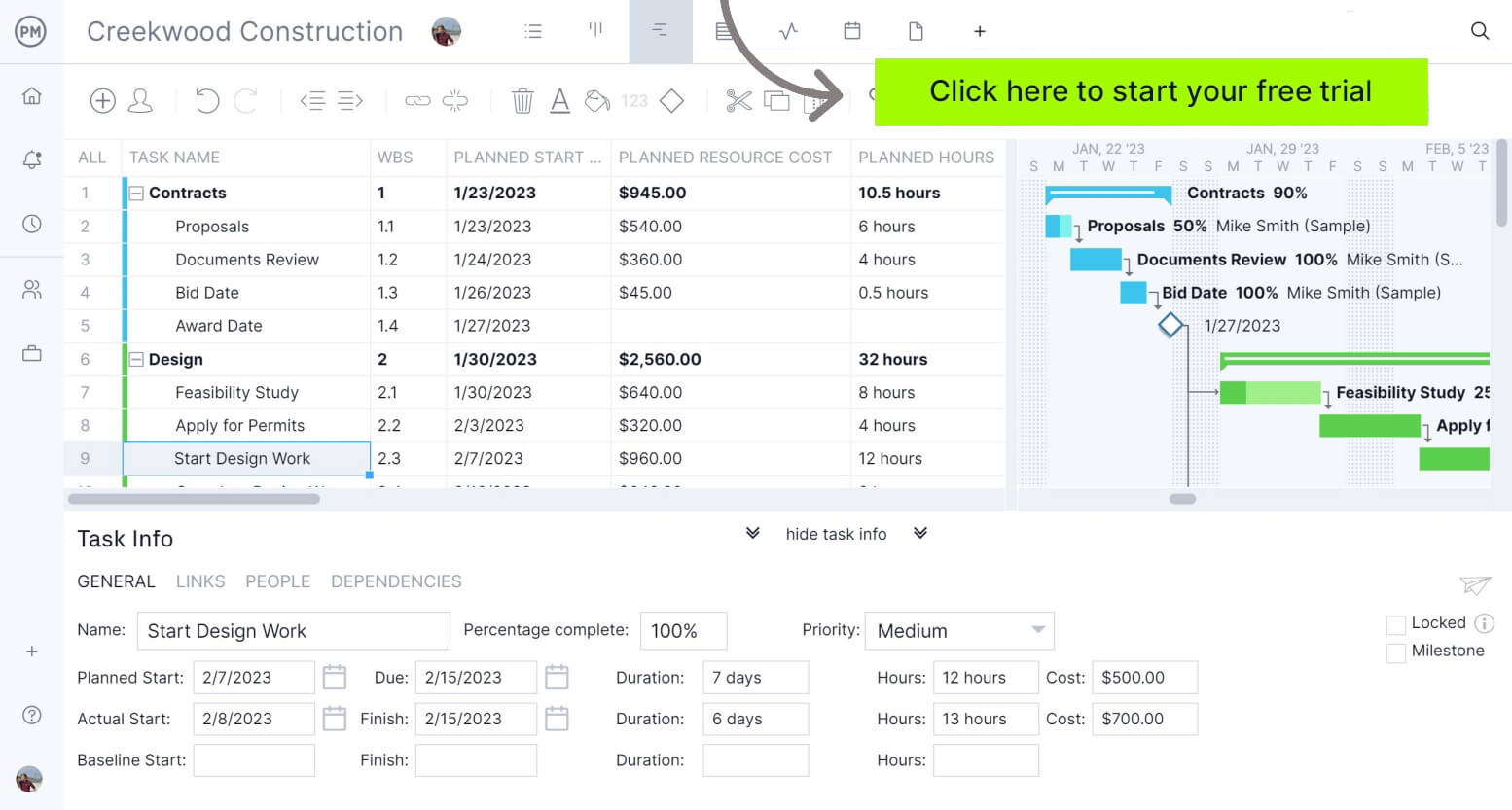
ProjectManager simplifies cost planning in construction by providing built-in resource management tools. For example, teams can utilize planned versus actual data on the Gantt chart to determine how the project is evolving and whether additional resources are needed. Other resource management tools include timesheets, workload charts, a team page and more. Get started by taking a free 30-day trial.
What Is a Cost Plan in Construction?
A cost plan in construction is a formal pre-contract document that sets out the anticipated cost of a project based on the developing design. Typically prepared in elemental format, it establishes the approved budget, identifies allowances and risks and provides a financial framework against which design changes are assessed before tender during controlled stages of design development and cost reconciliation.
When to Make a Cost Plan
Cost plans are typically prepared early in design, once the project brief is defined and initial layouts exist.
In UK construction, this usually aligns with RIBA Stage 2, when sufficient information allows elemental costs, risks and allowances to be established before design commitments become fixed and formally reviewed before progressing toward detailed technical design decisions and procurement strategy alignment.
- Following the initial issue, the cost plan is reviewed as design options are tested, ensuring scope changes, specification upgrades or layout revisions remain affordable and consistent with the approved budget before progressing to the next RIBA stage and client cost expectations.
- During detailed design development, amendments are made to reflect increased certainty, refined quantities and updated unit rates, allowing risks and provisional allowances to be reduced while confirming the project remains deliverable within the agreed construction cost limit and client approval.
- Before tender, the cost plan is reconciled against the frozen design, acting as the financial benchmark for tender returns and highlighting variances between contractor pricing, allowances and the pre-tender estimate before procurement decisions are finalised by the client team.
- Throughout construction planning discussions, cost plans support value engineering exercises by testing alternative materials, systems or construction methods against cost, risk and programme implications without compromising the client’s agreed quality objectives and long-term operational performance requirements or statutory compliance obligations.
- At key client approval gateways, updated cost plans are used to confirm affordability, release design development funding and demonstrate continued budgetary control to funders, stakeholders and governance bodies before committing to subsequent project stages within the agreed commercial strategy framework.
How to Make a Construction Cost Plan
Creating a construction cost plan is an iterative, decision-driven process that develops alongside the design. Rather than focusing on document structure, effective cost planning depends on clear actions taken at the right time, using the right information, to align scope, quality and budget before commitments become fixed.
- Define the project brief and cost objectives. Establish the client’s budget, priorities and constraints early, ensuring cost planning is aligned with scope, quality expectations and risk appetite from the outset.
- Assess design information and level of certainty. Review available drawings, specifications and assumptions to determine what can be priced reliably and where allowances or provisional sums are required.
- Develop an elemental cost model. Allocate costs by building element to test affordability, identify cost drivers and support value engineering discussions as design options are explored.
- Apply appropriate risk and contingency allowances. Identify design, construction and market risks, ensuring allowances reflect current uncertainty and reduce progressively as information improves.
- Review, reconcile and update regularly. Revisit the cost plan as design develops, documenting changes, testing assumptions and confirming continued alignment with the approved budget before advancing to the next project stage.
What Should Be Included in a Cost Plan?
A well-structured cost plan combines financial detail with context, allowing stakeholders to understand assumptions, track change and rely on the document as a reference throughout design development and decision making.
1. General Information
General information establishes the administrative and professional context of a cost plan, identifying who prepared it, when it applies and how it should be interpreted. This section ensures transparency, version control and accountability, allowing the document to be relied upon.
- Project name and description: Provides a concise summary of the project scope, purpose and physical context, ensuring the cost plan is clearly linked to the correct development.
- Client, consultant team, QS/cost consultant: Identifies the client and professional team responsible for design and cost advice, clarifying roles, responsibilities and points of contact for cost planning decisions.
- Cost plan stage: States the cost plan stage and corresponding RIBA stage, indicating the level of design development, certainty and appropriate use of the information presented.
- Date, revision number and status: Records the issue date, revision history and approval status, supporting version control and ensuring stakeholders rely on the most current and authorised cost plan.
- Basis of estimate and pricing date: Explains the assumptions, measurement standards and pricing date used, allowing readers to interpret figures correctly and understand the cost plan’s sensitivity to change.
2. Approved Budget
Clearly stating the approved budget anchors the cost plan to the client’s financial commitment and defines the limits within which design decisions must operate. This section establishes cost certainty, supports governance and provides the benchmark against which all future changes, risks and design developments are assessed.
- Total approved project budget: Sets the overall funding authorised for the project, including construction costs and agreed allowances, forming the highest-level financial control reference.
- Construction cost limit: Defines the maximum value allocated to construction works alone, excluding non-construction costs and acts as the primary constraint guiding design development and cost planning decisions.
- Client contingencies and allowances: Identifies contingency sums and specific allowances held by the client to manage uncertainty, risk and potential scope change without undermining the integrity of the approved budget.
- Comparison to previous cost plan versions: Highlights cost movements between revisions, explaining increases or reductions caused by design changes, updated assumptions or market conditions to maintain transparency and informed decision making.
Related: 18 Budget Templates for Business & Project Budgeting
3. Elemental Cost Breakdown
An elemental cost breakdown organises construction costs by building elements rather than trades, grouping related components into logical categories. Used in UK cost planning, it aligns design development with cost control, enabling comparison, benchmarking and analysis as proposals evolve through RIBA stages before detailed measurement or tender pricing processes.
Within a cost plan, an elemental breakdown provides structure and clarity, allowing costs to be tested against design choices. By showing where money is allocated, it supports value engineering, highlights cost drivers and helps clients and designers make informed decisions before commitments become fixed or budgets are exceeded during project development.
- Substructure: Cover foundations, basements and groundworks, reflecting site conditions and geotechnical risk. Including this element separately allows early testing of ground-related assumptions, contingency levels and design options that can significantly affect overall project cost before superstructure solutions are finalised.
- Superstructure: Includes frames, floors and primary structural systems forming the building above ground. Breaking out these costs supports comparison of alternative structural solutions, materials and spans, helping balance performance, buildability and cost implications during early and developed design stages.
- Internal finishes: Address walls, floors, ceilings and fittings that influence quality and user experience. Isolating these costs enables alignment with employer requirements, specification standards and value engineering discussions, where small changes can have a disproportionate impact on budget and quality.
- Services (MEP): Include mechanical, electrical and public health systems essential to building operation. Presenting these elements separately highlights technical complexity, coordination risk and specification choices, allowing informed decisions on performance standards, sustainability measures and long-term operational cost implications for projects.
- External works: Cover site works beyond the building footprint, including drainage, landscaping and access. Identifying these costs early clarifies scope boundaries, interfaces and statutory requirements, reducing the risk of omission and unexpected increases once construction activities start on site.

Get your free
Construction Schedule Template
Use this free Construction Schedule Template to manage your projects better.
Get the Template
4. Preliminaries
Preliminaries refer to the costs associated with managing, running and supporting a construction project rather than delivering permanent building elements. They include time-related, fixed and project-specific items required to enable works to proceed safely, efficiently and in accordance with contractual, statutory and logistical requirements.
Including preliminaries in a cost plan is essential because they represent a significant and often time-dependent portion of construction cost. Clear identification allows programme assumptions to be tested, procurement strategies to be evaluated and cost risks linked to duration, site constraints and management complexity to be properly understood and controlled.
- Contractor preliminaries: Capture the overall cost of delivering the project, including site management, compliance and coordination activities. Separating these costs helps assess how programme length, procurement route and project complexity influence contractor pricing beyond measured construction work.
- Site establishment: Covers initial setup activities such as hoardings, welfare facilities, access arrangements and utilities. Identifying these costs early clarifies site constraints, statutory requirements and logistical assumptions that can materially affect feasibility and cost before construction begins.
- Temporary works: Include non-permanent structures and systems required to support construction, such as scaffolding, propping and temporary access. Allowing for these costs reduces risk, supports buildability assessments and avoids underestimating construction complexity during design development.
- Management, supervision and overheads: Reflects the cost of project leadership, supervision and corporate overheads required to deliver the works. Including these items highlights the relationship between management input, project duration and commercial risk within the overall construction cost plan.
5. Measured Works Allowances
Measured works allowances represent cost provisions for construction elements that cannot yet be fully quantified or specified due to incomplete design information. They are included within measured works to reflect anticipated scope, allowing the cost plan to remain realistic while design detail, coordination and technical decisions continue to develop.
In a cost plan, measured works allowances are critical because they prevent false certainty. By explicitly identifying areas of incomplete information, they support transparent cost forecasting, manage expectations and ensure future design resolution doesn’t create unanticipated budget pressure or undermine confidence in the overall cost planning process.
- Works not yet fully designed: Covers elements where design intent is known but details are unresolved. Including these items enables progress without delaying cost planning, while clearly signalling that figures remain subject to refinement as drawings, specifications and coordination advance.
- Provisional quantities: Estimated measures used where final dimensions or extents are uncertain. They allow costs to be included using reasonable assumptions, supporting early budgeting while highlighting the potential for adjustment once accurate quantities become available.
- Assumed specifications: Reflect placeholder quality, performance or material standards applied in the absence of final selections. Stating these assumptions ensures cost figures are interpreted correctly and provides a clear basis for assessing the impact of future specification changes.
Related: 5 Best Construction ERP Software: Key Features to Look for
6. Risk Allowances & Contingencies
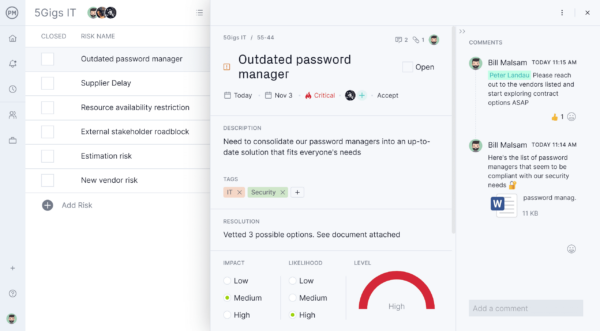
Risk allowances and contingencies are cost provisions included to address the uncertainty inherent in design development and construction delivery. They recognise that not all risks can be fully defined at early stages and provide controlled financial flexibility to manage change, unforeseen conditions and evolving project information.
Within a cost plan, these allowances are essential for maintaining credibility and control. By explicitly identifying and separating risk-related costs, they support informed decision making, reduce the likelihood of budget overruns and ensure that cost certainty improves progressively as design, scope and procurement details are resolved.
- Design development risk: Design development risk allowances cover cost changes arising from evolving layouts, coordination issues or specification refinement, ensuring that incomplete design information does not compromise budget integrity during early and developed design stages.
- Construction risk: Construction risk allowances address uncertainties related to site conditions, buildability, logistics and contractor methods, protecting against cost impacts that may emerge once works commence and operational constraints become fully apparent.
- Inflation risk (if applicable): Inflation risk allowances account for forecast cost increases due to market conditions, labour availability or material price volatility, particularly on projects with extended programmes or delayed procurement strategies.
- Client-held vs cost-plan-held contingencies: This distinction clarifies whether contingency sums are retained by the client or embedded within the cost plan, defining control, approval thresholds and how risk funds may be released or reallocated.
7. Inflation & Market Conditions
In construction, inflation and market conditions describe external economic factors that influence labour costs, material prices, availability and contractor pricing behaviour. These factors can change independently of design decisions, affecting project affordability, procurement outcomes and the reliability of cost forecasts over time.
Considering inflation and market conditions within a cost plan is vital to maintaining realism and resilience. Explicitly addressing these factors helps clients understand financial exposure, supports appropriate contingency levels and ensures cost forecasts remain credible despite volatility in labour markets, supply chains and wider economic conditions.
- Base date for pricing: Defines the point in time to which all cost rates apply, providing a clear reference for assessing future inflation and interpreting cost movements consistently.
- Inflation assumptions: Set out anticipated cost increases over the project duration, explaining rates applied and timeframes considered, enabling transparent evaluation of financial risk linked to programme and procurement strategy.
- Market conditions statement (labour, materials, supply risk): Summarises current labour availability, material pricing trends and supply chain risks, contextualising cost allowances and highlighting external pressures that may influence tender returns and delivery costs.
8. Exclusions & Assumptions
Exclusions and assumptions are statements that define what is not included and what has been presumed when preparing a construction cost plan. They clarify scope boundaries, design expectations, information gaps and constraints, ensuring costs are interpreted correctly and preventing misunderstanding where incomplete or provisional project information exists during early stages.
In a cost plan, exclusions and assumptions are critical to maintaining transparency and control. They explain the basis on which figures have been developed, highlight areas of uncertainty and protect against false certainty. Assumptions may relate to scope, specification, programme, procurement, site conditions or responsibilities, allowing stakeholders to understand risk exposure and assess the impact of change objectively over time.
Related: 20 Best Construction Scheduling Software for 2026 (Free & Paid)
9. Cash Flow Projections & Cost Phasing
Cash flow projections estimate how construction costs are expected to be incurred over time, based on programme assumptions and anticipated progress. They translate the overall cost plan into a time-based forecast, showing when expenditure is likely to occur and how funding requirements align with design, procurement and construction activities.
Cost phasing breaks the total construction cost into defined time periods or project stages, allocating expenditure in line with programme milestones. It reflects how different elements, preliminaries and risk allowances are expected to be spent across the project duration, rather than presenting costs as a single aggregated figure.
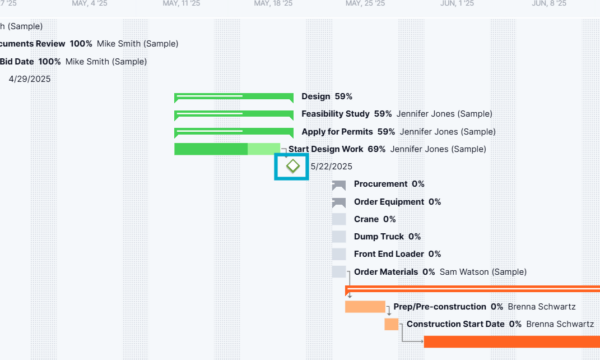
Including cash flow projections and cost phasing in a cost plan supports financial planning and decision-making. These tools help clients manage funding, assess affordability over time and understand the relationship between programme, procurement strategy and expenditure, reducing the risk of cash shortfalls and enabling proactive cost control as the project progresses.
10. Cost Reconciliation
Cost reconciliation in construction projects is the process of comparing successive versions of a cost plan to identify and explain changes in overall cost. It tracks movements caused by design development, scope adjustments, updated assumptions or market conditions, ensuring cost information remains consistent and transparent as the project evolves.
This facet of a cost plan provides visibility over why costs change and who is responsible for those changes. It supports informed approvals, reinforces cost control discipline and allows clients and design teams to make decisions based on cost drivers rather than unexplained budget movements.
Construction Cost Planning Tips
Effective construction cost planning goes beyond preparing a single cost plan. It requires a structured approach that evolves alongside design, procurement and programme decisions. When cost planning is treated as a continuous discipline, rather than a one-off exercise, it becomes a powerful tool for managing risk, supporting informed choices and maintaining financial control throughout project development.
- Begin cost planning as soon as the project brief is defined. Early cost planning helps shape design direction, set realistic expectations and prevent affordability issues before significant design effort or consultant fees are committed.
- Match cost certainty to design maturity. Avoid presenting early cost plans with unwarranted precision. Clearly reflect the level of information available and adjust allowances, risks and assumptions as design detail increases.
- Use elemental cost plans to guide design decisions. Reviewing costs by element highlights where money is being spent, supports value engineering discussions and helps balance performance, quality and budget without relying solely on headline totals.
- Keep assumptions, exclusions and risks visible. Well-documented assumptions and clearly defined risk allowances reduce misunderstandings, protect cost credibility and allow the impact of change to be assessed objectively as the project evolves.
- Regularly reconcile and review cost plans. Tracking cost movements between versions strengthens governance, improves transparency and ensures all stakeholders understand why costs change and what actions are required to remain within budget.
Free Related Construction Project Management Templates
We’ve created dozens of free construction project management templates for Word, Excel and Google Sheets. Here are some that can help during the construction cost planning process.
Project Initiation Document (PID) Template
A project initiation document template provides a structured starting point for defining objectives, governance and responsibilities, helping teams align expectations, secure approvals and establish a foundation before detailed planning begins.
Bill of Quantities Template
A bill of quantities template offers a standardised format for listing work items and quantities, supporting consistent pricing, tender comparison and financial clarity across construction projects and procurement processes activities.
Payment Schedule Template
A payment schedule template outlines when payments are expected throughout a project, helping manage cash flow, set expectations and maintain transparency between clients, contractors and stakeholders during delivery and administration.
ProjectManager Is Ideal for Construction Cost Planning
ProjectManager is award-winning software that helps construction teams create a clear financial baseline before construction begins. By providing access to real-time data in a centralized location, our software provides an integrated approach to help construction teams control costs, protect margins and make informed financial decisions throughout the project life cycle.
Built-in Resource Cost Management
Resource management tools like the workload chart, timesheets, planned vs. actual data and more all contribute to cost planning. Each resource can have assigned rates, such as hourly labor rates, equipment rental costs and consultant fees. When resources are assigned to tasks, costs are calculated automatically. This means that labor and equipment costs are forecast accurately based on schedules.

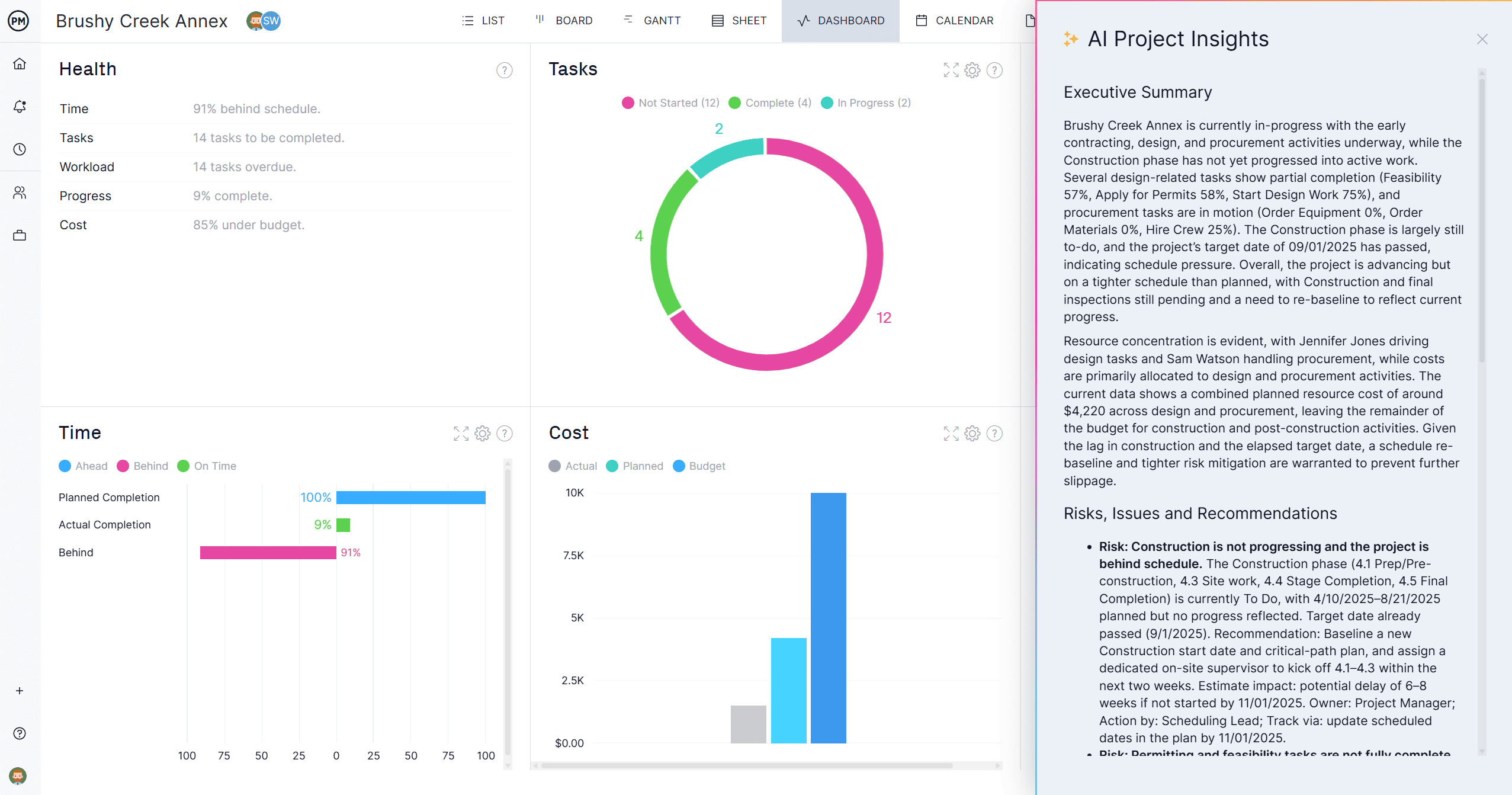
Real-Time Dashboards Showcase Financial Data
For a visual representation of how costs are evolving, utilize our project and portfolio dashboards. These visuals make it easy to spot financial problems and take action accordingly. AI Project Insights is another beneficial feature, allowing teams to gain in-depth project insights using the latest GPT5 technology.
Related Construction Project Management Content
- 39 Construction Documents (Templates Included)
- 10 Types of Construction Projects with Examples
- How to Manage a Construction Project Step by Step
- 10 Free Construction Plan Templates for Excel & Word
- Construction Work Breakdown Structure: A Quick Guide
ProjectManager is online construction project management software that connects teams, whether they’re in the office or on the job site. They can share files, comment at the task level and stay updated with email and in-app notifications. Get started with ProjectManager today for free.
