
Production scheduling is part of the pipeline that starts with sourcing and planning. Is it the most important part? Every part is important! If you don’t have the materials, you can’t manufacture a product. If you don’t have a plan,…
Read More
Production scheduling is part of the pipeline that starts with sourcing and planning. Is it the most important part? Every part is important! If you don’t have the materials, you can’t manufacture a product. If you don’t have a plan,…
Read More

Projects are made or broken by how time is managed. Planning, scheduling, monitoring and controlling are all key elements of project management that work to ensure the time spent and progress made over the life cycle of the project is…
Read More

Resources include the needed people, equipment, raw materials and so on to execute project tasks. Managing resources helps structure information to make it easier to track timelines and tasks. From manufacturing to construction, these free resource management templates add consistency…
Read More
It’s a cliche to say nothing is constant but change, but cliches grow from truths. Project managers understand this and work hard to create change management plans that ensure their projects run smoothly. Project management software helps, too, but if…
Read More

Every project runs on resources: the people, tools, materials and budget that make the work happen. Without a clear plan for how those resources are allocated, even well-funded projects slip, teams get stretched too thin and delivery dates become wishful…
Read More
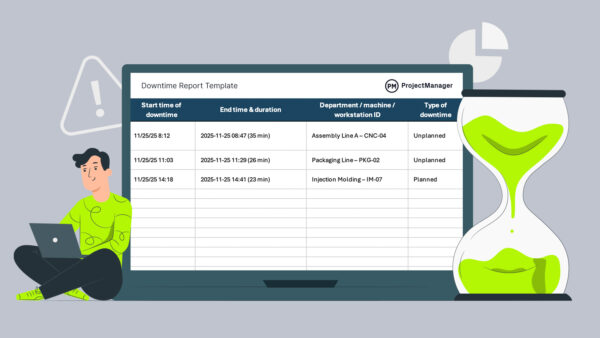
Most teams know roughly how their time is spent. The problem is “roughly.” When a project runs over budget, or a client disputes a bill, or a manager tries to figure out why a team is always at capacity, rough…
Read More

If you can’t track time properly, you’re losing money. It’s that simple. Yet for most project management professionals, tracking billable hours and reconciling financial data remains one of the most time-consuming, error-prone parts of the job, not because they lack…
Read More

What Is Job Management? Job management is a process used to plan, assign, schedule and track individual jobs from start to completion. It is commonly used in construction, manufacturing, maintenance and field service operations to coordinate work, control costs and…
Read More

Managing vendors across multiple projects quickly becomes chaotic without structure, especially when tracking performance, pricing and contracts. These vendor management templates bring consistency to how teams organize data, evaluate suppliers and control procurement workflows. By using standardized formats, teams reduce…
Read More
Financial planning rarely works well when income and expenses are scattered across notes, apps or disconnected files. A well-structured budget spreadsheet helps bring those numbers together so spending, savings and financial decisions can be managed with clarity. The free templates…
Read More

Organizations that regularly purchase goods, services or subcontracted work rely on structured documentation to keep sourcing activities organized and transparent. Procurement documents help standardize vendor selection, purchasing workflows and contract management across teams. In this guide, you’ll find practical procurement…
Read More

Construction projects involve hundreds of cost decisions long before a building takes shape. Materials must be measured, budgets must be forecast and contracts must align with the real scope of work. Quantity surveying sits at the centre of those decisions,…
Read More
Managing inventory is critical whether in manufacturing, retail, construction or any industry that lives and dies by having the right resources when needed. An inventory template is a structured tool that helps record, manage and track inventory items. Using an…
Read More