



Pressure builds quickly on a live construction site. Weather shifts, trades overlap and instructions change without much notice. A well-kept site diary keeps daily events from slipping through the cracks and protects your position when questions arise later. If you’re running UK projects, this guide shows how to keep one properly.
What Is a Site Diary In Construction?
A site diary in construction is a formal daily record maintained on a building project to document site activities, labour levels, plant usage, weather conditions, deliveries, instructions and notable events. It provides a chronological account of what occurred on site each day and serves as an official project record.
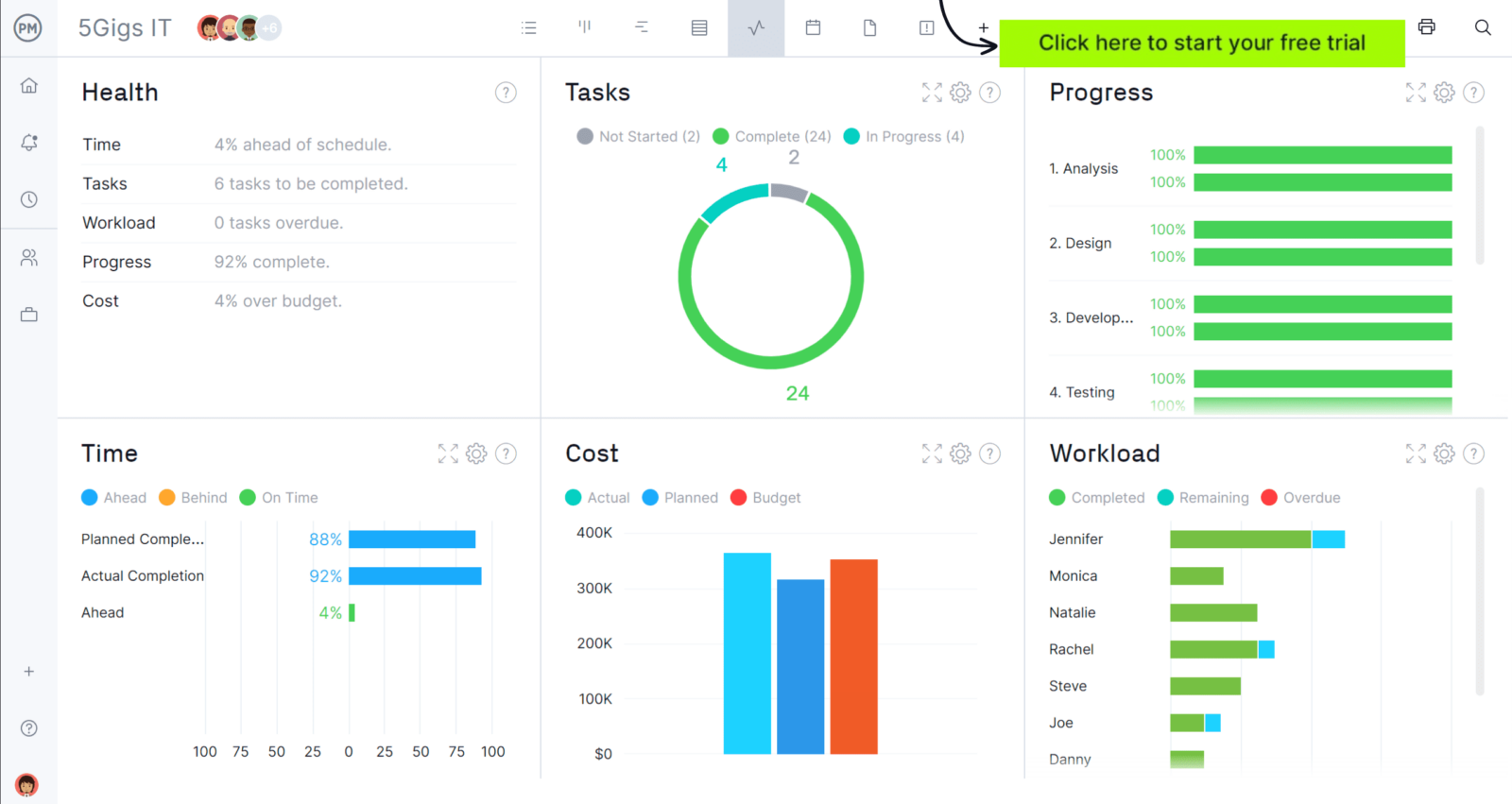
Site diaries are essential on any construction project, but they can’t match the real-time visibility provided by modern construction project management software like ProjectManager. ProjectManager is an award-winning construction project management software designed to build detailed construction programmes, allocate labour and plant, monitor progress, control costs and compare planned vs actual performance through live dashboards and reports to identify delays, variations and cost overruns before they impact the project. Get started for free today.
What Is the Purpose of a Site Diary?
At its core, a site diary exists to capture what actually happened on site each day, not what was planned to happen. It supports day-to-day monitoring of progress, resources, site conditions and instructions so project teams can track performance against programme. Beyond routine oversight, it also plays a critical role when accountability becomes important.
- Delay claims: When progress slips, entries detailing weather, late information or restricted access help demonstrate the true cause of delay.
- Adjudication or dispute resolution: A consistent daily record can support your position if disagreements escalate under JCT or NEC contracts.
- Variations and change instructions: Notes confirming verbal directions or revised works provide evidence if valuation is later challenged.
- Health and safety investigations: Records of site conditions, inductions and incidents can clarify what controls were in place at the time.
- Resource and productivity analysis: Labour and plant entries allow managers to review output levels and identify underperformance.
Who Makes and Maintains the Construction Site Diary?
On most UK construction projects, responsibility for maintaining the site diary sits with the site manager or site agent. That individual is accountable for ensuring daily entries are completed accurately, signed off where required and stored properly. Even if others contribute information, the duty to keep the record consistent and defensible ultimately rests with them.
Although one person holds accountability, a site diary is never produced in isolation. Accurate entries depend on coordinated input from supervisors, engineers, subcontractors and commercial staff throughout the project lifecycle.
- Site Manager or Site Agent: Oversees the entire recording process, verifies daily information, confirms instructions received and ensures entries reflect actual site conditions.
- Section Engineer or Project Engineer: Provides technical details on completed works, inspections, testing results and any deviations from drawings or specifications.
- General Foreman or Works Supervisor: Supplies daily labour numbers, plant allocation, productivity notes and reports on site access or sequencing issues.
- Health and Safety Manager or Advisor: Contributes information on inductions, toolbox talks, incidents, near misses and any temporary control measures implemented.
- Quantity Surveyor or Commercial Manager: Uses diary entries to cross-check variations, delays, compensation events and resource levels against contractual entitlements.
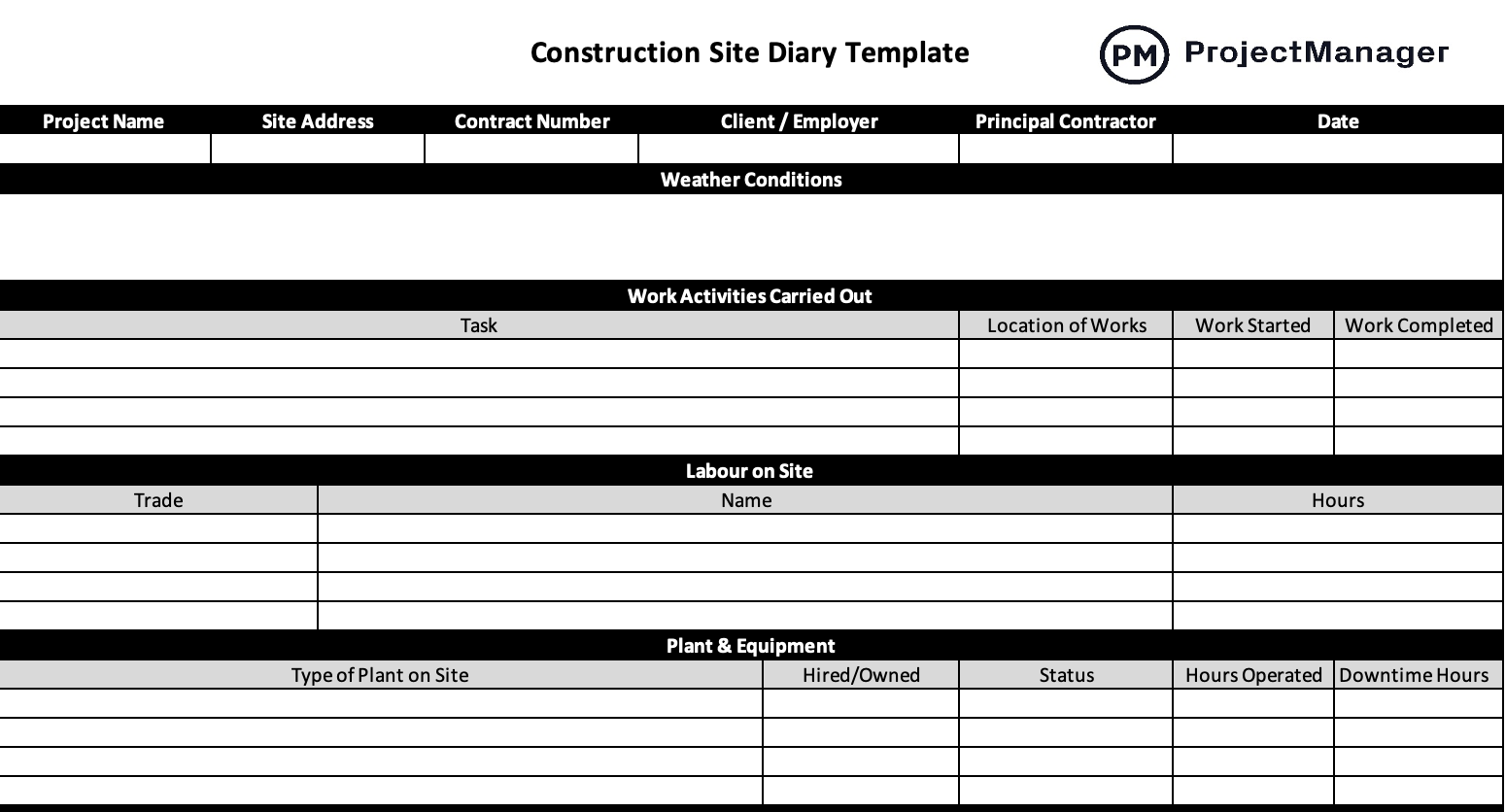
Get your free
Construction Site Diary Template
Use this free Construction Site Diary Template for Excel to manage your projects better.
What Should Be Included In a Site Diary?
To keep the record useful and defensible, each entry must capture consistent core information. Let’s break down the main components that should appear in a properly maintained UK construction site diary.
Project Administrative Details
Every entry should clearly reference the basic administrative details that anchor the record to a specific project and date. Including identifiers such as contract particulars, site location and daily conditions ensures entries cannot later be disputed or confused with another scheme.
Key elements for this section:
- Project name
- Site address
- Contract number
- Client / Employer
- Principal Contractor
- Date
- Weather conditions (AM/PM, temperature, rainfall, wind)
- Working hours
Labour on Site
Labour on site refers to all operatives physically present and carrying out work during the day, including direct staff, subcontractors and agency workers. Recording these figures matters because manpower levels directly affect productivity, programme performance and entitlement to extensions of time if resources are restricted.
Key elements for this section:
- Number of operatives on site
- Breakdown by trade (e.g. groundworkers, bricklayers, electricians)
- Subcontractors present
- Agency labour
- Any labour shortages or absenteeism
Plant & Equipment
Plant and equipment covers all mechanical assets and temporary machinery used to execute the works, from excavators and cranes to smaller powered access units. Documenting plant presence, deliveries and downtime is essential because availability, breakdowns or removals can directly impact output and support delay or disruption assessments.
Key elements for this section:
- Plant on site (telehandler, excavator, crane, MEWP, etc.)
- Deliveries or removals of plant
- Breakdowns or downtime
Work Activities Carried Out
Daily descriptions of work activities create a clear picture of actual progress on site, not just what the programme suggests. Recording what was built, where it was built and how much was achieved helps track performance. Just as importantly, it provides factual backing when assessing delay events, disruption claims or valuation disagreements later.
Key elements for this section:
- Specific tasks completed
- Location of works
- Quantities achieved where relevant
- Work started / work completed
Material Deliveries
Materials arriving on site directly influence sequencing, productivity and quality control. Logging deliveries, timings and condition on arrival allows managers to track supply chain reliability. When materials are late, short or rejected, those records can support extension of time claims, loss and expense submissions or commercial discussions with suppliers.
Key elements for this section:
- Materials delivered
- Delivery times
- Any rejected materials
- Short deliveries or damaged goods
Instructions and Communications
Instructions and communications include any formal or informal directions, clarifications or exchanges that influence how the works proceed, whether issued by the architect, engineer, employer or site team. These entries should capture written instructions, confirmed verbal directions and responses to technical queries to ensure the project record reflects what was actually authorised.
Documenting these exchanges protects the contractor if scope changes, delays or cost implications are later disputed. Clear diary notes can demonstrate when instructions were received and how they affected progress or resources.
Key elements for this section:
- Architect’s Instructions (AI)
- Engineer’s Instructions
- Site instructions
- Verbal instructions (noted carefully)
- RFIs raised or responses received
Delays & Disruption
Delays and disruption refer to events that prevent planned activities from proceeding as programmed or reduce productivity on site. These can stem from design information, access constraints, weather, resource limitations or unforeseen conditions, and must be clearly described with timing and impact noted to create an accurate daily record.
Capturing these issues in the site diary strengthens entitlement to extensions of time or loss and expense claims. Clear daily evidence helps demonstrate cause and effect when programme impacts are later assessed.
Key elements for this section:
- Late drawings
- Access issues
- Adverse weather
- Labour shortages
- Variations affecting progress
- Utility clashes
Health & Safety
Construction sites carry constant risk, and the diary should reflect how those risks were managed each day. Recording safety briefings, incidents and compliance checks demonstrates that controls were actively implemented. If an accident investigation or regulatory review occurs, detailed daily notes can evidence due diligence and responsible site supervision.
- Toolbox talks held
- Accidents or near misses
- HSE visits
- Method statement compliance issues
- Permit-to-work activity
Inspections & Tests
Inspections and tests cover all quality assurance checks carried out to confirm the works comply with drawings, specifications and contractual requirements. These include planned verification activities under inspection and test plans, statutory inspections and internal quality reviews that confirm workmanship standards.
Noting these activities in the site diary helps demonstrate compliance, supports payment applications and provides evidence if workmanship is later questioned or defects are alleged.
- ITP inspections
- Concrete pours & cube tests
- Building Control inspections
- Clerk of Works visits
- Snagging observations
Visitors
Movement in and out of the site should never go unrecorded. Logging visitors creates a traceable account of who attended, when they were present and why. That detail can clarify instructions issued during walkthroughs, confirm inspections took place and demonstrate controlled access if security, safety or liability questions arise later.
- Client visits
- Consultant attendance
- Building Control
- Utility companies
- Third parties
Variations
Change rarely arrives neatly packaged, which is why variations must be documented as they arise. Recording instructed changes, emerging compensation events under NEC contracts and ongoing discussions protects commercial positions. Noting the potential impact on time and sequencing also ensures programme consequences are tracked from the outset rather than reconstructed later.
- Variations instructed
- Potential compensation events (under NEC)
- Change discussions
- Impact on programme
General Observations
Not every issue fits neatly into a predefined category, yet those small daily details often become important. General observations capture site conditions, access constraints, neighbour complaints, workforce tensions or security incidents that influence how work proceeds. Including them provides broader context and prevents gaps in the overall project narrative.
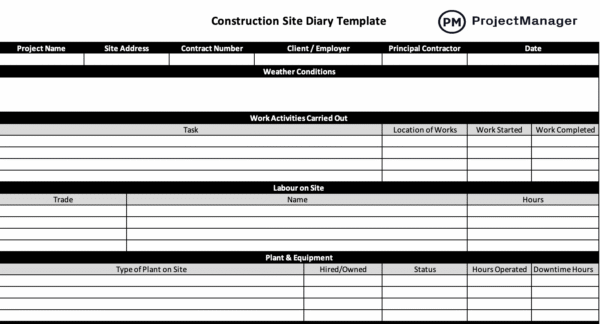
Site Diary Template
Track daily site activity with this free construction site diary template for Excel. Record labour, plant, weather, instructions, delays, deliveries and inspections to maintain accurate contemporaneous records and support contract administration.
Site Diary Example
Imagine a general contractor delivering a new 85,000 square foot corporate headquarters in Canary Wharf, London. The scheme involves a reinforced concrete frame, curtain wall façade and CAT A office fit-out across eight storeys. Below is a single site diary entry for one working day. For simplicity, some components of a site diary have been omitted.
Project Administrative Details
| Item | Details |
| Project Name | Thames View Corporate Headquarters |
| Site Address | 15 Marsh Wall, Canary Wharf, London E14 |
| Contract Form | JCT Design & Build 2016 |
| Client | Rivergate Holdings Ltd |
| Principal Contractor | London Build Contractors Ltd |
| Date | 18 February 2026 |
| Weather | AM: Light rain, 4°C | PM: Overcast, 6°C, moderate wind |
| Working Hours | 08:00 – 17:00 |
Labour on Site
| Trade / Category | Number on Site | Notes |
| Groundworkers | 8 | Basement drainage installation |
| Steel Fixers | 6 | Level 3 slab reinforcement |
| Electricians | 5 | Containment works Level 2 |
| Drylining Subcontractor | 10 | Partition framing Level 1 |
| Agency Labour | 3 | General site duties |
Plant & Equipment
| Plant | Status | Notes |
| Tower Crane | Operational | Used for steel and formwork lifting |
| Telehandler | Operational | Material distribution on ground level |
| MEWP | Operational | Façade bracket installation |
| Excavator (8T) | Down 2 hrs | Hydraulic hose replaced at 11:30 |
Work Activities Carried Out
| Activity | Location | Progress / Quantity |
| Concrete pour (Level 3 slab) | Level 3 | 120m³ completed |
| Partition framing | Level 1 | 65 linear metres installed |
| Cable tray installation | Level 2 | 40% of east wing completed |
Deliveries and Materials
| Material | Delivery Time | Status |
| Ready-mix concrete | 09:15 | Accepted |
| Reinforcement steel | 07:50 | Short delivery (2 bundles missing) |
| Plasterboard pallets | 13:40 | 1 pallet damaged, rejected |
Instructions & Communications
| Reference | Description | Action Taken |
| AI-014 | Revised ceiling detail Level 2 | Forwarded to drylining subcontractor |
| RFI-032 Response | Clarification on drainage invert levels | Groundworks adjusted layout |
| Verbal Instruction | Client requested additional data cabling | Recorded pending formal confirmation |
Delays & Disruption
| Issue | Time Impact | Notes |
| Morning rainfall | 1 hour lost | Delayed external façade works |
| Short rebar delivery | 2 hours | Pour sequence adjusted |
| Utility clash discovered | Under review | Survey requested |
Visitors
| Visitor | Organisation | Purpose |
| Client Representative | Rivergate Holdings Ltd | Monthly progress walkthrough |
| Building Control Officer | London Borough Authority | Inspection of Level 3 slab |
| Structural Engineer | Design Consultants LLP | Review reinforcement prior to pour |
Free Construction Project Management Templates
We’ve created dozens of free construction project management templates for Excel, Word and Google Sheets. Here are some that are ideal for UK construction projects.
Gantt Chart Template
Plan and programme construction works with this Gantt chart template for Excel. Sequence activities, assign durations, track progress and identify critical tasks to maintain control over timelines and site performance.
Snagging List Template
Use this snagging list template to record defects, incomplete works and quality issues before practical completion. Track locations, responsible trades and rectification status to ensure a smooth handover process.
Method Statement Template
Document safe systems of work with this method statement template for construction projects. Outline task sequences, resources and control measures to ensure compliance with health and safety requirements on site.
ProjectManager Is Ideal for Tracking Construction Site Progress
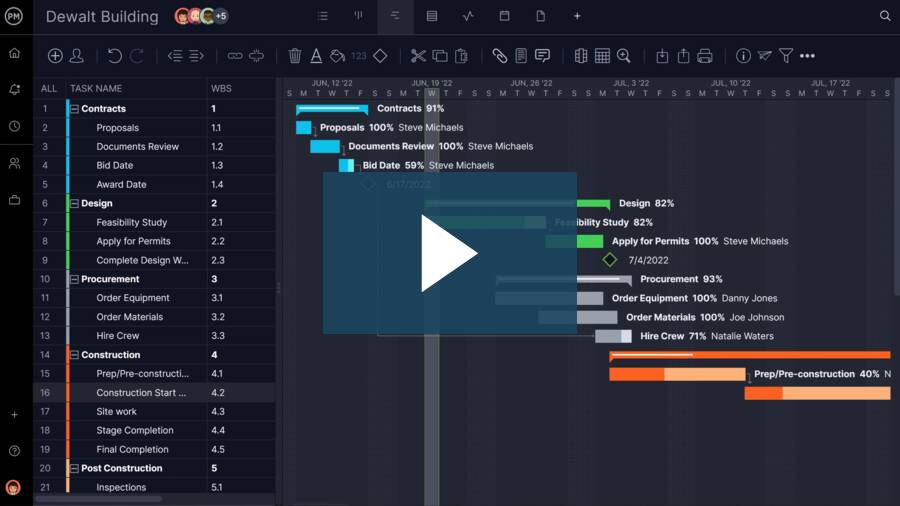
ProjectManager includes Gantt charts, workload charts, timesheets and real-time dashboards and reports, making it ideal for building and managing construction programmes, coordinating trades on site, monitoring labour and plant utilisation, tracking site costs and sharing photos and documents from inspections. Watch the video below to learn more!
Related Construction Project Management Content
Our content library features over 100 construction blogs, templates, ebooks and other types of content to help construction project managers better understand the many moving parts that must be managed to deliver successful construction projects. Here are some of them.
- How to Make a Construction Phase Plan (Templates Included)
- Program of Works in Construction: A Quick Guide
- Tendering Process in Construction: A Quick Guide
- Top 10 Tender Documents In Construction
- Construction Cost Planning: How to Make a Cost Plan
- Cost Value Reconciliation: How to Make a CVR Report
ProjectManager is online project management software with the tools you need for construction project management. Our features make planning, monitoring and reporting on your project more efficient and effective. Being online means our software is accessible everywhere and at any time. Plus, the data you get is more accurate because it’s updated immediately. Try ProjectManager for free with this 30-day trial offer.
