



We’ve spent enough years running construction projects to know exactly where software either saves you or sinks you: scheduling crews, tracking materials, keeping budgets from quietly spiraling. The wrong tool adds a layer of admin nobody asked for. The right one pays for itself the first time it catches a delay before it becomes a change order.
From that standpoint, we’ve put together this 2026 buyer’s guide to save you the trial-and-error. We tested these platforms the way a construction project manager would size up any tool on a jobsite: does it hold up under real conditions, does the field team actually use it, and does it give you visibility you can act on instead of just another dashboard to check. Below is our honest take on the 10 best construction project management software options out there right now, and exactly who each one is actually built for.
What Is Construction Project Management Software?
Construction project management software is software that helps construction teams plan, execute, monitor and complete construction projects. It centralizes project schedules, budgets, documents, resources, tasks and team communication in a single platform so contractors, project managers, owners and subcontractors can coordinate work more efficiently. Most construction project management software includes scheduling, budgeting, resource management, document management, progress tracking and reporting tools to help reduce delays, control costs and keep projects on schedule. Below are the key features to look for when comparing construction project management software.
What Features Make the Best Construction Management Software?
The best construction management software combines powerful features that support planning, communication and execution from start to finish. These tools are designed to handle the complex demands of construction projects while improving efficiency and reducing risk. Key features to look for include the following.
- Scheduling and Gantt Charts: Plan tasks, set dependencies and track progress with visual timelines.
- Document Management: Store and share drawings, contracts and permits in one centralized location.
- Budgeting and Cost Tracking: Monitor project expenses, compare actual vs planned costs and avoid budget overruns.
- Resource Management: Assign crews, equipment and materials based on availability and workload.
- Real-Time Collaboration: Keep field and office teams connected with live updates and shared task lists.
- Mobile Access: Manage and update project data from the jobsite using smartphones or tablets.
- Reporting and Dashboards: Gain insights into project performance through customizable, real-time reports.
- RFIs and Submittals Management: Track requests for information and submitted documents to reduce delays and ensure compliance.
Construction Project Management Software Comparison Table
The table below summarizes how the construction project management software in this list compares to each other and explains their key tools, who is their target audience and what our verdict is, so you have a clear picture of the construction project management software alternatives in the market.
| Software Name | Key Tools | Target Audience | Our Verdict |
| ProjectManager | Interactive Gantt charts with all four dependency types, live project dashboards, workload charts, integrated timesheets. | Contractors and PMs juggling multiple trades who want one tool instead of five. | Good, the rare tool that’s actually usable by both the office and the field. No invoicing or bidding though, so pair it with your accounting software. |
| Procore | Full lifecycle coverage, RFIs, submittals, drawings, budgeting, field productivity. | GCs and owners running large, complex jobs with big teams. | Good if you’re a big outfit. Powerful, but the price tag and onboarding time will make smaller crews wince. |
| Buildertrend | Scheduling, daily logs, change orders, built-in CRM and proposal tools. | Residential builders and remodelers managing the whole client journey. | Good for home builders, not so good once you need real Gantt dependencies or critical path analysis. |
| Fieldwire | Plan markups, punch lists, checklists, offline access. | Site supervisors and subs who live on the jobsite, not in spreadsheets. | Good as a field companion, not so good as your only PM tool, no budgeting, RFIs, or financial tracking. |
| Contractor Foreman | Estimating, scheduling, budgeting, CRM, equipment tracking, all in one. | Small to mid-sized contractors who want features without the enterprise price. | Not great. you get a lot for the money, but the clunky interface and glitchy reports will test your patience. |
| CoConstruct | Estimating, selections, job costing, QuickBooks integration, client portal. | Custom home builders who need to keep homeowners in the loop. | Not so good if you want modern software, the interface feels dated, and support has been shaky since the Buildertrend acquisition. |
| Microsoft Project | Advanced Gantt charts, critical path analysis, Microsoft 365 and Power BI integration. | Trained PMs running detailed schedules on large jobs. | Not ideal for construction specifically, great scheduling engine, but zero built-in RFIs, submittals, or punch lists. You will be bolting things on. |
| Autodesk Construction Cloud | BIM Collaborate, 2D/3D model coordination, clash detection, real-time issue tracking. | Commercial and infrastructure teams running BIM-heavy projects. | Good if you’re deep in BIM, not so good if you just want simple task tracking, since the module-hopping gets old fast. |
| BuildBook | Scheduling, daily logs, budgeting, client portal, messaging. | Residential builders who prioritize a smooth client experience over deep project controls. | Good for client comms, not so good for anything complex, no Gantt dependencies, RFIs, or resource planning. |
| Trimble Unity Construct | Cost management, procurement, document control, audit trails. | Owners and capital program managers overseeing large infrastructure builds. | Good for owner-side oversight, not so good for contractors in the field, dated interface, no mobile-first workflow. |
2026 Best Construction Project Management Software Rankings
Now that we understand what construction project management software is and what the best construction project management software has in terms of tools and features, it’s time to review those products that live up to these high standards. The following list ranks these top contenders from best on down.
1. ProjectManager 
We put ProjectManager at the top of this list because it’s the only tool here that doesn’t force you to pick between office control and field usability. Most platforms lean hard one way or the other. This one doesn’t.
Drawings, permits, and other documents attach directly to tasks, so a crew doesn’t have to go digging through email threads to find the latest set. Comments live on the task itself instead of scattered across texts and calls, which cuts down the “wait, which version are we using” conversations that eat up every jobsite’s morning.
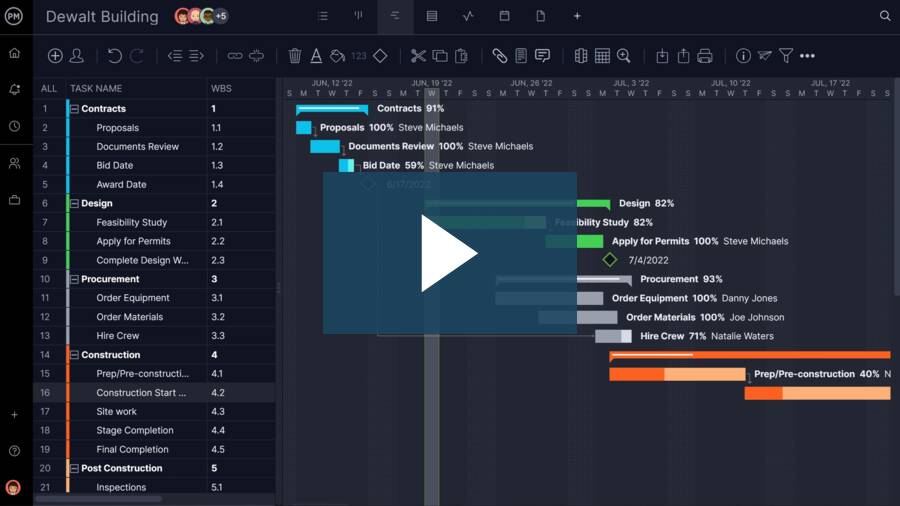
Plan and Schedule With Interactive Gantt Charts
The project scheduling tools are built for the way construction actually runs, not a simplified version of it. You get all four dependency types, which matters the moment you’re juggling trades that can’t start until others finish. The critical path filter shows you exactly which tasks have zero slack, so you know where a two-day delay becomes a two-week delay.
Baselines let you track planned versus actual progress, which is the earliest warning system you have for a schedule slipping. Multiple views — list, sheet, calendar, kanban — mean subs and office staff aren’t forced into the same interface if it doesn’t fit how they work.
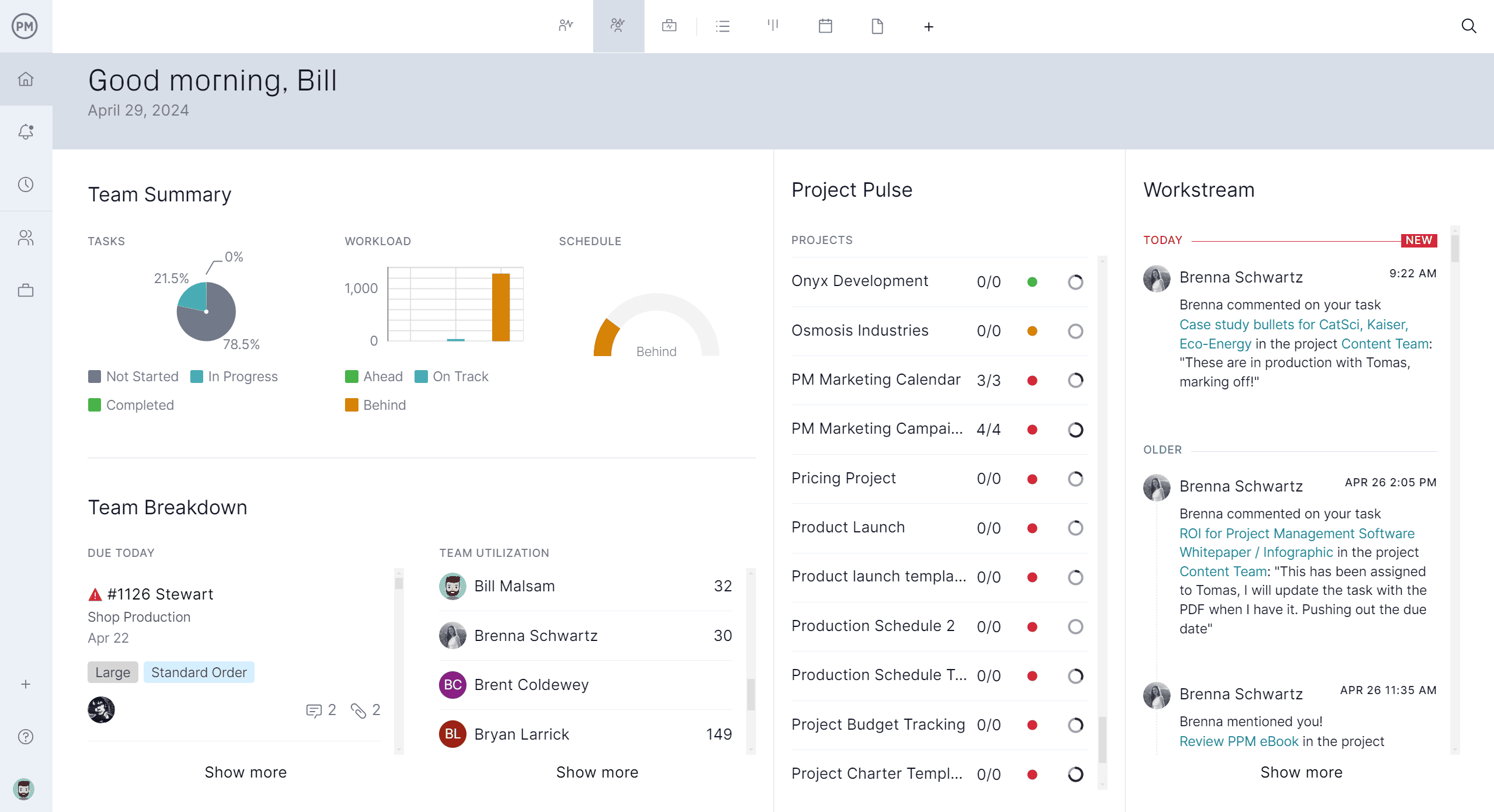
Budgeting and Cost Control and Tracking With Dashboards, Reports and Timesheets
Cost tracking here is genuinely usable day to day, not just a reporting feature bolted on for executives. You can set budgets, watch actual costs against forecasts, and track labor and material spend as it happens rather than finding out at month’s end. The dashboards surface cost and workload together, which is the combination that actually predicts trouble before it shows up in a change order.
Timesheets feed straight into cost reports, so payroll and job costing aren’t two separate systems you’re reconciling by hand.
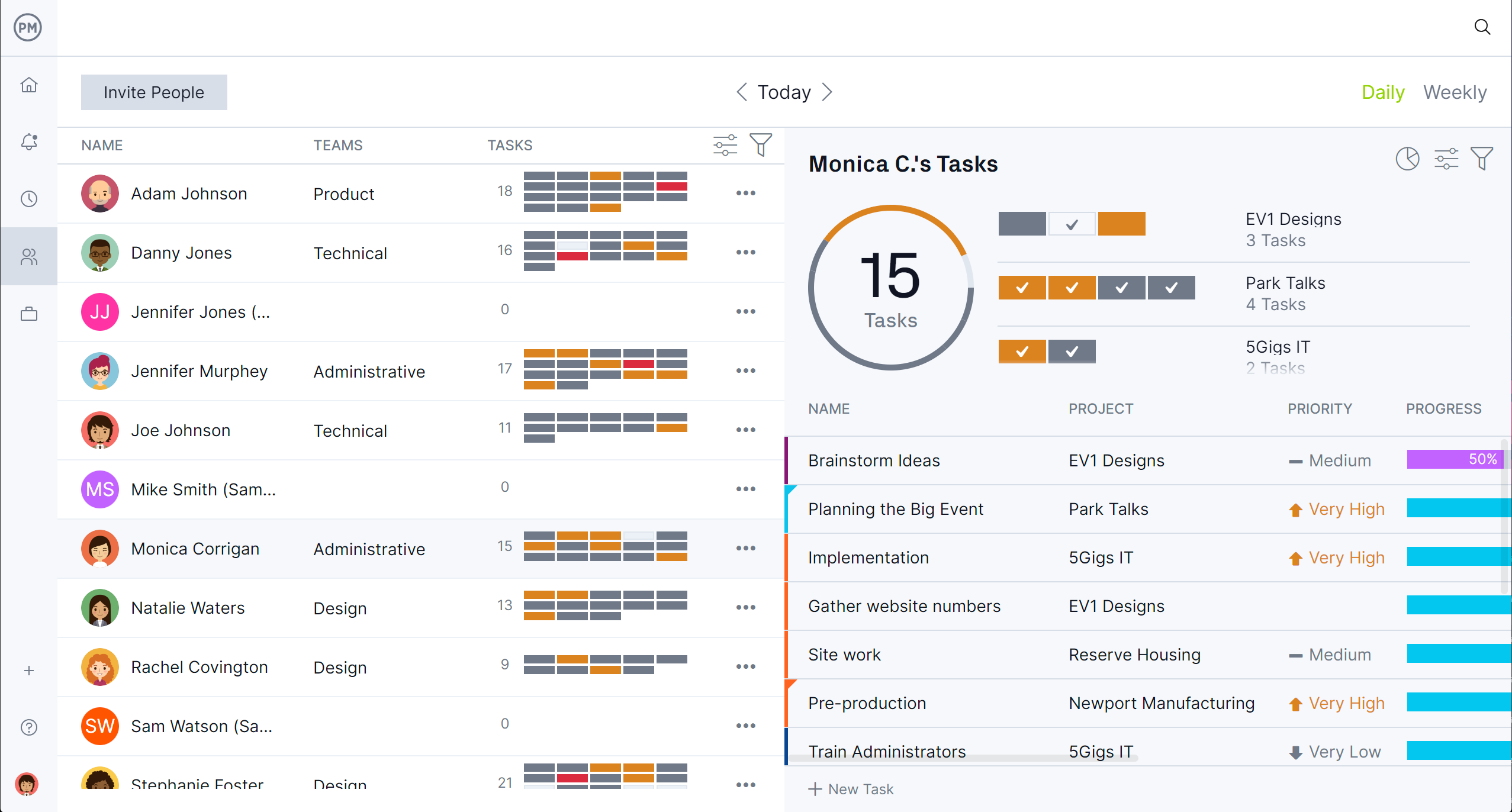
Coordinate Team and Resources With Workload Charts and Team Page
Resource planning is where a lot of tools fall apart, but ProjectManager handles it well. The workload chart shows you who’s overloaded and who’s sitting idle at a glance, which is exactly the kind of thing that’s obvious in hindsight and invisible in the moment without a visual. The team page rounds out roles and responsibilities so staffing decisions aren’t guesswork.
The mobile app is what pushes it to the top of this list for us. Field crews can update tasks and log hours in real time instead of catching up on paperwork after the fact, and the office gets that data as it happens rather than the next morning.
Verdict: Best Construction Project Management Software
Excellent. This is the one platform that actually works for both office and field teams without forcing a compromise. The Gantt charts, live dashboards, and integrated timesheets give you real cost visibility without a mile-long onboarding process. The catch: no invoicing or bidding tools, so you’ll still need a separate accounting stack. For teams that want clean, practical project controls without the enterprise bloat, this is the smart pick.
ProjectManager Pros & Key Features
- Online Gantt charts for construction planning and scheduling, including all four types of task dependencies, critical path and baseline
- Resource planning, scheduling and tracking tools for construction enable detailed allocation and monitoring of labor, equipment and materials
- Mac-friendly, online construction scheduling software with unlimited file storage, version control and global search
- Real-time dashboard and reporting tools for instant visibility into project performance
- Integrated timesheets for payroll and labor costs integrate directly with task management
- Free trial available
- Mobile app for Android and iOS
ProjectManager Cons & Limitations
- Limited customization features
- No payment or invoicing tools
- Lacks construction bidding functionality
- No free plan
ProjectManager Pricing
For current pricing, visit ProjectManager’s pricing page.
ProjectManager Reviews
- G2 review: 4.4/5
- Capterra review: 4.1/5
Highlighted User Reviews
- “ProjectManager works very well with both large and small-scale projects. Being able to use this with anything from a project involving only two members of staff, to hundreds, has been invaluable.” Peter W – from Capterra
- “We used to manage our projects, resources, and reporting in different systems. Enter ProjectManager. We have consolidated systems and work more efficiently.” Jeffrey M – from Capterra
- “Having the full scope of activities and who is responsible to do it, plus the time tracking is excellent.” Flavio M – from G2
- “It has an excellent accounting system capable of calculating the time that a person has used to develop a task that was assigned to him. I like being able to collaborate with all my colleagues in the Finance sector through ProjectManager.” Jesus C – from G2
- “The UI of the application is user-friendly, and it helps to identify what we are looking for with minimal effort.” Pavan H – from G2
2. Procore

Procore is the platform most large GCs already know by name, and for good reason: it covers the entire project lifecycle in one system, from RFIs and submittals to budgeting and field productivity. If you’re running big commercial work with a lot of moving stakeholders, that breadth is genuinely valuable.
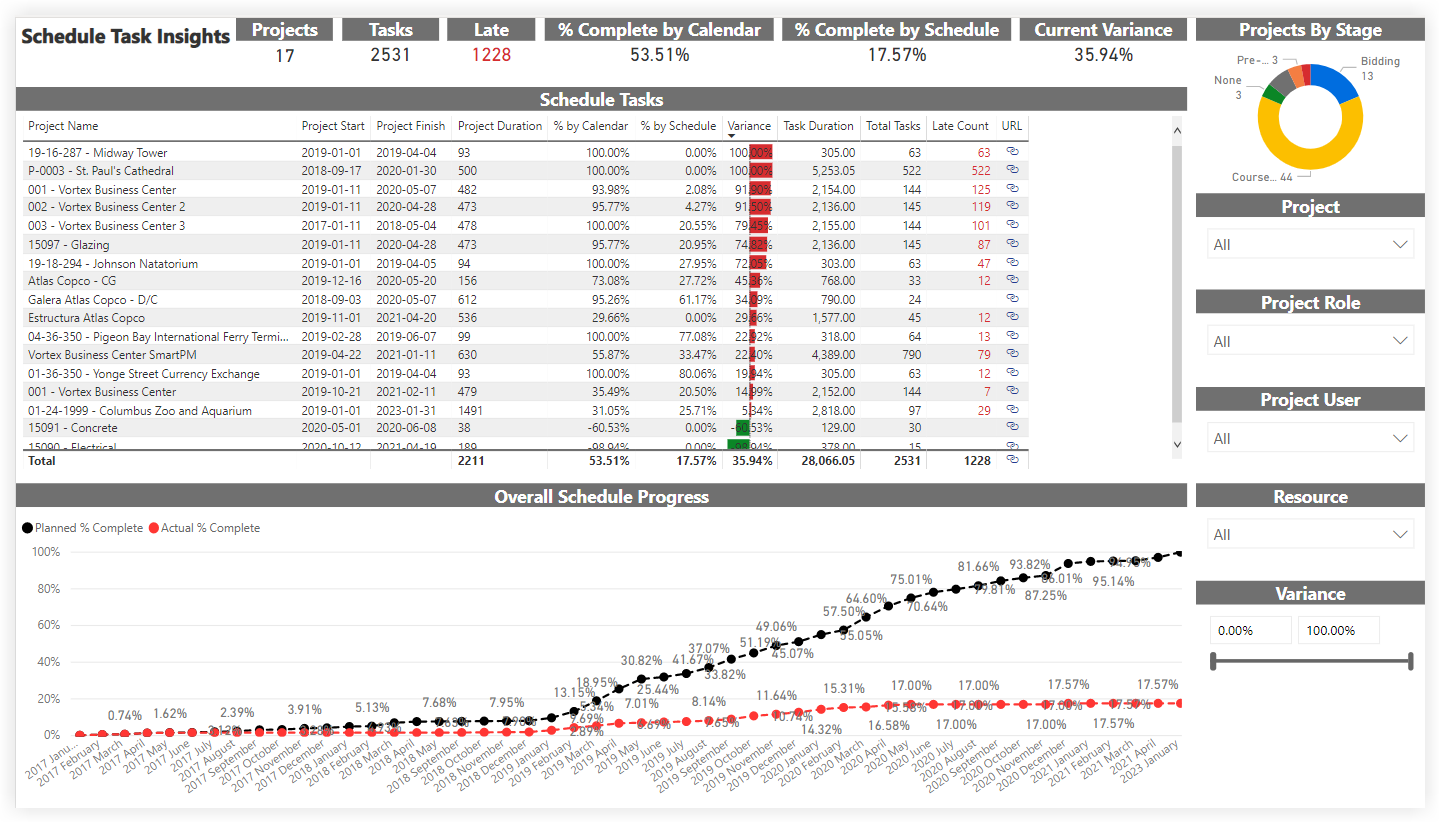
Where it loses points is cost and complexity. Procore doesn’t publish flat pricing — it scales with your Annual Construction Volume, so the price tag is a moving target until you get a quote, and it tends to land hard on smaller firms that don’t need the full suite. The learning curve is real too. This isn’t a tool you hand a new hire and expect them to be productive with by lunch.
We’ve also put together a list of Procore alternatives if the price or the onboarding time gives you pause.
Verdict: Best Construction Project Management Software for Large Projects
Only worth it if you’re running big jobs with big budgets. Procore covers the entire lifecycle and connects field and office in real time, which is genuinely valuable at scale. But the pricing is opaque, the learning curve is steep, and smaller firms will pay for features they never touch. If you’re a large GC managing complex projects, it earns its keep. Otherwise, look elsewhere.
Procore Pros & Key Features
- Has documents management, FRIs, submittals and drawings
- Budgeting and scheduling features
- Real-time updates and communication
- Mobile app for Android and iOS
Procore Cons & Limitations
- Only has two project scheduling views: Gantt charts and project calendars
- Complex construction scheduling tool with a steep learning curve
- Expensive, especially for smaller firms
- No free trial
Procore Pricing
For current pricing, visit Procore’s pricing page.
Procore Reviews
- G2 review: 4.6/5
- Capterra review: 4.5/5
Highlighted User Reviews
- “Procore is the king of remote working especially for administrative tasks.” Andy G – from Capterra
- “I enjoy the Procore Learning Center, which helps me when I am unsure of how to start or edit a task in Procore.” Olivia E – from G2
3. Buildertrend

Buildertrend is built for the residential and remodeling world, and it shows in the best way — the CRM, proposal tools, and client communication features carry a homeowner through the entire journey from first estimate to final walkthrough. If you’re a builder juggling both the sales pipeline and the build itself, that’s a real time saver.
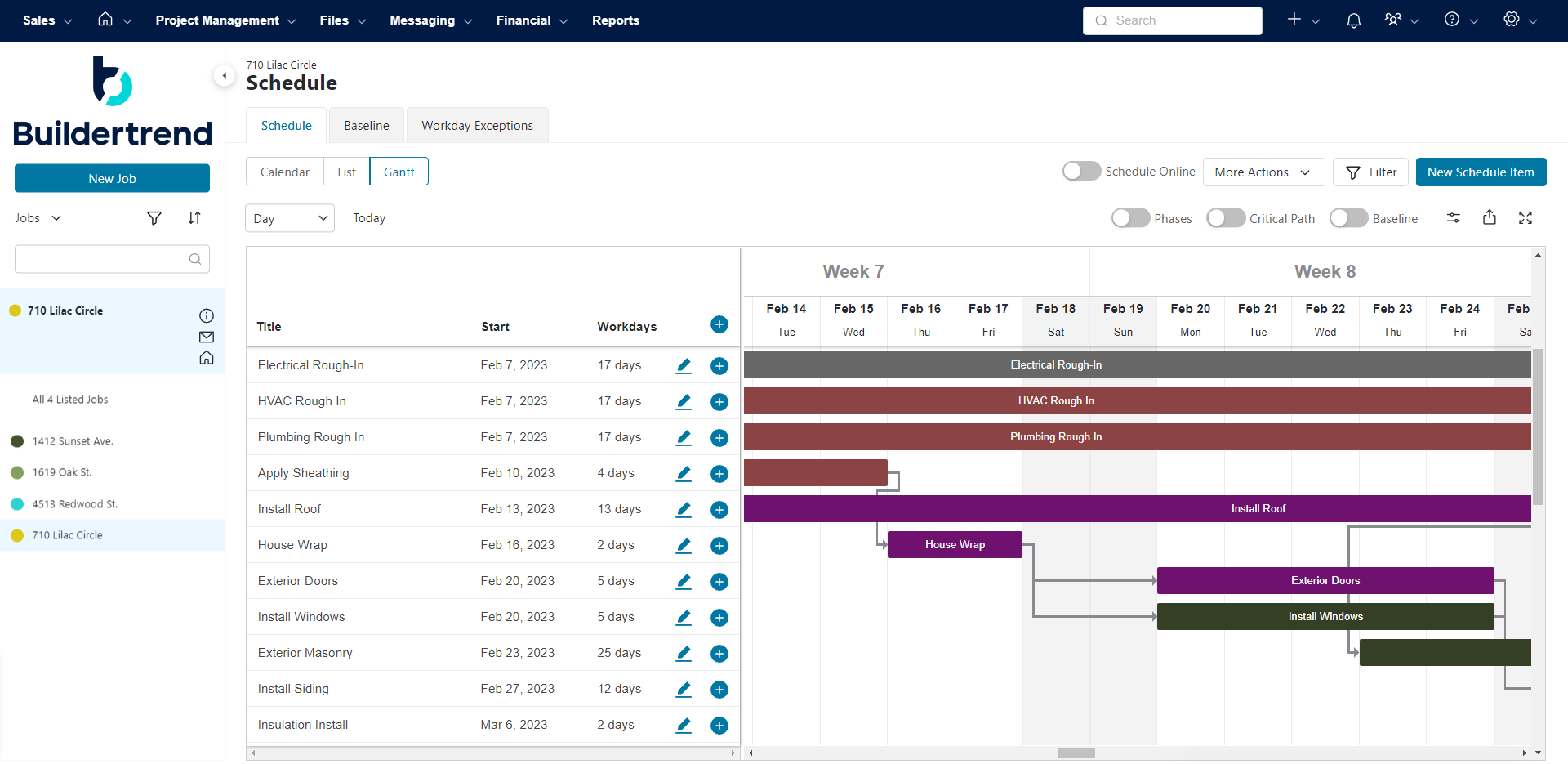
The scheduling tools are where it shows its ceiling. There’s no real critical path analysis or advanced dependency logic, which is fine for a kitchen remodel and a problem the moment you’re running multiple trades on a tight, interlocking timeline. Some users also report a cluttered interface and slower support response times as their project load grows — worth factoring in if you’re scaling past a handful of jobs at once.
Verdict: Best Construction Project Management Software for Residential Builders
Good for residential builders who need client-facing tools baked in, not so good for anything more technical. The built-in CRM, proposals, and change order management make it a strong fit for the full home-building journey. But the scheduling tools skip real dependency logic and critical path analysis, so anything beyond a standard remodel will feel underpowered fast. Know your project complexity before you commit.
BuilderTrend Pros & Key Features
- Has scheduling and budgeting tools
- Offers daily logs, change order management and client communication tools
- Integrated CRM, proposal generation and pre-sale tools
- Mobile app for Android and iOS
BuilderTrend Cons & Limitations
- Gantt chart lacks advanced dependencies and critical path analysis
- Basic reporting capabilities pall in comparison to others on this list
- No free plan
- No free trial
BuildTrend Reviews
- G2 review: 4.2/5
- Capterra review: 4.5/5
Highlighted User Reviews
- Nikki C., a permit technician, says the platform centralizes scheduling, budgeting and client communication so projects stay organized from start to finish – from Capterra
- Julieann L., an office manager, highlights the AI-generated client update feature and the cost inbox for organizing receipts by job – from Capterra
4. Fieldwire

Fieldwire does one job and does it well: field coordination. Plan markups, punch lists, checklists, and issue tracking all live on mobile in a way that actually holds up when a superintendent is walking a site with spotty signal. Offline access means you’re not stuck if the jobsite Wi-Fi is a rumor.
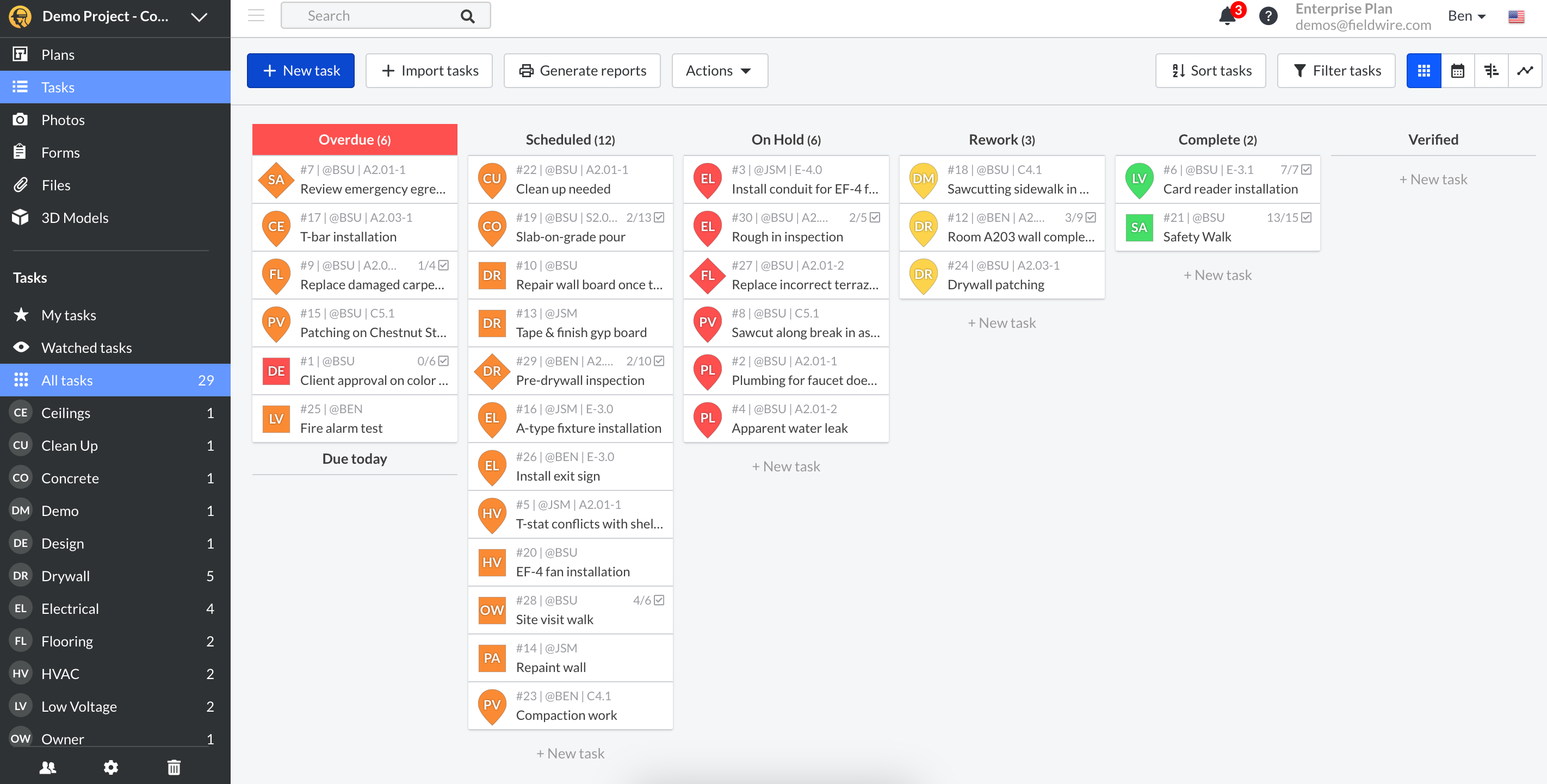
What it doesn’t do is manage a project end to end. There’s no budgeting, no RFIs, no financial tracking, and reporting is thin. Treat Fieldwire as the tool your field team uses on top of a real PM system, not a replacement for one — trying to run an entire project through it will leave gaps you’ll feel later.
Verdict: Best Contractor Project Management Software for Field Coordination
Good at exactly one thing: keeping field crews coordinated. Plan markups, punch lists, and offline access make it a genuinely useful jobsite tool for supervisors and subs. The problem is it stops there. No budgeting, no RFIs, no financial tracking, no real scheduling depth. Treat it as a field companion layered on top of a real PM system, not a replacement for one.
Fieldwire Pros & Key Features
- Good tool for site supervisors, engineers and subcontractors
- Has task management, plan viewing, punch lists, checklists and issue tracking
- Supports document control, version management and office access
- Mobile app for Android and iOS
Fieldwire Cons & Limitations
- Lacks comprehensive tools for budgeting, scheduling, dependencies, resource management and portfolio management
- Limited reporting and no built-in support for RFIs, submittals or financial tracking
- Isn’t a one-stop solution for broader aspects of construction, from plan to close
- No free trial
Fieldwire Pricing
For current pricing, visit Fieldwire’s pricing page.
Fieldwire Reviews
- G2 review: 4.5/5
- Capterra review: 4.6/5
Highlighted User Reviews
- “Overall I’ve been very satisfied with using Fieldwire as a field report and punch list tool.” Patrick B – from Capterra
- “We are able to keep track of progress, materials and scheduling easily.” Shannen H – from G2
5. Contractor Foreman
Contractor Foreman packs an unusual amount of functionality into a small-contractor price point — estimating, scheduling, time tracking, daily logs, CRM, and equipment tracking are all in there. For a small to mid-sized outfit trying to consolidate five spreadsheets into one system without an enterprise budget, it’s a legitimate option.
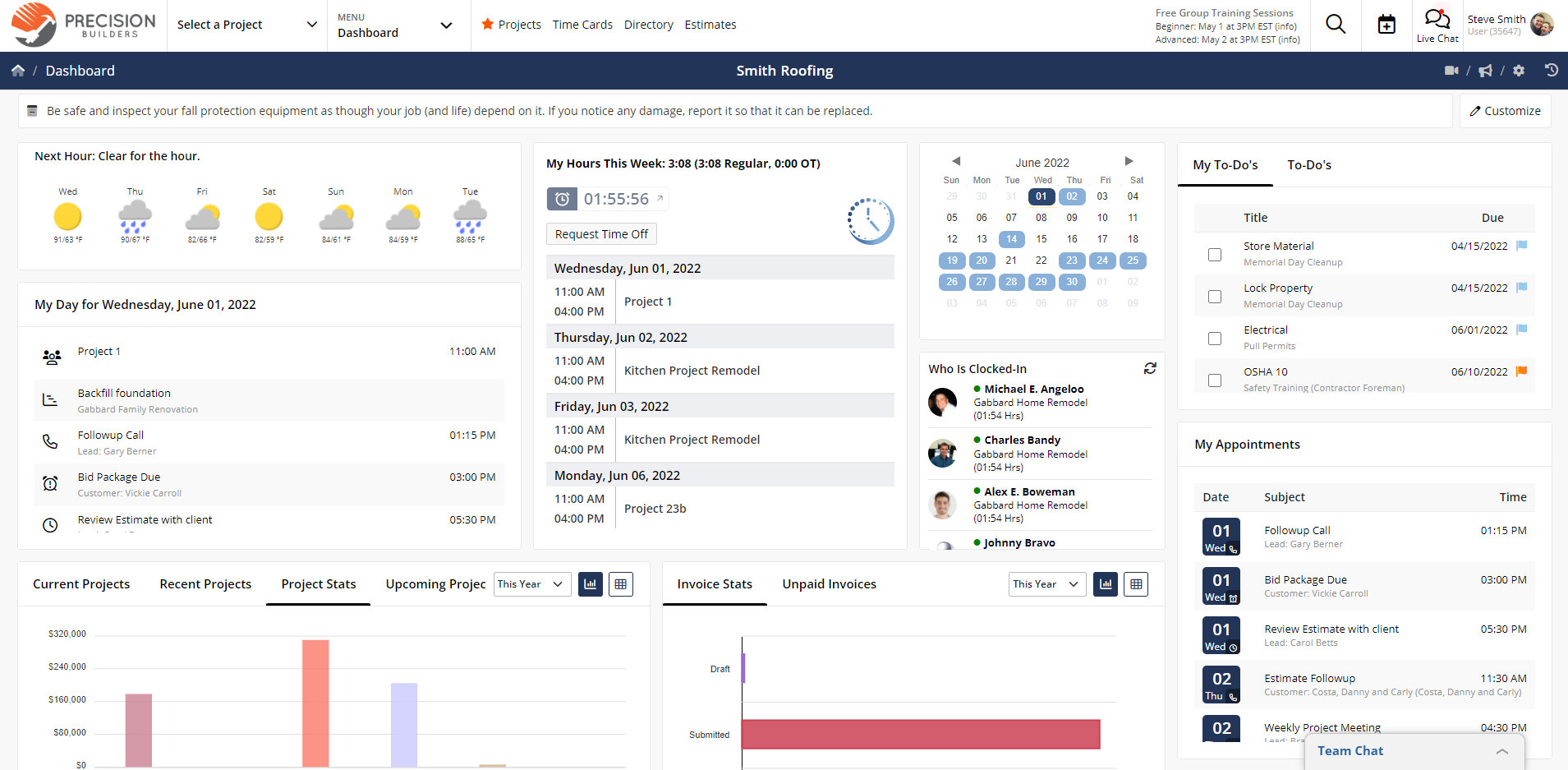
The tradeoff is polish. The interface takes longer to learn than it should, and some of the more advanced tools — Gantt charts with real dependency control, deeper resource planning — feel like they were added to check a box rather than built out properly. Users also report occasional glitches and slow load times. It’s a fair value trade for a budget-conscious team, but go in expecting some friction.
Verdict: Best Construction Project Management Software for Smaller Firms
It’s affordable and feature-packed on paper, estimating, budgeting, CRM, equipment tracking, all bundled for less than the big players charge. But execution is the weak spot. The interface is clunky, the learning curve is steeper than it should be, and users report glitchy, slow reports. Good value for small firms watching their budget, but expect some friction along the way.
Contractor Foreman Pros & Key Features
- Affordable with a wide range of features
- Tools for estimating, scheduling, time tracking, daily logs, budgeting, change orders, submittals and safety documentation
- Built-in CRM functionality, equipment tracking and client invoicing
- Free trial
Contractor Foreman Cons & Limitations
- Clunky interface is unintuitive and has a steep learning curve
- Scheduling and reporting tools lack advanced capabilities, such as Gantt charts without full dependency control or in-depth resource planning
- Users note glitchy reports that can run slow
- No free plan
Contractor Foreman Pricing
For current pricing, visit Contractor Foreman’s pricing page.
Contractor Foreman Reviews
- G2 review: 4.5/5
- Capterra review: 4.5/5
Highlighted User Reviews
- “I like the interface, the ability to customize and integrate” Jessi J – from Capterra
- “It has made it possible to organize all processes efficiently, and the information is always up-to-date and verified.” Loyda V – from G2
6. CoConstruct

CoConstruct has long been a favorite for custom home builders, largely because of its client portal — homeowners get real visibility into progress, documents, and change orders without having to call the office for updates. The QuickBooks integration and job costing tools hold up well too.
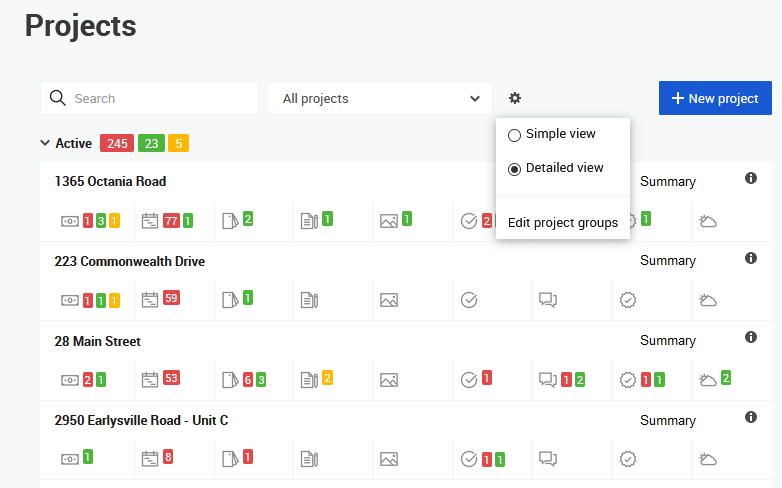
We’d flag one thing before you commit here: CoConstruct was acquired by Buildertrend, and the interface already feels dated next to newer platforms. Some users report slower updates and softer support since the acquisition, which raises a real question about how much longer CoConstruct sticks around as a standalone product versus being folded into Buildertrend entirely. It’s a fine choice for straightforward residential jobs today, but weigh the long-term platform risk.
Verdict: Best Construction Project Management Software for Remodelers
Not so good if you care about modern software. The estimating, job costing, and QuickBooks integration are solid, and the client portal is a genuine strength for custom home builders. But the interface feels outdated, scheduling lacks real dependency controls, and support has reportedly slipped since Buildertrend acquired it. Fine for simple residential jobs, risky if you need long-term platform stability.
CoConstruct Pros & Key Features
- Features for estimating, proposals, scheduling, budgeting, selections, client communication and job costing
- Client portal gives homeowners real-time visibility into projects
- Integrates with QuickBooks, streamlining financial workflows
- Mobile app for Android and iOS
CoConstruct Cons & Limitations
- Outdated and confusing interface
- Scheduling tools lack advanced Gantt chart capabilities with full dependencies and critical path controls
- Limited reporting and dashboards compared to other platforms
- No free plan
CoConstruct Pricing
For current pricing, visit CoConstruct’s pricing page.
CoConstruct Reviews
- G2 review: 4/5
- Capterra review: 4.7/5
Highlighted User Reviews
- “I like that, once all of your templates, specs, and trade partners are populated, it is very easy to build professional looking proposals.” Becky S – from Capterra
- “The clients can see precisely what we intend to build and the materials we will utilize.” Jorge P – from G2
7. Microsoft Project

Microsoft Project’s scheduling engine is as strong as anything on this list — advanced Gantt charts, real critical path analysis, and deep Power BI and Teams integration if your company already runs on Microsoft 365. For a trained PM working detailed, complex schedules, it’s precise and dependable.
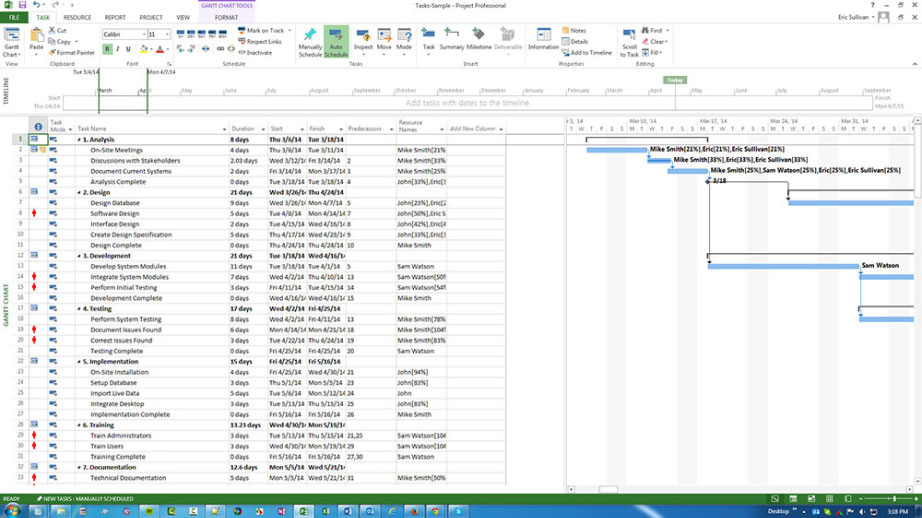
But it wasn’t built for construction, and that shows the moment you step off the schedule and into the rest of the job. No RFIs, no submittals, no punch lists, no field communication tools. You’ll be stitching other software around it to cover the basics a jobsite actually needs. Worth knowing too: Microsoft has been folding Project into its “Planner” branding, so what you find on their site may look different from what this section describes — check current naming before you buy.
Verdict: Best Construction Project Management Software for Large Projects
Not the best alternative for construction specifically. The scheduling engine is genuinely excellent, advanced Gantt charts, critical path analysis, deep Microsoft 365 integration for teams that already live in that ecosystem. But it wasn’t built for construction. No RFIs, no submittals, no punch lists, no field communication tools. You’ll be duct-taping other software around it just to cover basic jobsite workflows.
Microsoft Project Key Features & Benefits
- Supports construction planning and execution for complex projects
- Offers Gantt charts, task dependencies, milestone tracking and critical path analysis
- Mobile app for Android and iOS
Microsoft Project Cons & Limitations
- Not specifically designed for construction, limited its effectiveness for field-based work
- Lacks built-in tools for RFIs, submittals, punch lists, safety logs and real-time communication
- Complex and overwhelming interface is difficult for those without project management training
- Costly and complex pricing make it difficult to afford and find the right fit
Microsoft Project Pricing
For current pricing, visit Microsoft’s Project plans and pricing page.
Microsoft Project Reviews
- G2 review: 4/5
- Capterra review: 4.4/5
Highlighted User Reviews
- “It’s a powerful tool for managing complex projects, offering detailed features like task scheduling, resource allocation, and progress tracking.” Mazhar A – from Capterra
- “It is easy to set up a project plan using templates provided in MS Project.” Alex N – from G2
8. Autodesk Construction Cloud

Autodesk Construction Cloud is the pick for commercial and infrastructure teams doing serious BIM work. The 2D/3D model coordination and clash detection catch conflicts before they turn into rework on-site, and Build, BIM Collaborate, Takeoff, and Docs all talk to each other well if you’re already living in the Autodesk ecosystem.

Outside of BIM-heavy work, it’s a lot of tool for the job. Switching between modules feels disjointed rather than unified, the learning curve is steep, and task management and scheduling are noticeably less intuitive than platforms built construction-management-first. If your BIM needs are light, you’ll spend more time and money here than the job requires.
Verdict: Best Construction Project Management Software for Commercial Projects
Good if you’re deep in BIM, not so good if you just want simple tracking. The 2D/3D coordination, clash detection, and integrated Build and Docs tools make it a genuine powerhouse for commercial and infrastructure work. But it’s expensive, the learning curve is real, and switching between modules feels disjointed. Overkill for teams that just need straightforward task and schedule management.
Autodesk Construction Cloud Pros & Key Features
- Built for larger commercial, infrastructure and industrial projects
- Integrated tools like Build, BIM Collaborate, Takeoff and Docs connect design, planning, construction and operations
- Has document management, RFIs, submittals, change orders, scheduling and field collaboration
- Free trial
Autodesk Construction Cloud Cons & Limitations
- Complex and expensive, especially for those with limited BIM needs
- Steep learning curve and navigating between multiple modules feels disjointed
- Unintuitive task management and scheduling features
- Limited reporting customization without investing in integrations
Autodesk Construction Cloud Pricing
For current pricing, visit Autodesk’s pricing page.
Autodesk Reviews
- G2 review: 4.4/5
- Capterra review: 4.3/5
Highlighted User Reviews
- “Great. The app is extremely intuitive so the learning curve is reduced and simple. Just looks more complicated than it really is.” Mathew H – from Capterra
- “ACC has been phenomenal for working remotely. It’s also been great for sharing content with external partners.” Jeff B – from G2
9. BuildBook

BuildBook leans all the way into simplicity and client communication, and it delivers on both. The client portal keeps homeowners in the loop with real-time updates and selections without you fielding a phone call every time something moves. It’s intuitive enough that you’re not running a training session just to get a team on board.
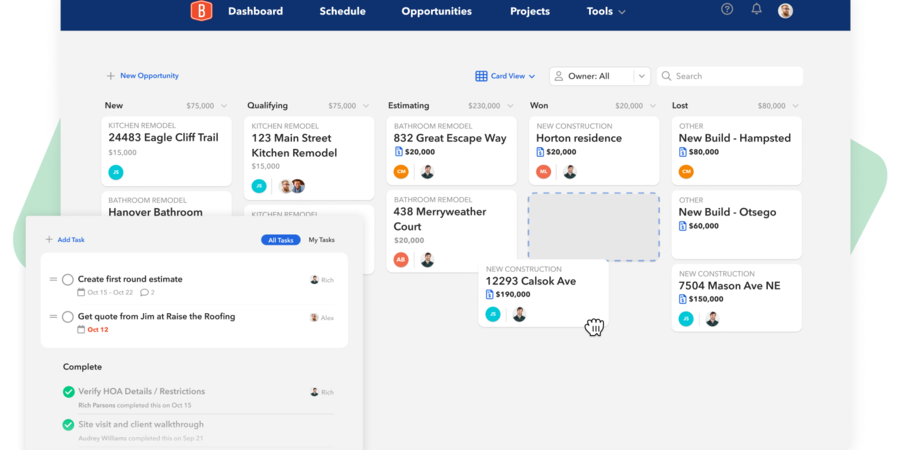
The lightness is also the limit. There’s no Gantt dependency tracking, no critical path analysis, no RFIs, and budgeting stays basic. Fine for a straightforward, client-facing remodel. The moment a project gets technically demanding — multiple trades, tight interlocking timelines — BuildBook runs out of runway fast.
Verdict: Best Construction Project Management Software for Client Communication
Good for client communication, not so good for real project complexity. The client portal and messaging tools are genuinely well built for residential builders who want homeowners in the loop. But there’s no Gantt dependency tracking, no critical path analysis, no RFIs or resource planning. Fine for simple, client-facing remodels. A poor fit the moment a project gets technically demanding.
BuildBook Pros & Key Features
- Delivers on client communication and simplicity
- Has scheduling, task management, daily logs, budgeting, file sharing and messaging
- Client portal keeps homeowners informed in real time
- Mobile app for Android and iOS
BuildBook Cons & Limitations
- Lacks the depth needed for managing larger, more complex projects
- Doesn’t support Gantt charts with full task dependencies or critical path tracking
- Basic budgeting and reporting capabilities
- No built-in tools for managing RFIs, submittals or resource planning
BuildBook Pricing
For current pricing, visit BuildBook’s pricing page.
BuildBook Reviews
- G2 review: Not available
- Capterra review: 4.5/5
Highlighted User Reviews
- “I do believe they will work the issues and help to create a product that is in tune with the current market needs.” Chris K – from Capterra
- “With Buildbook we have everything we need within reach in the office or on location.” Delaney H – from Capterra
10. Trimble Unity Construct

Trimble Unity Construct — the platform formerly known as e-Builder — is built for owners and capital program managers running large-scale infrastructure and facility projects, not for contractors on the ground. Cost management, procurement, document control, and audit trails are all strong, and the reporting is exactly what a public or private capital program needs to stay accountable and on budget.
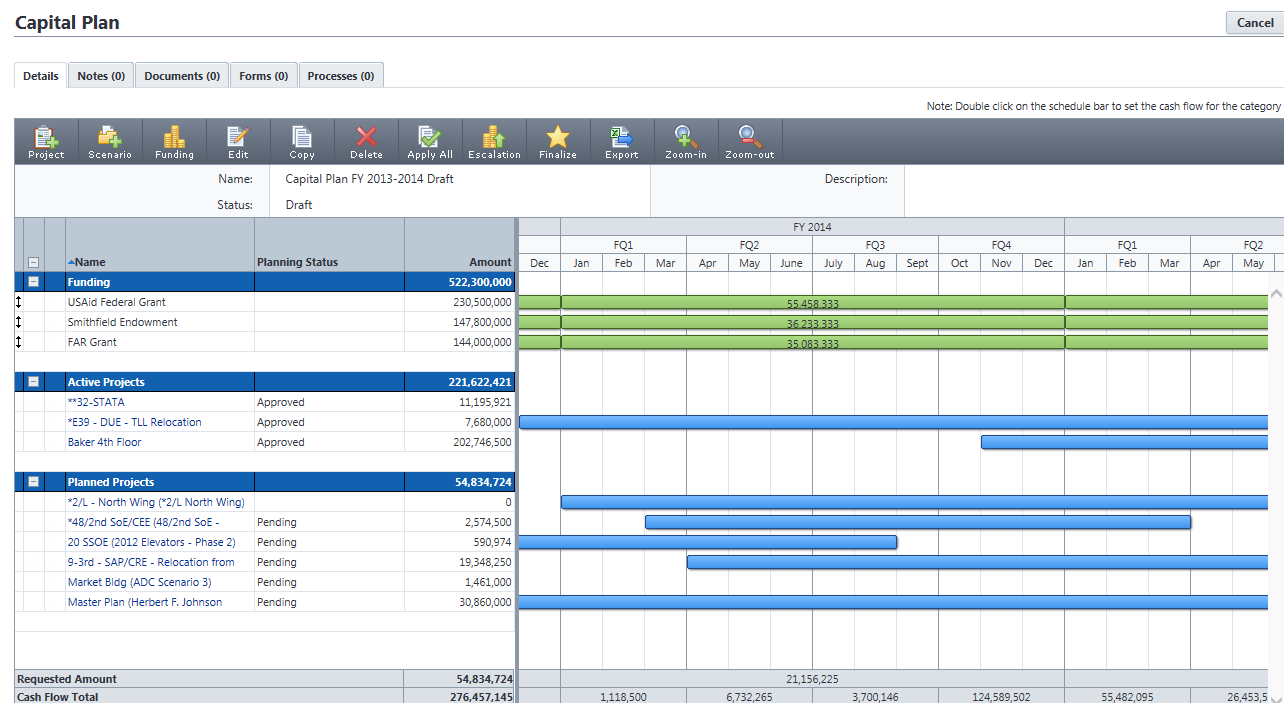
That owner-side focus comes at the expense of anyone actually swinging a hammer. The interface is dated and takes real training to navigate, customization is rigid, and there’s no mobile-first workflow for field teams. This is a tool for administrators tracking spend and compliance, not for crews trying to get work done on-site — know which side of that line you’re on before you buy.
Verdict: Best Construction Project Management Software for Capital Improvement Projects
Good for owner-side oversight, not so good for anyone in the field. The cost management, procurement, and audit trail features genuinely support large capital and infrastructure programs where accountability matters most. But the interface is dated, customization is rigid, and there’s no real mobile-first workflow for contractors. Built for administrators tracking spend, not crews trying to get work done on-site.
Trimble Unity Construct Pros & Key Features
- Helps oversee large-scale infrastructure and facility projects
- Includes cost management, scheduling, document control, procurement, submittals, RFIs and performance tracking
- Robust reporting and audit trail support keep public and private capital projects within scope, on schedule and budget
- Mobile app for Android and iOS
Trimble Unity Construct Cons & Limitations
- Complex and limited flexibility in day-to-day construction workflows makes it less effective for contractors and field teams
- Outdated and unintuitive interface requires extensive training
- No mobile-first tools and real-time task management features
- No free trial, no free plan
Trimble Unity Construct Pricing
Trimble Unity Construct is quote-based. For current options, visit Trimble’s subscription plans page.
Trimble Unity Construct Reviews
- G2 review: visit page for current rating
- Capterra review: 4.3/5
Highlighted User Reviews
- One reviewer calls it a strong auditing tool for scoring performance across internal staff and outside contractors – from Capterra
- Another reviewer notes it’s straightforward to use and integrates well alongside their other software – from Capterra
Related Construction Project Management Software Content
For those that are still on the fence, here are some recently published articles on construction software as well as a post on making a construction schedule, list of construction documents and an explanation of the construction phases to help you make a more informed decision.
- Best Construction Software for Mac
- Best Construction Management Software for a Small Business
- Best Construction Software for Mac”
- Best Construction Estimating Software
- Making a Construction Schedule: Construction Scheduling Basics
- 24 Construction Documents (Templates Included)
- The 5 Construction Phases (Templates Included)
ProjectManager is online construction project and portfolio management software that connects teams whether they’re in the office or out in the field. They can share files, comment at the task level and stay updated with email and in-app notifications. Join teams at Avis, Nestle and Siemens who use our software to deliver successful projects. Get started with ProjectManager today for free.
