



There’s always plenty of project management paperwork to create, get approved, file and archive. All project documents are important, but the statement of work (SOW) is easily one of the most important because it’s made at the outset of a project and outlines everything that needs to go into your project.
Using effective project planning tools and a thorough and well-written statement of work (SOW) will set you up to successfully lead a project over the finish line on schedule and within budget.
What Is a Statement of Work (SOW)?
The statement of work (SOW) is a legally binding document that captures and defines all the work management aspects of your project. You’ll note the activities, deliverables and timetable for the project. It’s an extremely detailed work contract that defines the terms and conditions agreed upon between parties and lays the groundwork for the project plan.
The statement of work (SOW) is one of the first documents you’ll create to lay out the entire landscape of the project before you create a project plan and execute it. Because of the great amount of detail required, the prospect of writing one can be daunting. Let’s break it down into more digestible parts. Your statement of work will be much more detailed than your job estimate, which is a simpler document that outlines the work that’ll be performed and the costs associated with it.
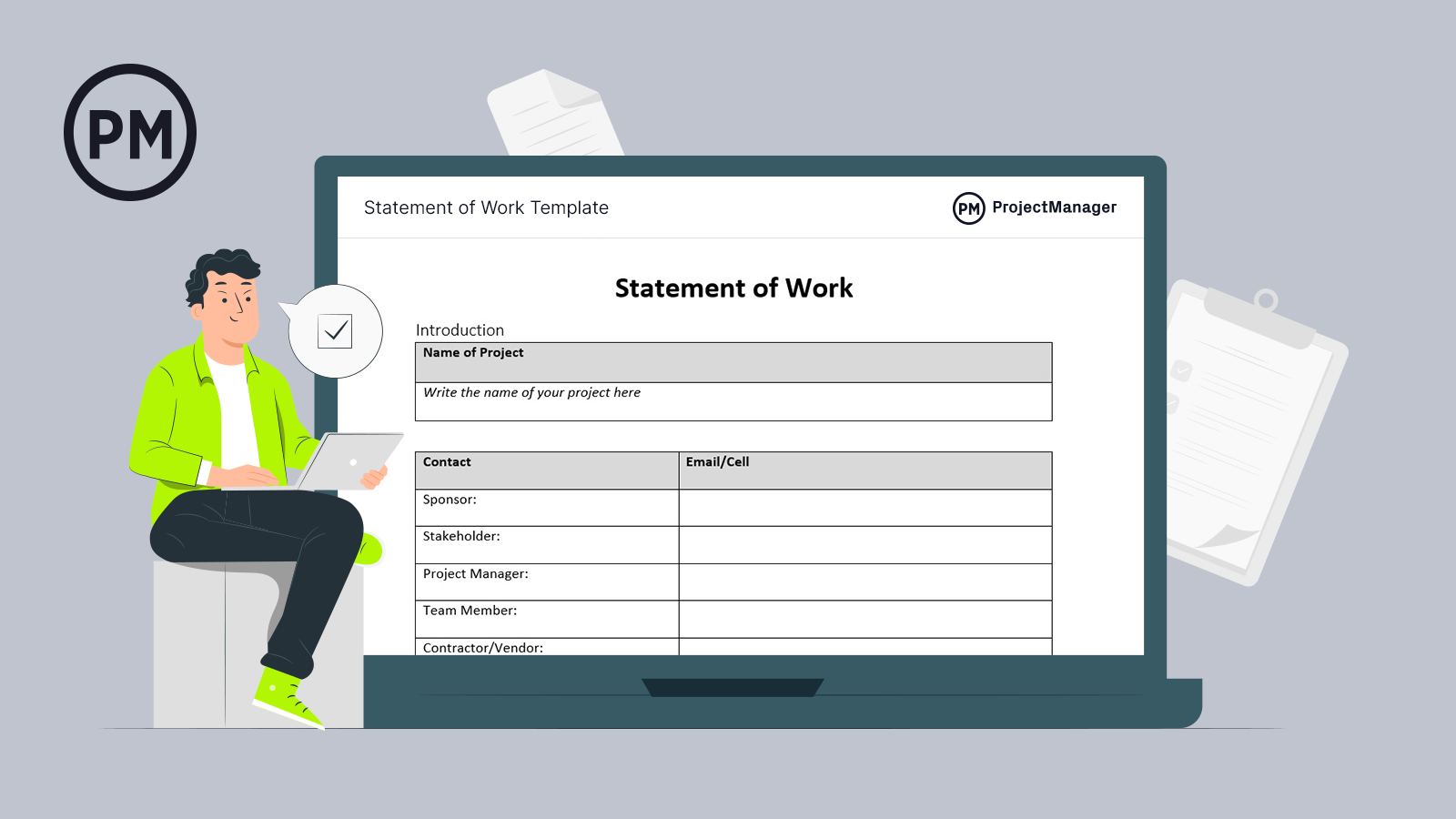
Get your free
Statement of Work Template
Use this free Statement of Work Template to manage your projects better.
Get the template
When you’re writing a statement of work, it can help to use a statement of work template because of the various aspects of the project that it must capture. Most statement-of-work templates include things such as a glossary of terms defining what you’re referencing in the SOW. There will be a place for you to write the statement of purpose as well as administrative information. If you like our statement of work template, you can also try our free project management templates to manage your projects.
What Is the Purpose of a Statement of Work (SOW)?
As noted, the statement of work is a detailed overview of the project scope. It’s also a way to share the project requirements, acceptance criteria and payment terms with those who are working on the project, whether they’re collaborating or are contracted to work on the project. This includes stakeholders like vendors and contractors who are bidding to work on the project.
An SOW contract is also helpful to project managers as it provides a structure on which the project plan can be built. The statement of work helps to avoid conflicts in the project. With detail and clarity, the SOW helps keep everyone who’s involved in the project on the same page and works to leave confusion to a minimum.
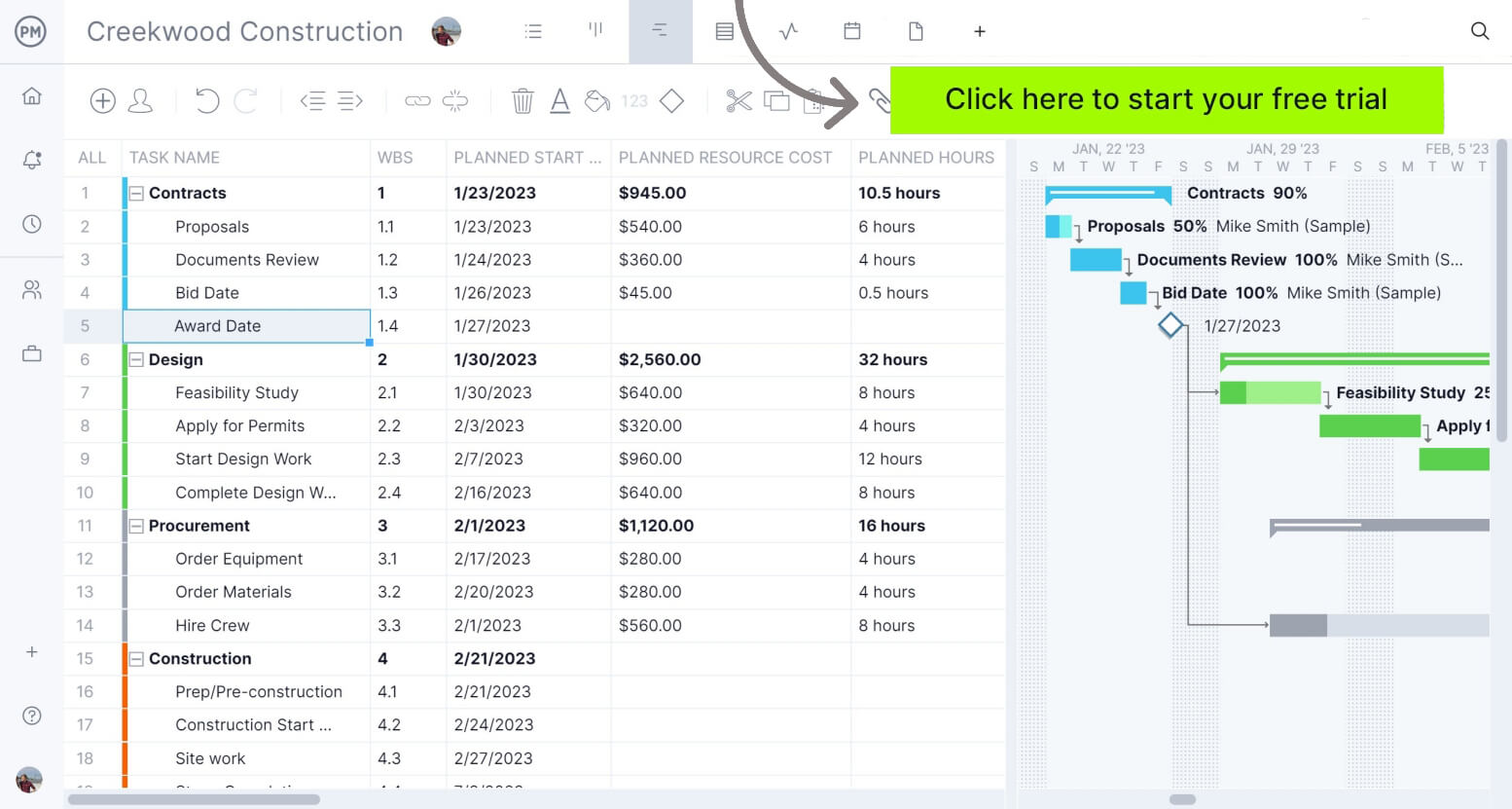
When building your schedule, it helps to use project management software. It can help organize your tasks and resources, as it’s critical to make an accurate schedule at this stage in the project. Project management software can also help you to create a work breakdown structure (WBS) to zoom into your project scope and identify your project’s activities, deliverables and milestones.
ProjectManager can organize the information you’re gathering in our list view. But our tool does more than make a fancy to-do list. Choose between online Gantt charts, kanban boards, project calendars and other project management views to plan, schedule and track your projects. Our real-time software tracks your progress and the list shows the percentage complete for each task. See for yourself by taking our free 30-day trial.
When to Use a Statement of Work
A statement of work should be used at the start of any project that requires clear deliverables, defined responsibilities and a formal agreement between stakeholders. In the project management industry, it’s especially important for projects involving external vendors, multiple teams or complex tasks, where ambiguity can lead to delays, budget overruns or disputes.
A SOW is also useful when projects have strict timelines, regulatory requirements or fixed budgets, as it sets expectations and defines scope upfront. Additionally, it serves as a reference point throughout execution, helping manage changes, prevent scope creep and ensure accountability across all parties.
Statement of Work vs. Scope of Work
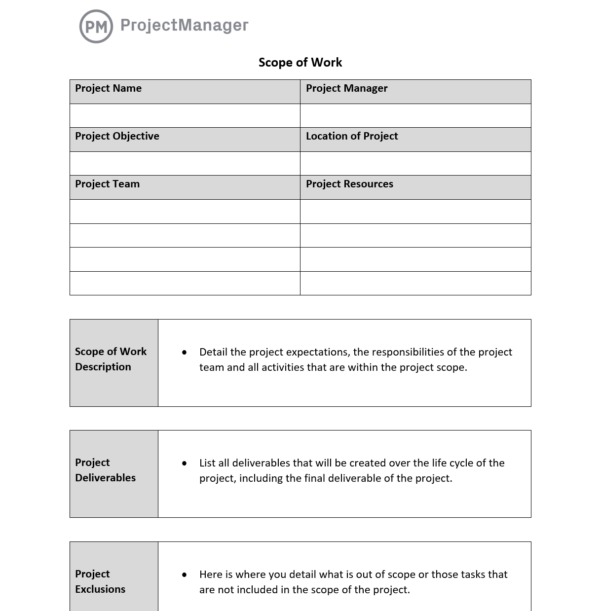
While they sound the same, a statement of work isn’t a scope of work. The statement of work, as we’ve shown, is a formal document that details the goals of the project.
The scope of work is part of the larger statement of work. In it, the way the project team will deliver the outcomes laid out in the SOW is described, so the scope of work is a much shorter project document.
What Does SOW Stand for In Business and Project Management?
Now that we’ve cleared the difference between a statement of work and scope of work, it’s important to note that the SOW acronym stands for statement of work and not scope of work, which is a component of the SOW. Similarly, the terms SOW contract, SOW document and SOW agreement also refer to statements of work in project management and business.
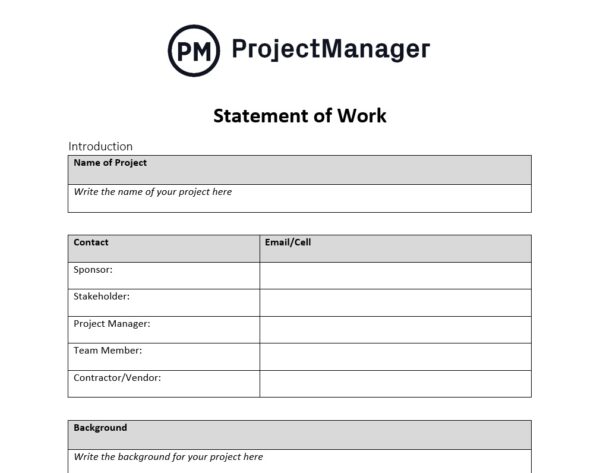
Statement of Work Template
Templates make everything a little bit easier. Jump-start your statement of work document with our free SOW template for Word. It helps you outline your project background, schedule, deliverables, communication plan and more. Download your free copy today.
Types of Statement of Work
An SOW can be broken down into three main categories, which can be defined as follows.
- Design/detail SOW: When you’re writing this SOW, you’re conveying to the supplier how you want the work done. What are the buyer requirements that’ll control the supplier’s process? You can use a requirements gathering template to ensure you gather them all. These project requirements can run the gamut from quality acceptance criteria and payment terms to the measurement of materials. In this SOW, it’s the buyer who’s being held responsible for the performance, as he’s the one directing the project course.
- Level of effort/time and materials/unit rate SOW: This SOW agreement is an almost universal version and it can apply to most projects. It defines the level of effort as well as the materials and cost per unit. It tends to find use in short-term contracts.
- Performance-based SOW: This is the preferred SOW of project managers as it focuses on the purpose of the project, the resources and the quality level expected of the deliverables. It does not, however, explain how the work is supposed to get done. This allows a great deal of autonomy in how to get to an outcome without requiring a specific process.
How to Write a Statement of Work (SOW)
A statement of work is a legally binding agreement between a client and a vendor that describes the terms and conditions for the execution of a project’s scope of work. There’s a lot of information to describe in the SOW. You can create this on your own if you want, but using project management tools to make sure nothing is left out will prove helpful. You only have one chance to create your SOW document and you want it done right.
Here’s an overview of the steps you’ll need to follow to write your statement of work:
- Create a brief introduction for your project
- Define the purpose of your project
- Define your project scope
- Create a work breakdown structure to identify your project tasks, milestones and deliverables
- Create a project schedule
- Define project requirements and acceptance criteria
- Define payment terms and conditions
In terms of writing the statement of work, you’ll want to be specific with this project document. You want to clarify the terms used to make them universally understood and clearly define who’s going to do what and by what time those tasks must be completed. This avoids confusion later in the project when you can’t afford miscommunications or disputes.
Besides writing clearly, include visuals in the SOW to help focus the lens on various project aspects. Including visuals, be they project charts, graphs or other illustrations to help you clarify the project, will make the SOW agreement more digestible.
After all the work you’ve done to detail the specifics of the project, you don’t want to neglect the final, crucial step — getting the work signed off. You can’t proceed if you don’t have the authority to do so. Or, more accurately, you can, but it might cost you the success of the project. Make sure that those in authority have signed off on the statement of work.

What Should Be Included in a Statement of Work (SOW)?
There are as many parts in a statement of work as there are in a project, so it’s advisable to use a project management information system to help you manage its components. If you start by focusing on the parts, you can work yourself up to the whole. For a full understanding of an SOW, first, note the major aspects of the project it addresses.
1. Project Background
Project background is a concise summary of the circumstances, conditions and prior decisions that led to the initiation of the project. It describes the situation that exists before work begins, including relevant history, business context and triggering events, without proposing solutions or commitments.
In a statement of work, the project background establishes shared context between the parties, explains why the engagement exists and provides a factual foundation for interpreting scope, objectives, assumptions and contractual obligations that follow, reducing ambiguity and misalignment during execution.
2. Purpose Statement
Start with the big question: why are you initiating this project? What’s the purpose of the project? Create a purpose statement to lead this section and provide a thorough answer to these questions, such as what are the project objectives, deliverables and return on investment?
3. Project Goals and Objectives
Project goals and objectives define the desired outcomes and specific results a project is expected to achieve within a statement of work. Goals describe the broader purpose and direction of the project, while objectives translate those goals into measurable, actionable targets. Together, they establish a clear framework for decision-making, align stakeholder expectations and provide criteria for evaluating performance, progress and successful project completion.
4. Scope of Work
What work needs to be done in the project? Note it in the scope of work, including what hardware and software will be necessary. What’s the process you’ll use to complete the work defined in your project scope? This includes outcomes, time involved and even general steps it’ll take to achieve that. You’ll need to create a project scope statement to capture the information about your project scope.
- Project tasks: Specific activities required to complete the work outlined in a statement of work. They break the project scope into manageable units, defining what actions must be performed, by whom and often within what timeframe. Defined tasks help ensure accountability, support accurate scheduling and cost estimates and provide a structured path for executing the scope.
- Project task dependencies: Describe the relationships between tasks, identifying which activities must be completed before others can begin. In an SOW, documenting dependencies clarifies workflow, sequencing and timing constraints. This helps set realistic schedules, anticipate potential delays and ensure that interrelated tasks are coordinated effectively to support smooth project execution.
- Roles and responsibilities: Define who is accountable for specific tasks, decisions and deliverables within a statement of work. This section clarifies expectations for project sponsors, managers, team members and external parties. Clearly assigning responsibilities reduces confusion, prevents overlap or gaps in ownership and supports efficient collaboration and accountability throughout the project lifecycle.
- Project deliverables: Tangible or measurable outputs the project is expected to produce, as defined in the statement of work. They specify what will be delivered, in what format and often to what standard. Defined deliverables provide a basis for acceptance, performance measurement and payment.
- Project milestones: Key points or events that mark significant progress or achievements within a project. In a statement of work, milestones help structure the timeline, track progress and align stakeholders on critical phases. They are often tied to reviews, approvals or payments and provide clear checkpoints for measuring advancement toward project completion.
- Project exclusions: Identify tasks, deliverables or responsibilities that are intentionally outside the project’s scope. In a statement of work, stating exclusions helps prevent misunderstandings and scope creep. By defining what is not included, stakeholders can align expectations and reduce the risk of disputes.
Related: Project Scope Template
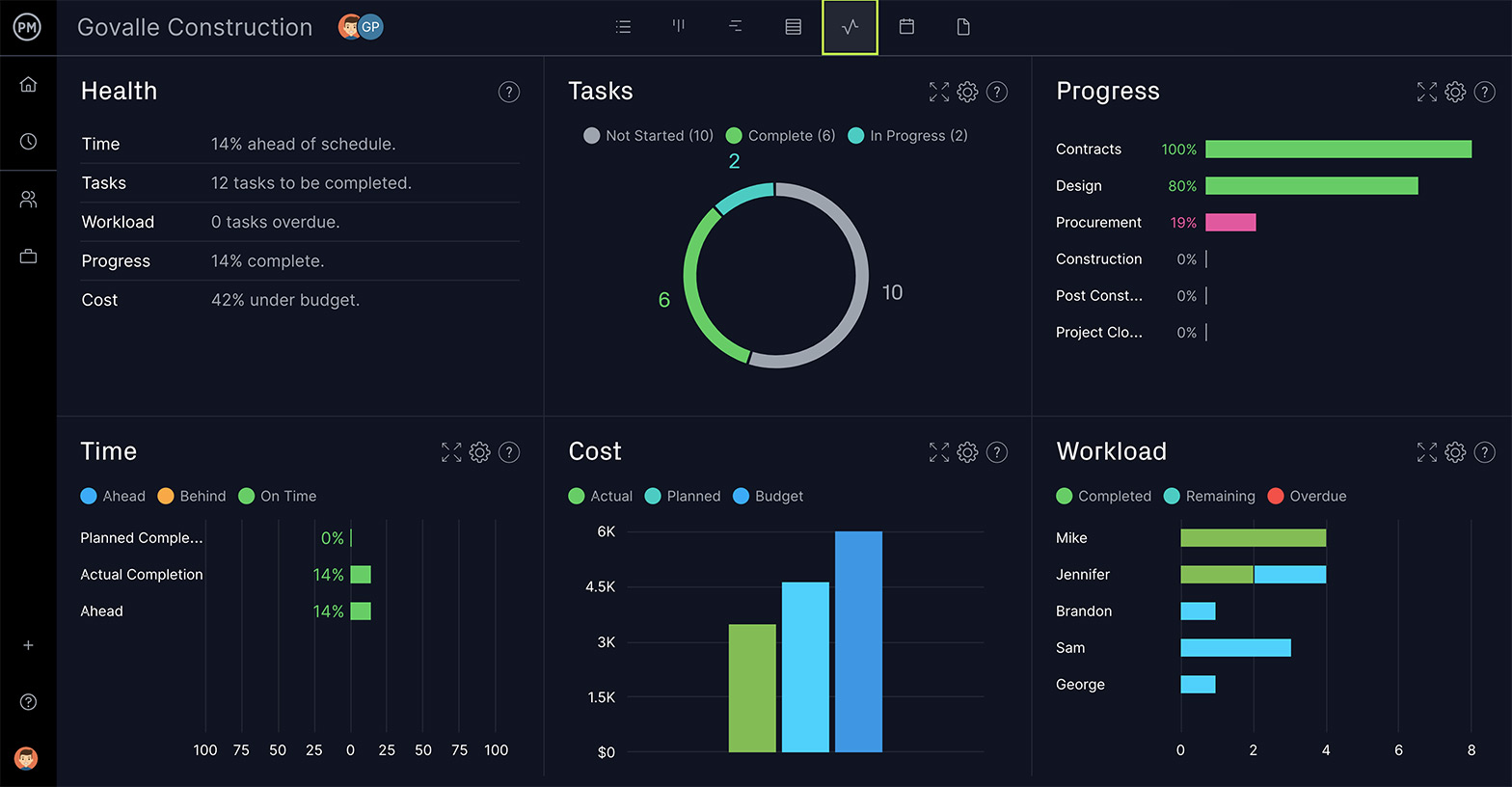
Use project management software to monitor your progress and ensure you’re meeting your milestones. ProjectManager has a real-time dashboard that’s built into the tool, unlike other software that makes you build your own. We not only have a dashboard embedded but it automatically calculates and displays the metrics in easy-to-read charts and graphs. Keep up with more than milestones, but also project variance, costs and more.
5. Work Schedule
The work schedule defines when contracted work will be performed across the engagement period for the statement of work. It identifies key dates, phases, milestones, review points and the overall performance window at a high level.
The work schedule establishes timing expectations and phase relationships, supports coordination between parties and provides a baseline for tracking progress, evaluating schedule changes and assessing timing impacts on costs, resources and deliverable acceptance throughout the duration of the agreement.
6. Project Requirements
Project requirements establish the mandatory conditions that must be satisfied for the work to proceed, be reviewed and be accepted. They specify obligations related to communication, approvals, reporting, access, compliance, quality and documentation that govern how the parties interact during delivery.
- Communication and reporting requirements: Define how progress is communicated, including reporting frequency, formats, meetings and points of contact, ensuring visibility, alignment and timely issue identification throughout the engagement.
- Review, approval and decision requirements: Specify required reviews, approval authorities and response timelines that govern deliverable evaluation, change authorization and decision-making, preventing delays and ambiguity during execution.
- Acceptance criteria and validation requirements: Establish acceptance criteria and processes for confirming deliverables meet agreed standards, including testing, inspections and formal sign-off, forming the basis for acceptance and payment.
- Compliance, quality and documentation requirements: Define applicable laws, standards, quality benchmarks and documentation obligations that must be met to ensure contractual, regulatory and operational compliance throughout delivery.
7. Project Assumptions
Project assumptions are conditions or factors that are accepted as true for planning purposes, even though they may not be fully verified. In a statement of work, documenting assumptions provides context for scope, timelines and cost estimates. They help align stakeholder expectations, identify potential risks and establish a baseline for decision-making if conditions change during project execution.
8. Project Constraints
Project constraints are the limitations or restrictions that affect how a project is planned and executed, such as budget, schedule, resources, or regulatory requirements. In a statement of work, defining these constraints sets realistic expectations and establishes boundaries for delivery. This information guides planning decisions, supports risk management and helps ensure the project remains achievable within agreed-upon limits.
9. Quality Assurance Guidelines
Quality assurance guidelines define the standards, processes and criteria used to ensure project work meets required levels of quality and performance. In a statement of work, these guidelines establish how quality will be measured, reviewed and maintained throughout execution. They help align expectations, support consistent results, reduce rework and provide a clear basis for evaluating deliverables against agreed-upon quality standards.
10. Quality Control Procedures
Quality control procedures are the specific methods and activities used to inspect, test and verify that project deliverables meet defined quality requirements. In a statement of work, these procedures outline how quality will be checked, who is responsible and when reviews will occur. They support consistent evaluation, early detection of defects and acceptance of deliverables that meet agreed-upon standards.
11. Project Success Criteria
Quality control procedures are the specific inspection, testing and verification activities used to confirm that project deliverables meet defined quality standards. In a statement of work, documenting these procedures clarifies how outputs will be reviewed, who is responsible for checks and when evaluations occur. This ensures consistent quality, supports acceptance decisions and reduces defects, rework and disputes during project execution.
12. Change Management Approach
A change management approach defines the formal process for requesting, evaluating, approving and implementing changes to the project scope, schedule, or cost. In a statement of work, it establishes how changes will be documented, who has approval authority and how impacts will be assessed. This approach helps control scope creep, maintain alignment with project objectives and ensure changes are managed consistently and transparently.
13. Payment Terms
If the project budget has been created, then you can list the payments related to the project and how they’ll be delivered: upfront, over time or after completion. For example, you can pay after the completion of a milestone or on a fixed schedule, whichever is more financially feasible.
14. Other
There will be other parts of the project that aren’t suited to the above categories, and this is the place where you can add them so that everything is covered. For example, are there security issues, restrictions around hardware or software, travel pay, post-project support, etc?
Related: Project Task Tracking Template
Statement of Work Example
We’ve been talking a lot about a statement of work, but a statement of work example can help make the subject more understandable. Let’s take a look at what a statement of work sample would look like in a real-life scenario.
This statement of work defines the terms, scope and expectations for the construction of a new 12,000-square-foot light industrial warehouse expansion. The document establishes contractual alignment between the client and contractor by clearly defining objectives, scope boundaries, deliverables and responsibilities before the start of physical work.
Project Background
The client operates a growing regional distribution business and has outgrown its existing warehouse capacity. Increased inventory volumes and operational throughput have created space constraints that limit efficiency and future growth. This project involves constructing a warehouse expansion adjacent to the existing facility to support increased storage capacity, improve logistics flow and meet applicable zoning and building regulations.
Purpose Statement
The purpose of this statement of work is to formally document the construction services to be provided for the warehouse expansion project. It defines what work is included, how deliverables will be produced, who is responsible for execution and what activities fall outside the agreed scope, serving as the baseline for performance measurement and change control.
Project Goals and Objectives
The primary goal of the project is to deliver a fully operational warehouse expansion that meets structural, safety and regulatory requirements within the agreed schedule and budget. Supporting objectives focus on quality execution, coordination among trades and minimizing disruption to existing warehouse operations.
| Goal ID | Project Goal | Objective | Success Metric | Target Date |
| G-01 | Construct warehouse expansion | Complete all construction activities | 100% scope delivered | 15/11/2025 |
| G-02 | Maintain schedule performance | Avoid critical path delays | On-time completion | Project close |
| G-03 | Meet safety and compliance standards | Pass all inspections | 100% approvals obtained | Final inspection |
Scope of Work
The scope of work defines the construction tasks required to deliver the warehouse expansion, including dependencies, deliverables, assigned responsibilities and explicit exclusions. Any work not expressly included in this section is considered outside the scope and subject to formal change control.
| Project Tasks | Task Dependencies | Project Deliverables | Roles and Responsibilities | Exclusions |
| Site preparation and grading | Approved site plans | Cleared and leveled site | General contractor manages earthworks | Environmental remediation |
| Foundation construction | Completed site preparation | Poured and cured foundation | Concrete subcontractor executes foundation work | Underground utility relocation |
| Structural framing | Foundation approval | Steel frame erected | Structural contractor installs framing | Future vertical expansion |
| Building envelope installation | Completed framing | Roofing and exterior walls | Envelope subcontractors install roofing and cladding | Specialty façade elements |
| Interior utilities rough-in | Enclosed structure | Installed electrical and lighting systems | Electrical subcontractor performs installations | Office fit-out or furnishings |
Work Schedule
The work schedule outlines the planned sequencing and duration of major project phases. Dates are based on the notice to proceed and assume timely approvals and site access. The schedule establishes baseline expectations for progress tracking and milestone coordination.
| Project Phase | Start Date | End Date | Duration | Responsible Party |
| Site preparation and grading | 01/08/2025 | 15/08/2025 | 2 weeks | General contractor |
| Foundation construction | 18/08/2025 | 05/09/2025 | 3 weeks | Concrete subcontractor |
| Structural framing | 08/09/2025 | 26/09/2025 | 3 weeks | Structural contractor |
| Building envelope | 29/09/2025 | 17/10/2025 | 3 weeks | Envelope subcontractors |
| Interior utilities and inspections | 20/10/2025 | 14/11/2025 | 4 weeks | Electrical contractor |
Project Requirements
Project requirements define the technical, regulatory and performance standards that must be met for deliverables to be accepted. These requirements establish objective criteria for compliance, inspection and final approval.
| Requirement Category | Requirement Description | Verification Method | Responsible Party |
| Structural | Warehouse structure must meet approved engineering specifications | Engineer inspection and certification | Structural contractor |
| Regulatory | Compliance with local building and fire codes | Authority inspections | General contractor |
| Safety | Adherence to site safety and OSHA standards | Safety audits and reports | Project manager |
| Operational | Warehouse ready for storage operations upon completion | Final walkthrough and client sign-off | Client and contractor |
Project Assumptions
Project assumptions identify conditions believed to be true for planning purposes. If any assumption proves incorrect, schedule, cost or scope adjustments may be required through formal change control.
| Assumption ID | Assumption Description | Impact if Invalid | Owner |
| A-01 | Permits will be approved within planned timelines | Schedule delays | Client |
| A-02 | Site access will be available throughout construction | Reduced productivity | Client |
| A-03 | Key materials will be available as scheduled | Cost increases or resequencing | General contractor |
Project Constraints
Project constraints identify fixed limitations that restrict planning flexibility. These constraints must be managed throughout execution and cannot be altered without formal agreement.
| Constraint Type | Description | Impact | Mitigation Approach |
| Schedule | Project must be completed before peak inventory season | Limited float | Critical path monitoring |
| Budget | Total construction budget is fixed | Restricted scope flexibility | Cost control and approvals |
| Operational | Existing warehouse operations must continue | Phased work required | Coordination with client operations |
Quality Assurance and Control
Quality assurance and control define the processes and standards used to ensure that all work performed under this statement of work meets contractual, regulatory and technical requirements. Quality activities focus on preventing defects through planning and oversight while verifying completed work through inspections, testing and formal acceptance before project closeout.
| Quality Area | Quality Standard | Quality Control Method | Acceptance Criteria | Responsible Party |
| Site work and foundation | Approved engineering drawings and specifications | On-site inspections and material testing | Foundation meets design tolerances and passes inspection | General contractor |
| Structural framing | Structural codes and approved shop drawings | Engineer review and field verification | Structure approved by structural engineer | Structural contractor |
| Building envelope | Manufacturer specifications and installation standards | Installation inspections and water intrusion checks | Envelope is weather-tight and defect-free | Envelope subcontractors |
| Electrical systems | Electrical codes and approved plans | Functional testing and authority inspections | All systems operational and approved | Electrical subcontractor |
| Final completion | Contract requirements and regulatory approvals | Final walkthrough and punch-list verification | Client sign-off with no outstanding defects | Project manager |
ProjectManager Can Improve Your Statement of Work
ProjectManager has a suite of project management tools that can help you put together a statement of work (SOW) that accurately depicts the forthcoming project. For starters, you can use our Gantt to start listing the tasks you can think of for the project.
Plan and Schedule Project Tasks With Gantt Charts
The online Gantt has the basics of a visual timeline and the ability to link dependencies to avoid bottlenecks and set milestones. Assign costs to tasks and see your planned costs for the project or specific phases. You can use the critical path tool to know what tasks can be skipped if necessary and set the baseline once your schedule and budget are done. That means you’ll be able to track in real time whether you’re staying on track and under budget. ProjectManager has the tools you want and delivers more functionality than the competition.
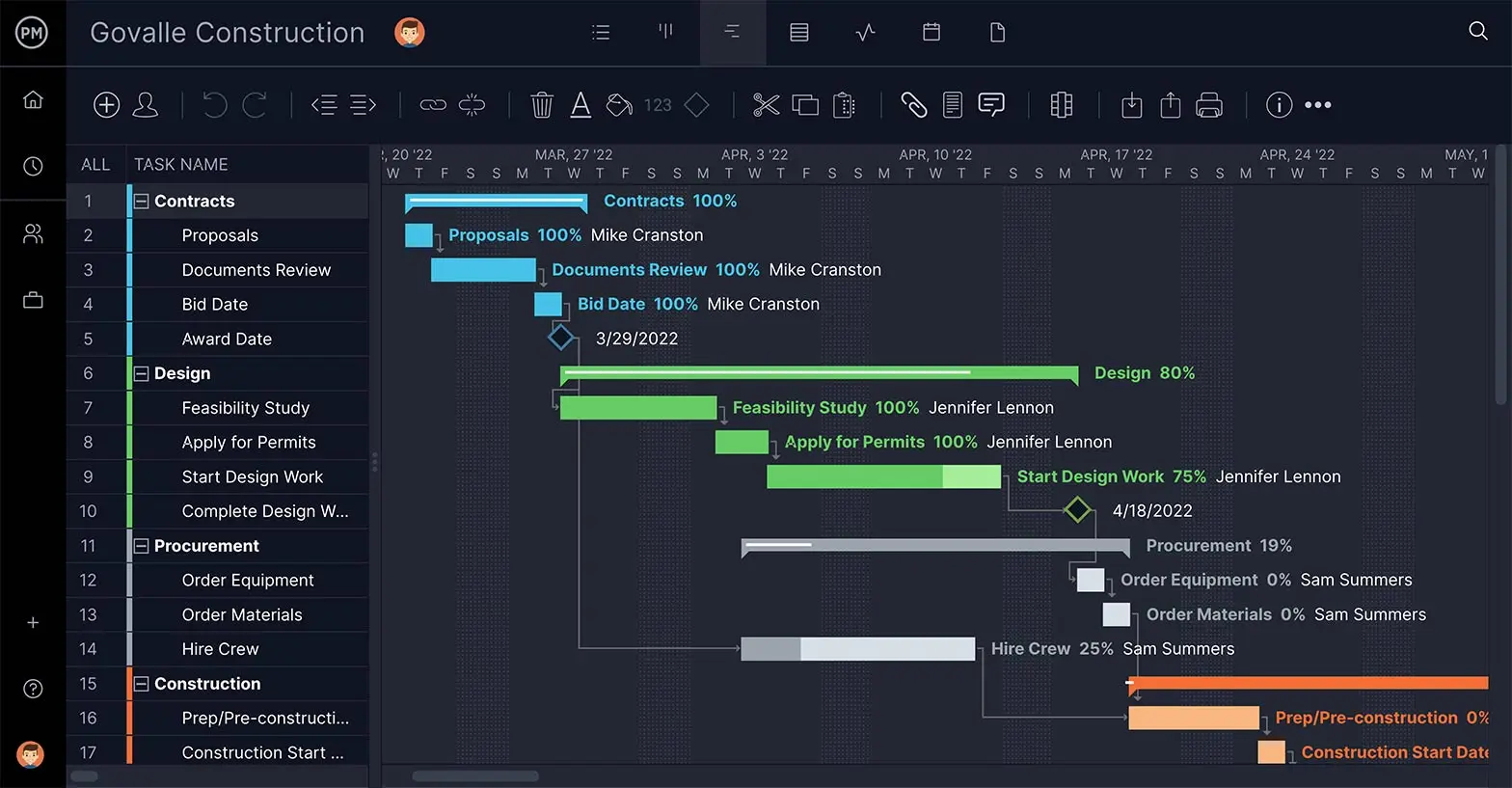
As you can see, using our Gantt chart software can go a long way to making an accurate statement of work for your project. Accuracy means a lot to stakeholders when it comes time to deliver on the work that you scoped out.
Keep Track of Progress, Costs and Schedules With Real-Time Dashboards
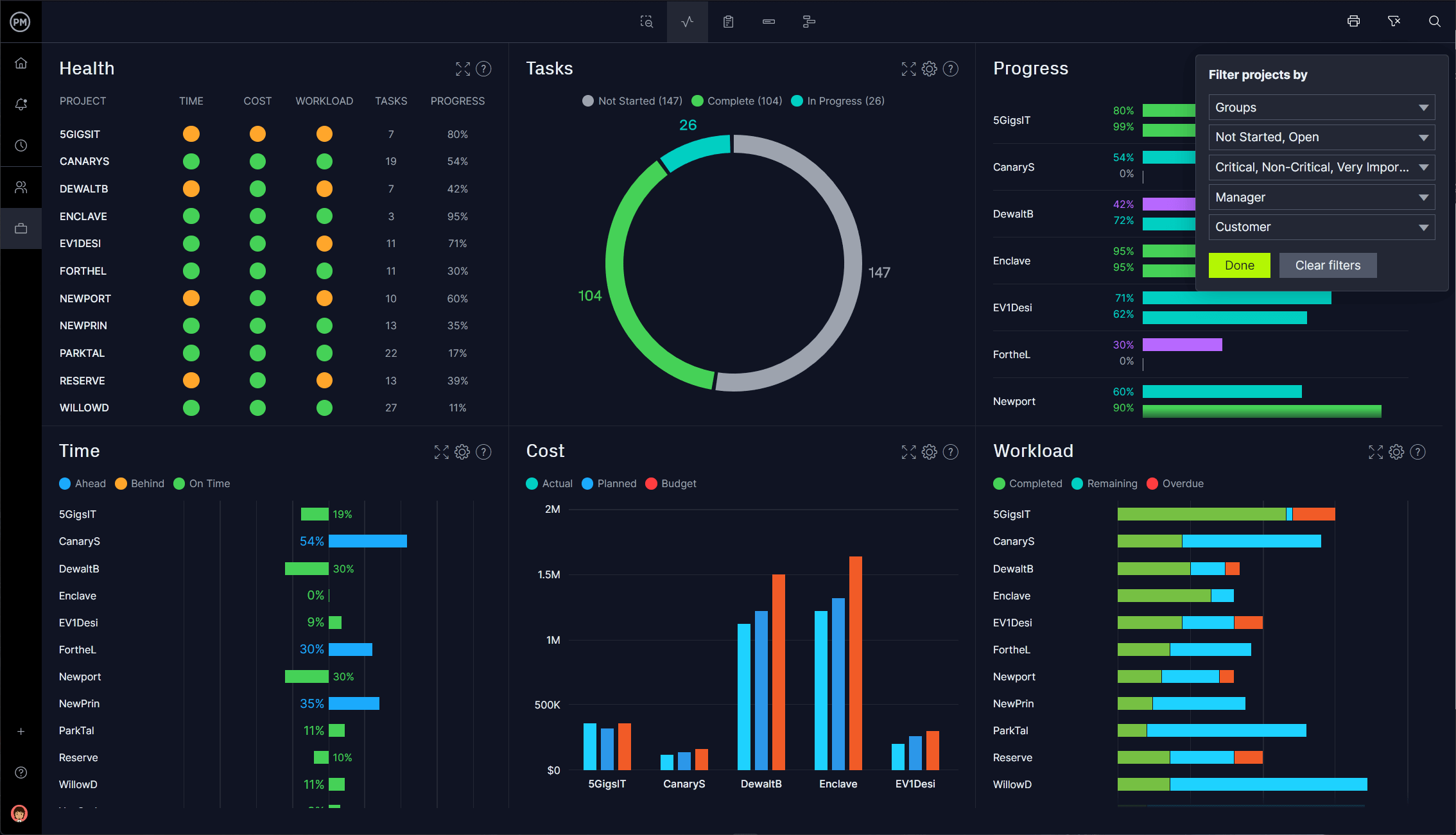
ProjectManager’s project dashboard tracks progress, costs and workload in real time so you can monitor the execution of your statement of work and quickly determine whether your project team is delivering tasks on time and on budget. In addition, Gantt charts and kanban boards have built-in risk and resource management features for better project tracking.
Related Work Management Content
- Workflow Template
- Statement of Work Template
- Work Proposal Template
- 9 Work Templates for Excel and Word
- How to Write a Work Proposal (with Example & Template)
- ¿Qué es la declaración de trabajo de un proyecto?
- Was ist eine Leistungsbeschreibung? Definition & Beispiele
- Qu’est-ce qu’un cahier des charges ? Définition et exemples
The statement of work is a foundational document of any project. Once created and approved, you’ll have to create a plan and implement it. That’s where ProjectManager comes in. Our online project management software provides real-time data to help you manage and track your statement of work. Take it for a test spin and see how it can help you with this 30-day free trial.
