



Accurate forecasting can mean the difference between a profitable project and one plagued by cost overruns, resource shortages and missed deadlines. This guide takes an in-depth look at construction forecasting software, exploring the capabilities that drive better planning and decision-making. You’ll learn which forecasting features matter most, why they are valuable and which software solutions stand out in each area.
What Is Construction Forecasting Software?
Construction forecasting software is a project management tool used to predict future project costs, labor needs, resource requirements, schedules and financial outcomes. It is commonly used by contractors, project managers and construction firms to improve planning, reduce uncertainty and make informed decisions throughout a project’s lifecycle.
Rather than relying solely on historical reports, these platforms analyze current project data to estimate what is likely to happen next. Forecasts may include final project costs, expected completion dates, workforce demand, equipment utilization, cash flow projections and profit margins.
By identifying potential overruns, delays and resource shortages before they occur, construction forecasting software helps teams take corrective action earlier. This allows construction organizations to improve budget control, allocate resources more effectively and increase the likelihood of delivering projects on time and within budget.
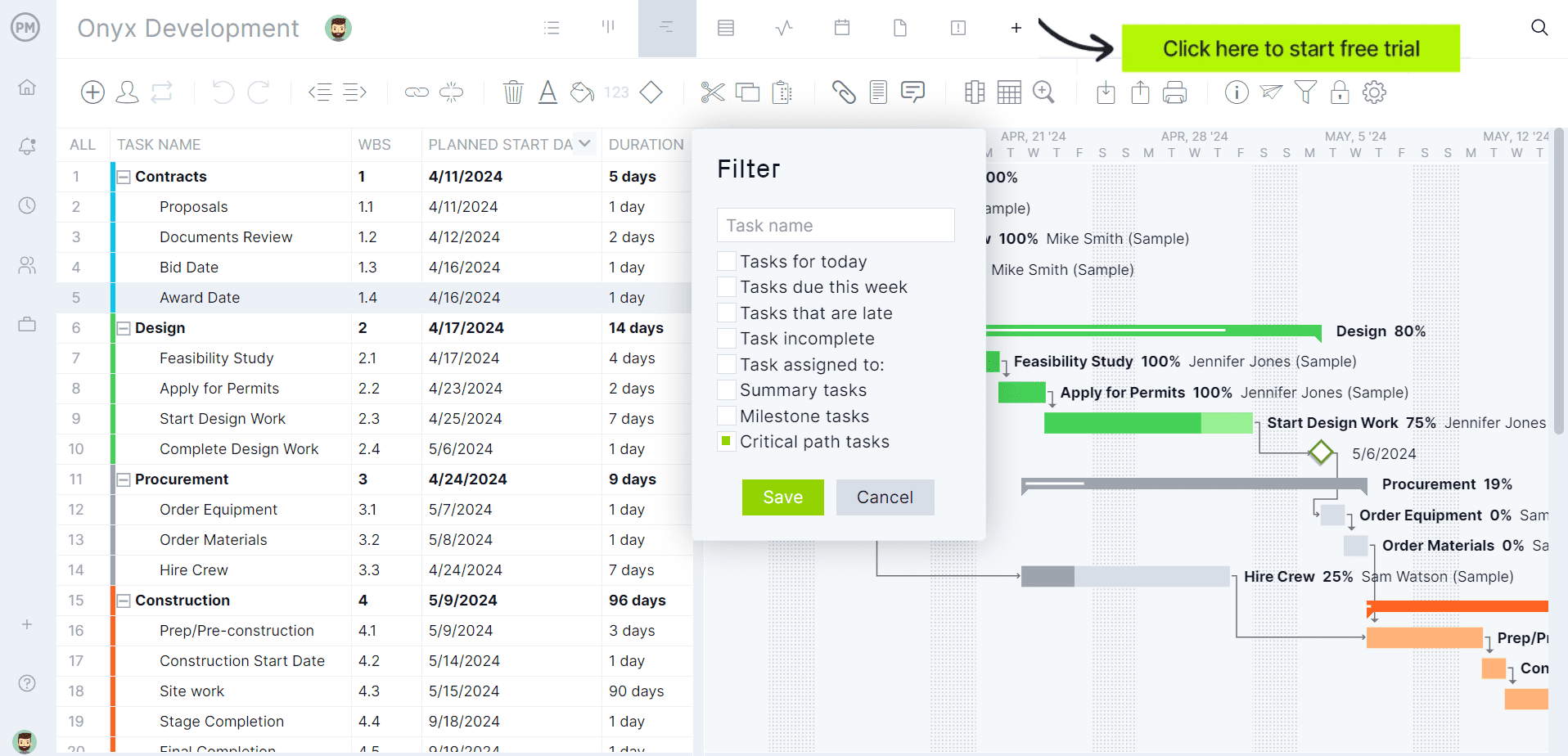
If you’re looking for software to plan, schedule and track construction projects from start to finish, try ProjectManager instead. ProjectManager is award-winning construction project management software that gives construction companies tools to ensure projects are completed on time, within budget and within scope. It allows project managers to create detailed construction schedules, estimate costs, allocate resources, set budgets, track progress and compare estimated versus actual project outcomes using real-time dashboards and reports to quickly identify delays or cost overruns. Get started with ProjectManager for free today.
Construction Forecasting Software Features
Strong forecasting capabilities give contractors a clearer view of project performance before issues affect budgets, schedules or profitability. The sections below explore the core forecasting functions found in construction forecasting software, including cost, labor, resource and schedule forecasting tools used to support planning and decision-making.
Construction Cost Forecasting
Construction cost forecasting features are tools used to predict future project expenses and estimate the final cost at completion. They are commonly used in construction projects to monitor spending trends and identify potential budget risks. These capabilities analyze budgeted and actual costs, forecast remaining expenses, evaluate cost variances and estimate the financial impact of change orders, material price fluctuations and subcontractor commitments.
As a project progresses, small cost deviations can quickly develop into significant overruns if they go unnoticed. Within construction forecasting software, cost forecasting features provide early visibility into budget performance and future financial outcomes. By projecting remaining costs and highlighting emerging risks, they help contractors make informed decisions before profit margins, cash flow or project viability are negatively affected.
Best Construction Cost Forecasting Software
| Software Name | Key Tools | Target Audience |
| ProjectManager | Offers construction cost management tools to forecast construction costs, compare planned vs. actual costs and track budgets with dashboards and reports. | Contractors and project managers that need practical budget tracking, cost visibility and project controls. |
| Procore | Provides configurable project budgets, real-time expense tracking, accounting sync, and financial forecasts. | General contractors, owners and construction teams that need connected budget management across field, financial and project stakeholders. |
| Autodesk Construction Cloud | Centralizes cost activities, budget tracking, payment applications, expense data and cost-related risk forecasting. | Construction firms that want cloud-based cost control tied to project workflows, documents, approvals and ERP-connected financial data. |
| CMiC | Supports construction budgeting and forecasting with real-time cost tracking, automated calculations, workflow optimization and project controls across cost, schedule and risk. | Mid-sized and large contractors managing complex projects, multiple delivery partners, long timelines and portfolio-level financial oversight. |
| Acumatica Construction Edition | Includes project cost forecasting, project budget forecasting, cost projections, budget control, job cost accounting and cost-code-level visibility. | Construction companies that need cloud ERP, accounting, job costing, purchasing, inventory and project financials connected in one system. |
| Sage 300 Construction and Real Estate | Provides construction accounting capabilities such as integrated job costing, reports, purchase orders, AIA billing, WIP reporting and real-time analytics. | Construction and real estate firms that need deep accounting, job costing, payroll, compliance and work-in-progress reporting capabilities. |
| Viewpoint Vista | Offers job cost features, work-in-progress tracking, budgets, change order information, on-demand cost data and revenue/cost forecasting options. | Contractors that need construction ERP, accounting, job costing and financial controls for tracking whether projects stay under budget and profitable. |
Construction Labor Forecasting
Construction labor forecasting features are tools used to predict workforce requirements and labor-related costs throughout a project. They are commonly used in construction planning to align staffing levels with scheduled work. These capabilities forecast labor demand, crew assignments, overtime requirements, hiring needs and productivity trends while estimating payroll expenses and trade-specific workforce availability.
Labor often represents one of the largest and most variable project expenses, making workforce planning critical to accurate forecasting. In construction forecasting software, labor forecasting features help teams anticipate staffing shortages, avoid unnecessary overtime and balance workloads across projects. Better visibility into labor capacity and costs supports more reliable budgets, schedules and resource allocation decisions.
Best Construction Labor Forecasting Software
| Software Name | Key Tools | Target Audience |
| ProjectManager | Provides resource management features such as workload charts, team scheduling, availability tracking, capacity planning and timesheets. | General contractors and specialty contractors that need practical workforce planning, crew scheduling and resource visibility. |
| Bridgit Bench | Built specifically for workforce planning with labor forecasting, people planning, pursuit tracking, capacity forecasting, skills tracking and workforce allocation tools. | Mid-sized and large construction firms that need dedicated labor planning software to forecast staffing requirements and optimize workforce utilization. |
| Procore | Offers resource management capabilities through workforce planning, labor tracking, productivity monitoring, timesheets and labor cost visibility connected to project operations. | Construction organizations that want labor planning tied directly to project execution, field productivity and financial management workflows. |
| CMiC | Provides workforce management, labor costing, crew tracking, payroll integration, employee utilization monitoring and project controls. | Large contractors seeking integrated project management, accounting, payroll and workforce planning within a single construction platform. |
| Acumatica Construction Edition | Includes payroll management, labor costing, project accounting, employee tracking and resource planning capabilities. | Construction firms that need labor forecasting closely connected to payroll, accounting, job costing and operational planning. |
| Viewpoint Vista | Offers labor cost tracking, payroll management, job costing, workforce reporting and operational visibility. | Construction businesses requiring strong labor cost controls, payroll management and workforce reporting integrated with project financials. |
| InEight | Provides workforce planning, resource management, labor productivity tracking, project controls and forecasting tools designed for complex capital construction projects. | Large contractors, infrastructure firms and capital project owners managing labor-intensive projects across multiple locations. |
Construction Resource Forecasting
Construction resource forecasting features are tools used to predict future equipment, material and inventory requirements for a project. They are commonly used in construction operations to ensure resources are available when needed. These capabilities forecast equipment utilization, rental needs, procurement activities, inventory levels, material quantities and supply chain risks that could affect project execution.
Even well-planned projects can experience delays when equipment is unavailable or materials arrive later than expected. Through construction forecasting software, resource forecasting features help teams identify shortages before they disrupt work in the field. Forecasting future demand improves procurement planning, reduces idle equipment costs and supports more efficient use of available resources across multiple projects.
Best Construction Resource Forecasting Software
| Software Name | Key Tools | Target Audience |
| ProjectManager | Provides resource planning, workload management, team availability tracking, capacity planning, resource scheduling and real-time dashboards. | Construction firms that need a practical way to balance crews, equipment and workloads across multiple projects. |
| InEight | Offers resource-loaded planning, equipment forecasting, materials planning, productivity management and project controls. | Infrastructure contractors, EPC firms and large construction organizations managing resource-intensive projects with significant equipment and material requirements. |
| Autodesk Construction Cloud | Connects project planning, cost management, document management and field execution workflows to improve resource coordination, procurement planning and material visibility. | Construction companies seeking a connected platform that links project teams, field operations and resource-related data throughout the project lifecycle. |
| Procore | Provides resource management, workforce planning, equipment tracking, procurement workflows and project visibility tools. | General contractors and owners that need resource planning integrated with field operations, project management and construction financials. |
| CMiC | Supports resource planning through equipment management, inventory management, procurement controls, project management and integrated construction workflows. | Mid-sized and enterprise contractors that require centralized control of labor, materials, equipment and project operations. |
| Acumatica Construction Edition | Includes inventory management, purchasing, project accounting, equipment management and resource planning capabilities. | Construction companies looking for resource forecasting tied directly to procurement, inventory, accounting and project management processes. |
| Viewpoint Vista | Offers equipment management, inventory tracking, procurement support, project controls and operational reporting. | Contractors that need visibility into equipment utilization, materials management and operational performance alongside project financials. |
Construction Schedule Forecasting
Construction schedule forecasting features are tools used to predict future project timelines and evaluate potential schedule outcomes. They help anticipate delays and forecast completion dates. These capabilities analyze milestone progress, critical path activities, schedule variances and alternative scenarios while assessing how weather, resource constraints or task slippage may affect delivery.
Deadlines become difficult to manage when teams only react to schedule problems after they occur. In construction forecasting software, schedule forecasting features provide a forward-looking view of project progress and timeline risks. Scenario analysis allows project managers to test possible outcomes, evaluate corrective actions and make scheduling decisions that improve the likelihood of on-time completion.
Best Construction Schedule Forecasting Software
| Software Name | Key Tools | Target Audience |
| ProjectManager | Provides Gantt charts, critical path analysis, baselines, resource scheduling, workload management and real-time tracking tools. | General contractors and construction project managers that need a robust construction scheduling platform. |
| Oracle Primavera P6 | Offers critical path scheduling, resource-loaded schedules, what-if analysis, baseline comparisons, schedule risk analysis and milestone forecasting for complex projects. | Large contractors, infrastructure developers and capital project organizations managing highly detailed schedules with thousands of activities. |
| Microsoft Project | Includes dependency management, critical path scheduling, baseline tracking, timeline planning, resource scheduling and project forecasting tools. | Construction teams already using Microsoft technologies that need advanced scheduling and forecasting without adopting a construction-specific platform. |
| InEight | Provides schedule development, critical path management, scenario planning, project controls and schedule forecasting capabilities for large capital projects. | Engineering, infrastructure and industrial construction firms that require detailed schedule forecasting and project controls. |
| Procore | Offers project scheduling, look-ahead planning, milestone tracking, schedule updates and integrations with scheduling platforms. | Contractors seeking schedule visibility that connects directly with field operations, collaboration and project management workflows. |
| Autodesk Construction Cloud | Connects schedule data, project management workflows, field information and coordination activities. | Construction firms that want scheduling information integrated with project execution, document management and field collaboration. |
| Oracle Aconex | Supports schedule management through project controls, document management, workflow automation and coordination tools. | Owners, contractors and project delivery teams managing large construction programs with multiple stakeholders and complex coordination requirements. |
Construction Profitability Forecasting
Construction profitability forecasting features are tools used to predict the financial performance of a project and estimate expected profit outcomes. They are used to evaluate whether work remains financially viable. These capabilities forecast gross profit, profit margins, return on investment and final project results using estimate-at-completion and forecast-at-completion calculations.
Winning work is only valuable if projects remain profitable from start to finish. Within construction forecasting software, profitability forecasting features help contractors understand how changing costs, productivity levels and project performance affect financial results. Early visibility into expected margins allows teams to adjust spending, control risks and protect profitability before issues become difficult to correct.
Best Construction Profitability Forecasting Software
| Software Name | Key Tools | Target Audience |
| CMiC | Provides budgeting, forecasting, job costing, project controls, cost management and financial reporting tools. | Large construction firms and enterprise contractors that require detailed financial oversight across multiple projects and business units. |
| Acumatica Construction Edition | Includes project accounting, job costing, budget forecasting, cost projections, financial reporting and project profitability tracking tools. | Construction companies seeking cloud ERP capabilities that connect operational activities with financial performance and profitability analysis. |
| Sage 300 Construction and Real Estate | Offers job costing, work-in-progress reporting, project accounting, financial management and profitability reporting capabilities designed for construction businesses. | Construction and real estate organizations that need strong accounting controls and detailed financial visibility into project performance. |
| Viewpoint Vista | Provides job costing, work-in-progress tracking, revenue forecasting, cost forecasting, project accounting and financial reporting tools. | Contractors that need comprehensive project financial management with strong visibility into project costs, revenues and margins. |
| Procore | Offers budgeting, forecasting, cost tracking, financial reporting, change management and project financial controls. | General contractors and owners seeking profitability insights connected to project execution, field operations and financial management. |
| ProjectManager | Provides budget tracking, cost management, resource management, workload monitoring and reporting tools. | Construction companies that want forecasting visibility and financial awareness. |
| Autodesk Construction Cloud | Combines cost management, budget tracking, change management, payment workflows and financial visibility tools. | Construction organizations looking to connect financial performance with project delivery, collaboration and operational workflows. |
Construction Portfolio Forecasting
Construction portfolio forecasting features are tools used to predict financial and operational performance across multiple projects. They are commonly used by contractors managing several jobs simultaneously to evaluate future business conditions. These capabilities forecast company-wide revenue, cash flow, backlog, resource demand, capacity utilization and projected profitability to support strategic planning and growth decisions.
Looking at projects individually can hide broader trends that affect overall business performance. Through construction forecasting software, portfolio forecasting features provide a consolidated view of future workload, financial health and resource requirements. This perspective helps executives balance project commitments, avoid overextension, allocate resources effectively and make informed decisions about pursuing new opportunities.
Best Construction Portfolio Forecasting Software
| Software Name | Key Tools | Target Audience |
| ProjectManager | Provides portfolio dashboards, resource management, workload balancing, project tracking, reporting and cross-project visibility. | Construction firms managing multiple projects that need portfolio-level visibility. |
| Oracle Primavera P6 EPPM | Offers enterprise portfolio management, resource capacity planning, project prioritization, portfolio analytics, forecasting and cross-project controls. | Large contractors, infrastructure owners and program management organizations overseeing extensive portfolios of construction projects. |
| CMiC | Provides portfolio-level project controls, financial visibility, forecasting, business intelligence dashboards and enterprise reporting across multiple projects. | Enterprise contractors seeking centralized portfolio management, financial oversight and operational visibility across business units. |
| Procore | Offers portfolio financial management, project tracking, analytics, reporting and construction intelligence tools. | General contractors, owners and developers that need a consolidated view of project performance across their construction portfolio. |
| Autodesk Construction Cloud | Connects project data, financial information, reporting, risk management and executive dashboards. | Construction organizations looking to standardize project data and gain portfolio-wide visibility across teams and projects. |
| Acumatica Construction Edition | Provides project accounting, financial reporting, budgeting, forecasting and business management capabilities. | Construction firms that need portfolio visibility tied closely to accounting, ERP and operational management functions. |
| InEight | Offers portfolio planning, project controls, forecasting, resource planning, executive reporting and capital program management tools. | Large infrastructure, industrial and engineering construction organizations managing portfolios of capital projects. |
Construction Risk Forecasting
Construction risk forecasting features are tools used to identify and predict conditions that could negatively affect project outcomes. They are commonly used during the construction planning phase to detect emerging threats before they cause disruptions. These capabilities evaluate risk indicators such as potential cost overruns, schedule delays, productivity declines, safety concerns, subcontractor performance issues and cash flow problems.
Many construction problems develop gradually before becoming visible in project results. As part of construction forecasting software, risk forecasting features provide early warnings that allow teams to respond sooner. Predictive alerts and risk scoring help project managers prioritize attention, reduce uncertainty and address issues before they lead to budget overruns, missed deadlines or operational disruptions.
Best Construction Risk Forecasting Software
| Software Name | Key Tools | Target Audience |
| Oracle Primavera P6 | Supports risk forecasting through schedule analysis, critical path management, what-if scenarios, probabilistic modeling and integration with Primavera Risk Analysis. | Large contractors, infrastructure developers and project controls teams managing complex schedules with significant cost and delivery risks. |
| InEight | Provides project controls, forecasting, schedule management, performance tracking and risk management capabilities. | Infrastructure, engineering and industrial construction firms managing large-scale projects with substantial financial and operational risk exposure. |
| Autodesk Construction Cloud | Includes Construction IQ, which uses project data to identify quality, safety, cost and schedule risks. | Construction organizations seeking data-driven risk identification across project management, field operations and collaboration workflows. |
| Procore | Provides construction intelligence, project controls, quality and safety management, analytics and reporting tools. | General contractors, owners and developers looking to improve project visibility and proactively manage construction risk factors. |
| CMiC | Combines project controls, budgeting, forecasting, business intelligence and operational reporting. | Enterprise contractors requiring centralized visibility into project, financial and operational risks across multiple projects. |
| Oracle Aconex | Provides project controls, workflow management, document management and coordination tools. | Owners, contractors and project delivery teams managing complex construction programs with multiple stakeholders and approval processes. |
| ProjectManager | Offers real-time dashboards, workload tracking, resource management, project monitoring and reporting tools. | Construction teams seeking practical visibility into project performance indicators that can signal emerging risks and project constraints. |
Construction Forecasting Dashboards and Reports
Decision-makers need forecasting data presented in a format that is easy to understand and act upon. Construction forecasting software uses dashboards and reports to consolidate projected revenue, costs, profits, cash flow, labor demand, equipment needs, backlog and risk indicators into a single view. Real-time visibility helps stakeholders monitor trends, identify issues quickly and make more informed project and business decisions.
Best Construction Forecasting Dashboards and Reporting Software
| Software Name | Key Tools | Target Audience |
| ProjectManager | Provides real-time dashboards, customizable reports, portfolio views, workload charts, project status tracking and resource reporting. | Construction firms that need accessible reporting and dashboard capabilities without requiring specialized business intelligence software. |
| Procore | Offers construction analytics, project financial reporting, portfolio reporting and customizable dashboards. | General contractors, owners and developers looking for centralized reporting across field operations, project management and financial data. |
| Autodesk Construction Cloud | Includes executive dashboards, reporting tools, Construction IQ insights, project analytics and portfolio-level visibility. | Construction organizations seeking connected reporting across project management, field collaboration, quality, safety and financial workflows. |
| CMiC | Provides business intelligence, analytics, executive dashboards, forecasting reports and enterprise reporting tools. | Large contractors that need organization-wide reporting, portfolio visibility and executive-level forecasting insights. |
| Acumatica Construction Edition | Offers business intelligence, financial reporting, project reporting, dashboards and data analysis tools. | Construction firms that want reporting capabilities connected directly to accounting, project management and ERP data. |
| Viewpoint Vista | Provides operational reporting, project financial reporting, work-in-progress analysis, dashboards and business intelligence capabilities. | Contractors that require detailed reporting on project performance, costs, revenues and operational metrics. |
| InEight | Delivers executive dashboards, forecasting reports, project controls analytics, performance metrics and portfolio-level reporting for capital construction projects. | Infrastructure, engineering and industrial construction organizations that need advanced reporting and forecasting across large project portfolios. |
ProjectManager Is Designed for Managing Construction Projects
ProjectManager offers a comprehensive construction project management software that combines advanced scheduling, resource management, cost tracking and team collaboration in a single platform. Construction managers can build Gantt charts, manage task dependencies, identify critical paths and monitor project performance without the expensive price tag and steep learning curve commonly associated with Microsoft Project.
In addition to traditional construction scheduling capabilities, ProjectManager includes AI-powered project insights, workflow automation and live performance tracking that help teams identify delays, manage risks and make better decisions.
Beyond scheduling, ProjectManager includes workload management, resource scheduling, portfolio roadmaps, real-time dashboards, kanban boards, timesheets and automated reports that help construction companies balance labor resources, monitor project costs and track performance across multiple projects. These tools provide greater visibility into schedules, budgets and resource utilization, making it easier to keep construction projects on track.
Watch the video below to learn more!
The platform also supports an open API and more than 1,000 integrations with tools like Acumatica, QuickBooks, Microsoft Project, Slack and Google Workspace, allowing construction companies to connect operational and project data across their existing systems. The Acumatica integration is particularly valuable for construction businesses because it connects project management workflows with ERP capabilities such as accounting, financial management and operational reporting.
For organizations looking for a modern construction project management platform that combines construction scheduling, resource planning, budget tracking, collaboration and ERP connectivity, ProjectManager is the best alternative to Microsoft Project.
ProjectManager is online construction project management software that empowers teams to plan, manage and track their projects in real time. We connect architects and engineers in the office with your work crew on the job site so they can share files and comments to foster better collaboration. Get started with ProjectManager today for free.
