



Breaking into construction project management can feel overwhelming because there are countless opinions about what matters most and also several different paths you can take to become a construction project manager.
To separate practical advice from generic career tips, the ProjectManager editorial team reviewed the questions aspiring and beginner construction project managers ask most often across the web.
Then, we selected the 10 most popular questions and collaborated with experienced construction project management professionals to provide practical, experience-based answers that reflect the real challenges of managing construction projects, teams, budgets and schedules. We hope they’re helpful for you!
1. How Do I Become a Construction Project Manager?
Before worrying about schedules, budgets or leading jobsite meetings, it’s worth understanding how most people actually get into the profession. There’s no single roadmap that every construction project manager follows, but there is a career path that’s far more common than the rest. Once you understand that foundation, it’s much easier to decide which route makes the most sense for your own career.
From a general perspective, the most common path starts with a degree in construction management, civil engineering or a related field, followed by an entry-level role such as Project Engineer, Field Engineer or Assistant Project Manager. From there, most professionals gradually take on larger responsibilities until they’re trusted to manage projects independently. That is the path most construction project managers take, but it’s not the only way to do it.
- Start in the field before moving into the office: Many outstanding project managers began as carpenters, electricians, plumbers or equipment operators. Firsthand construction experience makes scheduling, estimating and problem-solving much easier because you’ve actually performed the work yourself.
- Work under an experienced project manager: There isn’t a college class that teaches you how to handle late subcontractors, difficult owners or conflicting priorities. Shadowing an experienced PM accelerates your learning because you see real decisions being made every day.
- Move up through an Assistant Project Manager role: If you’re already working for a contractor, ask to help with RFIs, submittals, meeting minutes, cost tracking or schedule updates. Those responsibilities naturally build the technical foundation needed to manage an entire project.
- Learn construction software before you’re required to: Becoming comfortable with scheduling, budgeting, document management and project tracking software makes you valuable long before you’re officially managing projects. Many employers look for candidates who can contribute immediately.
- Earn certifications after gaining practical experience: Certifications can strengthen your resume, but they’re most valuable once you’ve worked on real projects. Combining field experience with professional credentials shows employers that you understand both construction theory and day-to-day project execution.
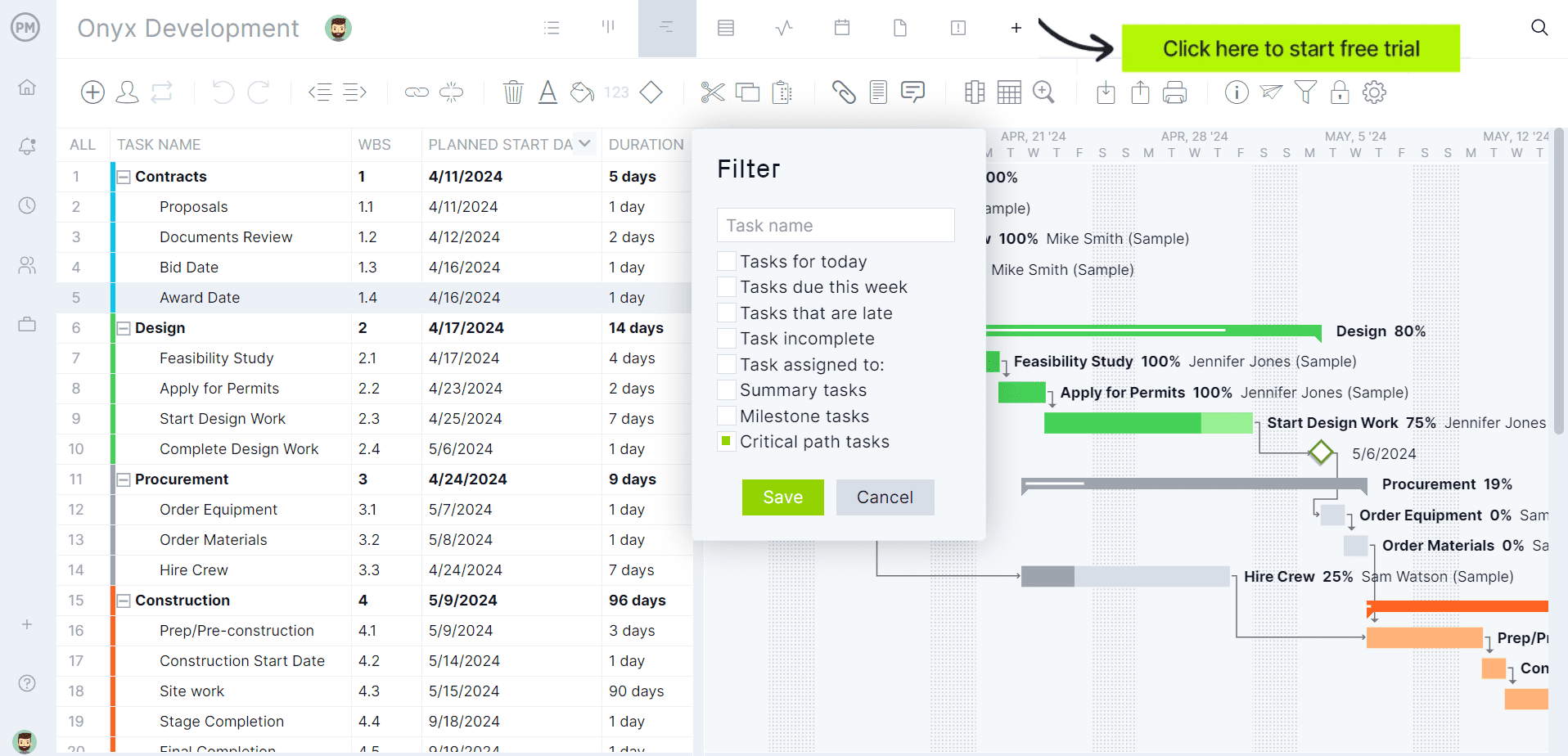
If you’re looking for software to plan, schedule and track construction projects from start to finish, try ProjectManager. ProjectManager is an award-winning project management solution that gives construction project managers the tools they need to ensure projects are completed on time, within budget and within scope. Create detailed construction schedules, estimate costs, allocate resources, set budgets, track progress and compare estimated versus actual project outcomes using real-time dashboards and reports to quickly identify delays or cost overruns. Get started with ProjectManager for free today.
2. What Should a Construction Project Manager Focus on During Their First 90 Days?
Your first 90 days aren’t about proving you’re the smartest person on the project—they’re about learning how your company operates and earning the trust of the people around you. Spend as much time on the jobsite as possible, understand how work flows from one trade to the next and learn your company’s scheduling, budgeting and procurement processes. Get to know your superintendents, foremen, subcontractors and project engineers because they’ll become your best source of practical knowledge. Most importantly, ask questions before making changes. A new construction project manager who listens first and acts second will usually gain credibility much faster than one who tries to reinvent everything on day one.
3. How Do I Become a Better Construction Project Manager?
Among all the questions aspiring construction project managers ask online, this appears more than any other. It’s also one of the hardest to answer because every professional brings different strengths, experience and weaknesses. Still, the following skills consistently separate average construction project managers from outstanding ones.
- Build schedules that reflect reality: Anyone can put activities on a Gantt chart, but experienced construction project managers build schedules around crew availability, subcontractor sequencing, inspections, long-lead materials and weather risks. A schedule should help the field, not just satisfy the owner.
- Know your budget before the accountant does: Don’t wait until the monthly cost report to discover you’re losing money. Track committed costs, labor hours, purchase orders and change orders every week so you can spot budget overruns while there’s still time to correct them.
- Spend more time in the field: The schedule may say drywall starts Monday, but a quick site walk might reveal framing isn’t ready. Visiting the jobsite regularly helps you catch problems that reports and dashboards simply can’t show.
- Learn how to forecast project outcomes: Strong construction project managers don’t just report today’s progress—they predict where the project will finish. Regularly compare planned versus actual performance so you can anticipate schedule delays, cost overruns and resource shortages before they become crises.
- Become obsessive about tracking progress: If you don’t know exactly what was completed this week, you can’t confidently update the schedule or forecast completion dates. Accurate progress tracking leads to better decisions, more reliable reporting and fewer unpleasant surprises.
- Understand contracts before problems arise: Construction contracts determine responsibilities, payment terms, notice requirements and change order procedures. Reading them only after a dispute starts usually means you’ve already missed opportunities to protect your project.
- Treat change orders like project risks: Every design revision or scope change has ripple effects on labor, materials, equipment and scheduling. Evaluate those impacts immediately instead of focusing only on the additional cost of the work itself.
- Master resource planning: Great schedules fail when the right crews or equipment aren’t available at the right time. Continuously balance labor, subcontractors, materials and equipment across the project to avoid idle time and productivity losses.
- Use project management software every day: The best construction project managers rely on software to update schedules, monitor budgets, assign work, manage RFIs, organize documents and keep everyone working from the latest project information instead of outdated spreadsheets.
- Keep learning from every completed project: Every job teaches lessons about estimating, scheduling, procurement, communication and risk management. Review what caused delays, cost overruns and successful outcomes so each project makes you a stronger construction project manager than the last.
4. What Does a Typical Day Look Like for a Construction Project Manager?
No two days are exactly alike, which is one of the reasons construction project management is both challenging and rewarding. A typical morning usually starts by reviewing the project schedule, checking overnight emails and identifying the day’s highest priorities before heading to the jobsite. Once there, you’ll walk the site with the superintendent, verify progress, discuss upcoming work and identify any issues that could affect the schedule or budget.
The rest of the day is often spent coordinating subcontractors, answering RFIs, reviewing submittals, tracking costs, attending meetings and keeping the owner informed of project progress. Of course, no plan survives the day exactly as expected. Deliveries get delayed, inspections uncover unexpected issues and design changes create new priorities. Successful construction project managers know how to shift their focus quickly without losing control of the project’s schedule, budget, quality standards or overall objectives.
5. What’s the Hardest Part of Being a Construction Project Manager?
The hardest part isn’t creating schedules, reviewing budgets or leading meetings—it’s keeping dozens of moving pieces aligned while everything around you keeps changing. Materials arrive late, subcontractors fall behind, owners request scope changes and weather or unforeseen site conditions can throw carefully planned schedules off course overnight. Meanwhile, you’re still responsible for maintaining the budget, coordinating inspections, answering RFIs, processing submittals and keeping everyone informed.
The real challenge is learning how to prioritize competing demands without losing sight of the project’s overall goals. Great construction project managers aren’t the ones who avoid problems—they’re the ones who recognize issues early, adjust the plan quickly and prevent one small setback from turning into a major project delay.
6. What Mistakes Do New Construction Project Managers Make?
Every new construction project manager makes mistakes because the job demands technical knowledge, organization and people skills all at once. Some lessons only come with experience, but certain errors appear again and again. Avoiding these common pitfalls can save months of frustration, costly delays and difficult conversations.
- Trusting the schedule instead of the jobsite: A project schedule might show everything is on track, but the field often tells a different story. New project managers spend too much time behind a desk instead of walking the site, talking to superintendents and verifying that work is actually progressing as planned.
- Waiting too long to address problems: Small issues rarely stay small in construction. A delayed material delivery, an unanswered RFI or a subcontractor falling two days behind can quickly affect multiple trades if you don’t step in immediately and develop a recovery plan.
- Focusing only on today’s work: It’s easy to spend the entire day putting out fires, but experienced project managers are always looking two or three weeks ahead. Planning upcoming procurement, inspections, crew availability and long-lead materials prevents tomorrow’s emergencies.
- Failing to keep accurate cost and progress records: New project managers sometimes assume they’ll remember important details later. They won’t. Track completed work, labor hours, production rates, change orders and project costs consistently because those records drive better forecasts and protect you during disputes.
- Trying to solve every problem alone: Construction is a team sport. Superintendents, foremen, estimators, subcontractors and experienced tradespeople have probably seen your problem before. Asking questions early isn’t a weakness—it’s usually the fastest way to make the right decision and keep the project moving.
7. How Do Construction Project Managers Handle Difficult Owners?
Every project owner has a different personality, communication style and level of construction knowledge. Still, experienced construction project managers rely on a handful of proven habits that help keep even the most demanding owners productive and engaged.
- Set expectations before construction begins: Difficult owners often become frustrated because they expected something different. Walk them through the schedule, decision deadlines, approval process and potential risks early so there are fewer surprises as the project progresses.
- Communicate proactively, not reactively: Don’t wait for the owner to discover bad news. If a delivery is delayed or a subcontractor falls behind, explain what happened, what you’re doing about it and how it affects the overall project before they have to ask.
- Document every important decision: Follow up meetings, phone calls and verbal approvals with written documentation. Good records eliminate misunderstandings and prevent conversations from turning into debates about who said what three weeks earlier.
- Keep emotions out of difficult conversations: Some owners question every decision or challenge every invoice. Stay professional, stick to the facts, refer back to the contract and avoid taking criticism personally. Calm, consistent communication usually earns respect over time.
- Know when to say no—and explain why: Owners sometimes request changes that impact cost or schedule without realizing the consequences. Instead of simply rejecting the request, explain the tradeoffs, present alternatives and let them make an informed decision based on accurate information.
8. What Habits Do Successful Construction Project Managers Have?
Success in construction project management rarely comes from one big decision. Instead, it’s usually the result of small habits repeated every day. The best project managers develop routines that help them stay ahead of problems instead of constantly reacting to them.
- Walk the jobsite every day: Schedules and reports are useful, but nothing replaces seeing the work with your own eyes.
- Review tomorrow before today ends: Successful project managers leave each day knowing tomorrow’s priorities, meetings, deliveries and potential roadblocks.
- Follow up relentlessly: An unanswered RFI, pending submittal or overdue material order won’t fix itself without consistent follow-up.
- Keep detailed notes: Document conversations, commitments and decisions immediately because construction moves too fast to trust your memory.
- Look several weeks ahead: Great project managers aren’t just managing today’s work—they’re preventing the problems that could slow next month’s progress.
9. How Do You Earn the Respect of Field Crews as a New Construction Project Manager?
The quickest way to lose credibility is pretending you know more than the people building the project every day. Experienced field crews can spot that immediately. Instead, spend time on the jobsite, ask thoughtful questions and genuinely listen to their recommendations. If someone raises a problem, follow through until it’s resolved instead of letting it disappear into your inbox. Learn enough about the work to have productive conversations, but don’t be afraid to admit when you don’t know something. Crews respect project managers who are organized, dependable and willing to remove obstacles far more than those who simply give orders from the office.
10. What’s the Biggest Knowledge Gap New Construction Project Managers Have?
Most new construction project managers understand the administrative side of the job much better than the construction side. They know how to update schedules, write reports and organize documents, but they often struggle to understand why one delayed activity can disrupt several trades weeks later. Construction sequencing, procurement timing, crew productivity and field logistics are skills that usually develop through experience rather than classroom learning. That’s why spending time on active jobsites is so valuable. Once you understand how projects are actually built, you’ll create more realistic schedules, make better cost forecasts and identify potential problems long before they affect the project’s budget or completion date.
11. How Do Construction Project Managers Deal With Project Delays?
The first step is accepting that delays are part of construction, not a sign that you’ve failed as a project manager. What separates experienced PMs from inexperienced ones is how quickly they identify the root cause and develop a recovery plan. Start by determining whether the delay is caused by labor shortages, procurement issues, weather, design changes or subcontractor performance. Then evaluate how it affects the critical path and whether work can be resequenced to recover lost time. Keep the owner informed, coordinate closely with the superintendent and update the schedule frequently so everyone is working toward the same recovery plan.
Want to Learn More? See What People Are Saying on Reddit!
One of the best ways to learn construction project management is by hearing directly from people doing the job every day. The following Reddit discussions inspired many of the topics covered in this guide and offer additional perspectives from experienced construction project managers, superintendents and industry professionals.
- Project Managers – What Do You Wish You Knew Before Getting Into PM?
- Looking to Talk to Project Engineers and Managers About Their Experience
- In Your Experience, What Is the Biggest Knowledge Gap?
- Got a PM Assistant Interview Next Week…
- Hardest Part of Being a PM?
- Project Managers: What’s Your Biggest Daily Struggle?
- How Do You Approach a New Project as a PM?
- Need Help for Final Interview
- r/ConstructionManagers
ProjectManager Is the Best Construction Project Management Solution
ProjectManager offers a comprehensive construction project management software that combines advanced scheduling, resource management, cost tracking and team collaboration in a single platform. Construction managers can build Gantt charts, manage task dependencies, identify critical paths and monitor project performance without the expensive price tag and steep learning curve commonly associated with Microsoft Project.
In addition to traditional construction scheduling capabilities, ProjectManager includes AI-powered project insights, workflow automation and live performance tracking that help teams identify delays, manage risks and make better decisions.
One of the biggest advantages of ProjectManager is that it is fully cloud-based. It gives office staff, project managers, superintendents and field teams access to the same live project data from anywhere. Schedule updates, resource changes, timesheet submissions and project status information are immediately available, helping construction teams improve coordination and reduce communication delays.
Beyond scheduling, ProjectManager includes workload management, resource scheduling, portfolio roadmaps, real-time dashboards, kanban boards, timesheets and automated reports that help construction companies balance labor resources, monitor project costs and track performance across multiple projects. These tools provide greater visibility into schedules, budgets and resource utilization, making it easier to keep construction projects on track.
Watch the video below to learn more!
The platform also supports an open API and more than 1,000 integrations with tools like Acumatica, QuickBooks, Microsoft Project, Slack and Google Workspace, allowing construction companies to connect operational and project data across their existing systems. The Acumatica integration is particularly valuable for construction businesses because it connects project management workflows with ERP capabilities such as accounting, financial management and operational reporting.
For organizations looking for a modern construction project management platform that combines construction scheduling, resource planning, budget tracking, collaboration and ERP connectivity, ProjectManager is the best alternative to Microsoft Project.
ProjectManager is online construction project management software that empowers teams to plan, manage and track their projects in real time. We connect architects and engineers in the office with your work crew on the job site so they can share files and comments to foster better collaboration. Get started with ProjectManager today for free.
