



Organizations rely on clear documentation when evaluating employee performance, tracking professional development and setting expectations for the future. The performance review templates in this list provide structured documents that help managers conduct fair employee performance reviews while also giving individuals a framework to reflect on progress, identify skill gaps and plan their career growth. Whether used by HR teams, supervisors or employees themselves, these performance review templates support consistent performance management and professional development.
Whenever you’re ready to start managing projects, give ProjectManager a try. ProjectManager is an award-winning project management software designed to plan, schedule and track projects from start to finish. Build detailed project schedules, allocate resources, monitor costs and compare estimates against actual performance using a complete set of powerful project management tools. Get started for free today.
1. Performance Review Template
At its core, a performance review is a structured evaluation where managers assess an employee’s work, productivity and professional behavior during a specific review period. The process documents accomplishments, identifies improvement areas and provides feedback that supports employee development, performance management and long-term organizational goals.
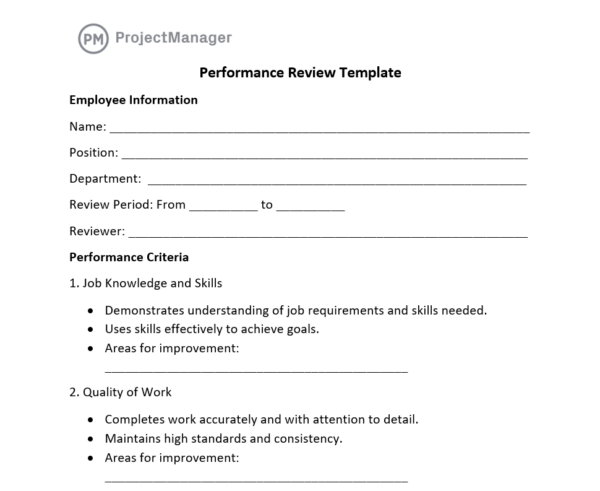
This performance review template provides a structured Word document that guides managers through the employee evaluation process. It organizes employee information, performance criteria, goal tracking and review summaries so supervisors can document feedback clearly and conduct consistent employee performance appraisals across teams.
- Employee Information Section: Records key details such as the employee’s full name, job title, department, review period and reviewer name to clearly identify the employee being evaluated and establish the timeframe of the performance review.
- Performance Criteria Evaluation: Allows managers to assess job knowledge, technical skills and overall role competency while documenting concrete examples that illustrate how effectively the employee performs assigned responsibilities.
- Quality of Work Assessment: Evaluates accuracy, attention to detail and consistency of the employee’s work output to determine whether deliverables meet expected standards and organizational quality requirements.
- Productivity and Efficiency Review: Measures how effectively the employee manages time, meets deadlines and uses available organizational resources while maintaining consistent performance throughout the review period.
- Communication and Teamwork Evaluation: Reviews collaboration, interpersonal communication and the employee’s ability to work productively with colleagues while contributing to team objectives and workplace coordination.
- Goals and Development Planning: Documents completed goals, analyzes unmet objectives and establishes new goals that guide employee performance improvement and professional development during the next review cycle.
- Performance Summary and Signatures: Provides space for an overall performance rating, written feedback, employee comments and signatures from both the reviewer and employee to formally acknowledge the evaluation discussion.
2. Performance Improvement Plan Template
Sometimes employee evaluations reveal consistent performance gaps that require structured follow-up rather than simple feedback. A performance improvement plan is a formal document used to address performance issues, clarify expectations and guide employees toward meeting job requirements. Managers use it to document concerns, define corrective actions and monitor measurable progress over a defined improvement period.

This performance review template provides a structured action plan managers can use to document performance issues, define SMART performance goals and track corrective actions. It guides supervisors through outlining expectations, timelines and evaluation metrics so employee improvement efforts remain organized, measurable and clearly documented.
- Administrative Information: The template begins with employee and manager identification details such as employee name, job title, department, contact information and review date to ensure the performance improvement plan is clearly documented and easy to reference.
- Purpose of the Improvement Plan: A dedicated section explains the reason the performance improvement plan is being implemented, helping managers clarify the context behind the employee evaluation and the specific performance concerns that triggered corrective action.
- Performance Issues Documentation: Managers describe concrete examples of unmet performance goals, missed expectations or behavioral concerns so the employee clearly understands the problems that must be addressed during the improvement period.
- SMART Performance Improvement Goals: The template includes space to define clear improvement goals using the SMART framework so employees know exactly what outcomes they must achieve and how their progress will be measured.
- Action Plan and Expectations: Supervisors outline the steps employees must take to correct performance issues while documenting management expectations, responsibilities and specific activities required to improve work performance.
- Improvement Timeline and Evaluation Metrics: The document establishes a defined timeline for improvement while identifying key performance indicators and review checkpoints used to monitor employee progress and assess measurable results.
- Consequences and Final Assessment: The final sections explain the consequences of failing to meet performance goals and provide space for a final evaluation, followed by employee and manager signatures acknowledging the improvement plan.
3. Professional Development Plan Template
Employee evaluations often highlight more than past performance—they reveal opportunities for growth that can shape an employee’s future career path. A performance review creates space to identify those opportunities by examining achievements, strengths and improvement areas while aligning employee development with organizational goals and long-term workforce planning.

This performance review template helps employees and managers organize career growth initiatives by documenting skills assessments, development goals and action steps. It provides a structured framework for planning training, tracking professional development progress and measuring skill advancement over time.
- Personal Information Section: Records basic identifying information such as employee name, job title, department, manager and plan creation date to ensure the professional development plan is clearly associated with the individual employee and their role.
- Current Skills Assessment: Provides space to evaluate existing competencies, strengths and improvement areas while incorporating self-assessment insights and feedback from managers or colleagues to create an accurate baseline for development planning.
- Professional Development Goals: Allows individuals to define measurable short-term and long-term career objectives that focus on acquiring new skills, expanding expertise and supporting both personal career advancement and organizational needs.
- Action Plan for Skill Development: Outlines the specific actions required to achieve development goals, such as training programs, professional certifications, mentorship opportunities, workshops or practical work assignments.
- Development Timeline: Establishes a structured schedule that assigns deadlines and timeframes to each development activity so employees can track progress and remain accountable for achieving their professional growth goals.
- Resources and Learning Support: Identifies the tools, learning materials and support systems needed to complete development activities, including courses, educational content, coaching or specialized software platforms.
- Performance Indicators and Evaluation: Defines measurable performance indicators and reflection opportunities that allow employees and managers to review progress, evaluate results and adjust the professional development plan when necessary.
4. Skills Matrix Template
During a performance review, managers evaluate how effectively employees apply their knowledge, technical abilities and professional skills to their daily responsibilities. These evaluations often highlight strengths, identify skill gaps and reveal training needs. Documenting these insights helps organizations plan employee development, improve workforce capabilities and support long-term performance management strategies.

This skills matrix template helps managers visualize employee competencies across multiple skills while identifying capability gaps that may affect team performance. By recording proficiency levels, assessment sources and recommended actions, the template supports workforce planning, targeted training initiatives and data-driven employee development decisions during performance reviews.
5. Training Record Template
Performance reviews often examine more than day-to-day results—they also consider how employees build skills and complete professional training over time. Managers review training participation, certifications and development progress to understand whether employees are improving their capabilities and meeting evolving job requirements within the organization.

This training record template helps organizations track employee training programs, course completion and certification timelines. It documents training types, providers, start and completion dates and employee status, allowing managers to monitor development activities, maintain compliance records and identify additional training needs during employee performance reviews.
6. 30-60-90 Day Plan Template
A 30-60-90 day plan outlines the goals, priorities and expectations for an employee’s first three months in a role. By breaking the onboarding period into three structured phases, managers can track progress, evaluate early performance and provide feedback that supports performance reviews, skill development and long-term employee success.
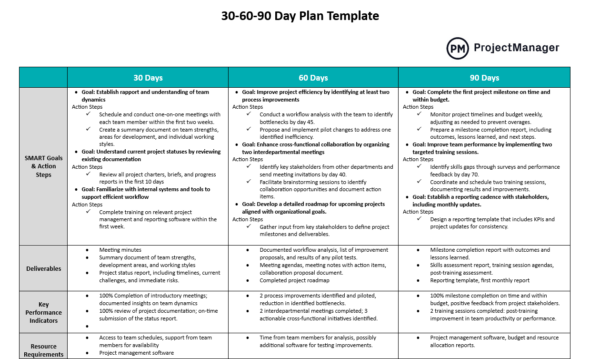
This 30-60-90 day plan template organizes employee onboarding goals into three phases while documenting SMART goals, action plans, deliverables and performance metrics. Managers and employees can track progress, identify resource requirements and measure early performance results during the first ninety days in a role.
ProjectManager Is an Award-Winning Project Management Software
ProjectManager offers robust project management features such as Gantt charts, task lists, workload management charts, timesheets and real-time dashboards and reports. In addition to that, it’s also equipped with AI project insights, online team collaboration features and unlimited file storage that further help project managers ensure nothing falls through the cracks. Watch the video to learn more!
Related Content
- 15 Goal-Setting Strategies for Individuals and Teams
- 15 Free Goal-Setting and Tracking Templates for Excel and Word
- How to Create SMART Goals (Example Included)
- How to Set CLEAR Goals: CLEAR Goal Examples
- How to Set FAST Goals: FAST Goal Examples
- How to Set a Big Hairy Audacious Goal (BHAG)
If you need a tool to help you manage projects, then signup for our software now at ProjectManager. Our online software helps teams across industries plan, track and oversee projects as they unfold. Sign up for a free 30-day trial today!
