



Project timelines rarely unfold exactly as planned, especially when dependencies, constraints and uncertainty collide. In construction projects, pressure on delivery dates makes schedule risks impossible to ignore, pushing teams to look beyond planned construction schedules. This is where schedule risk analysis becomes essential, helping decision-makers anticipate disruption before delays cascade across the project.
What Is Schedule Risk?
Schedule risk describes the likelihood that a project will fail to meet its planned timeline due to the presence of both known and unknown risks that can affect the execution of project tasks and therefore their estimated start and end dates and their duration.
Related: 10 Free Construction Scheduling Templates for Excel, Word & Google Sheets
Beyond identifiable risks, schedule risk is also driven by uncertainty embedded in the planning process itself. Uncertainty emerges when assumptions, constraints or forecasts used to build the schedule do not reflect how the project actually unfolds. These gaps between expectation and reality introduce variability that can undermine even well-structured schedules. Here are some examples of schedule risks that can happen in any construction project.
- When developing the construction schedule, it is assumed that sufficient labor and materials will be available, but once work begins, shortages or supply disruptions may delay critical activities.
- Productivity rates are estimated during planning, yet real-site conditions can slow crews due to congestion, access limitations or learning curves.
- Permits, inspections or third-party approvals are scheduled based on expected turnaround times that may extend without warning.
- Weather conditions are often averaged or simplified, even though extreme or prolonged events can halt work entirely.
- Design information is assumed to be complete at specific milestones, but late clarifications or revisions can interrupt planned task sequences.
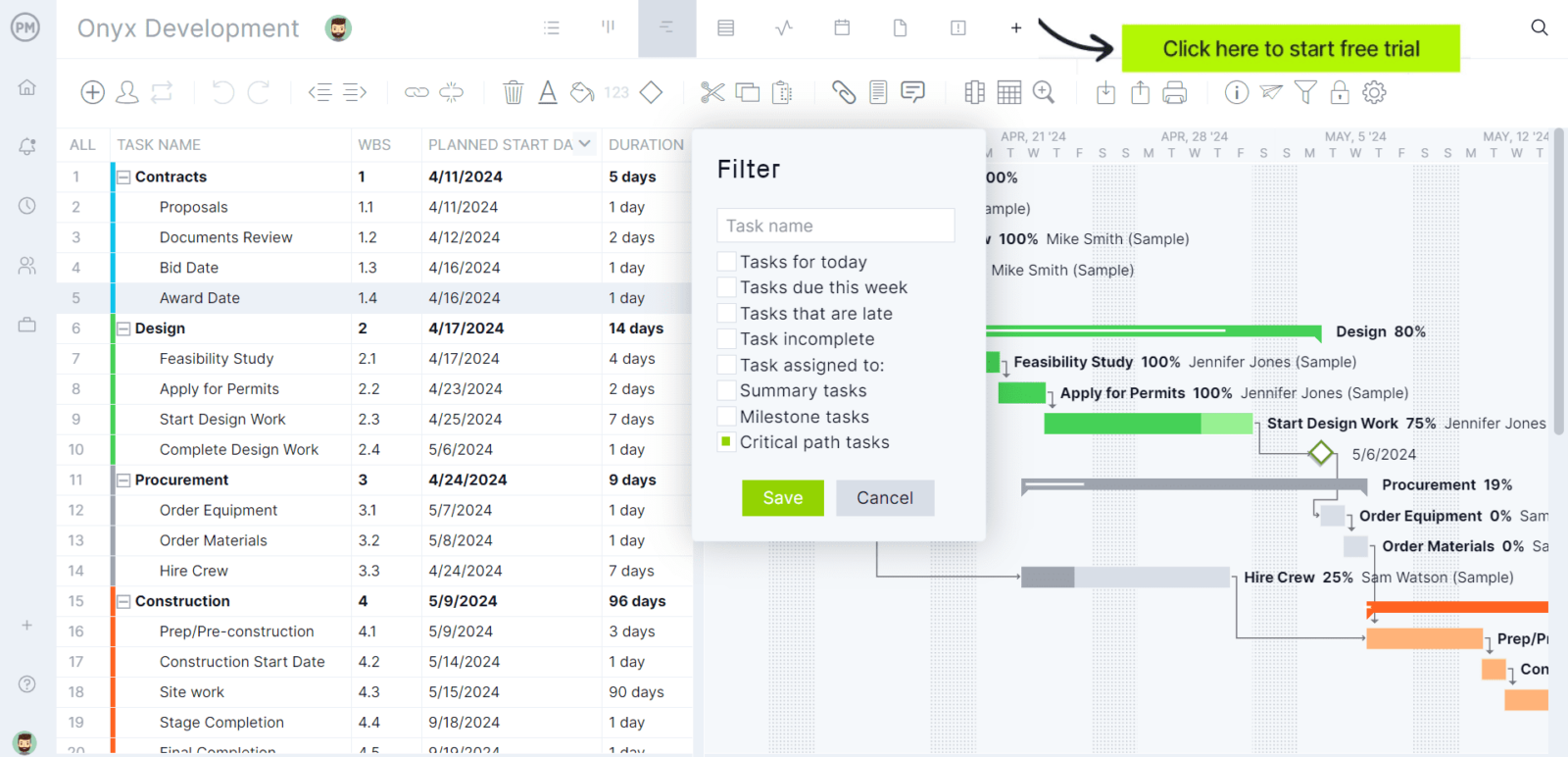
ProjectManager is an award-winning construction project management software equipped with tools such as Gantt charts, RAID logs, project calendars and real-time dashboards to make detailed construction schedules, identify project risks and monitor projects as they progress, making it the ideal companion for construction scheduling and schedule risk analysis. Get started for free today.
What Is Schedule Risk Analysis?
Schedule risk analysis is the practice of stress-testing a project schedule to understand how exposed it is to uncertainty and risk. Instead of treating the schedule as a fixed, bulletproof plan, it asks what could realistically go wrong, how sensitive the timeline is to change and where assumptions about durations, sequencing and constraints are most likely to fail.
By exploring different outcomes rather than a single promised date, the analysis reveals how probable various completion scenarios actually are. This allows teams to judge how much confidence they should place in the schedule, where buffers are justified and which parts of the plan deserve closer attention before delays materialize.
Why Is Schedule Risk Analysis Important in Construction?
Construction projects operate under tight contractual deadlines, complex task sequencing and constant exposure to uncertainty. Weather, permits, labor availability and design changes interact in ways that amplify individual or concurrent delay events into major overruns. Schedule risk analysis matters because it shifts planning from deterministic dates to probability-based outcomes.
By showing where the schedule is most likely to break, it helps teams make smarter decisions about buffers, sequencing and timing before problems occur. So in construction projects, schedule risk analysis:
- Helps teams understand how weather uncertainty can directly threaten critical path activities like earthworks, concrete placement or exterior finishes.
- Exposes how optimistic assumptions about permit approvals or inspections can ripple through the schedule and delay entire downstream phases.
- Reveals trade stacking vulnerabilities, where overlapping subcontractor activities create congestion and productivity losses that were not visible in the baseline plan.
- Highlights the schedule exposure created by long-lead materials, showing how procurement delays can disrupt structural, mechanical or façade sequences.
- Tests how resilient the schedule is to late design changes or incomplete documents that force resequencing and rework.
- Clarifies how labor availability assumptions break down during peak seasons or regional shortages, extending task durations beyond plan.
- Identifies fragile handoffs between major phases, such as the transition from structure to interiors, where minor slips can cascade into significant completion delays.
Who Is Responsible for Schedule Risk Analysis In a Construction Project?
Responsibility for schedule risk analysis typically sits with the project manager or planning lead, since they own the construction schedule and its assumptions. However, meaningful schedule risk analysis cannot be done in isolation in a construction project.
Accurate results depend on input from field teams, designers, procurement, subcontractors and project controls, because the more detailed and realistic the information, the more credible the assessment of schedule exposure becomes during planning and execution phases of construction projects.
- Project manager: Defines schedule logic, integrates assumptions and coordinates inputs so identified risks and uncertainties are reflected in the project schedule.
- Superintendent: Provides field insight on productivity, access constraints and sequencing challenges that affect realistic durations and expose hidden schedule risks.
- Designers and engineers: Identify design maturity gaps, late changes or unresolved details that can force resequencing and delay construction activities.
- Procurement team: Supplies information on lead times, supplier reliability and logistics constraints that shape material-driven schedule risk exposure.
- Subcontractors: Validate task durations, crew availability and sequencing feasibility based on actual means, methods and contractual work scopes.
- Schedulers and project controls: Analyze logic paths, float consumption and sensitivity results to quantify where delays are most likely to occur.
- Owners and stakeholders: Set contractual priorities, milestone constraints and risk tolerance that influence acceptable schedule outcomes and contingency decisions.
Get your free
Construction Schedule Template
Use this free Construction Schedule Template to manage your projects better.
Get the Template
How to Perform a Schedule Risk Analysis
Now that we have a better understanding of the importance of schedule risk analysis in construction, let’s go over some basic steps to conduct one.
1. Establish a Schedule Baseline
A schedule baseline is the approved version of a project schedule that serves as the reference point for measuring progress and performance. It captures planned start and finish dates, task durations and sequencing assumptions, providing a fixed benchmark against which actual execution is compared to identify variance, delays and forecast impacts throughout the project lifecycle.
Creating a realistic schedule baseline requires more than listing activities and dates. Several structured steps must be completed to ensure the baseline reflects how the project is actually expected to be built.
- Begin by developing a work breakdown structure that decomposes the project scope into manageable phases, work packages, deliverables and tasks, ensuring all required construction work is clearly defined and nothing critical is omitted.
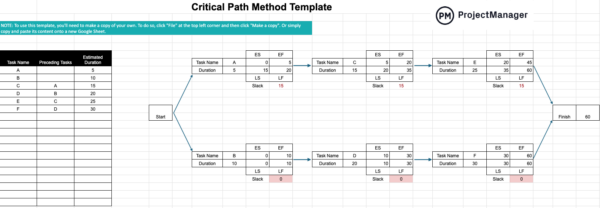
- Define construction sequencing by mapping task dependencies with a critical path diagram, clarifying which activities must occur in a specific order and identifying the chain of tasks that directly controls project duration.
- Build the construction schedule using a Gantt chart to visualize task timing, overlaps and milestones, then analyze the logic to confirm and clearly identify the project’s critical path.
- Once durations, sequencing and constraints are validated, formally approve the estimated construction schedule and lock it in as the schedule baseline for performance tracking and risk analysis.
2. Identify Schedule Risks
With a schedule baseline established, the next step is to systematically identify schedule risks that could disrupt planned execution. This is typically done using a risk register, where every risk that may affect project tasks, work packages, deliverables or milestones is documented. The focus is on capturing anything that could interfere with durations, sequencing or dependencies, including technical issues, coordination gaps and external constraints. A comprehensive risk register ensures no meaningful source of schedule exposure is overlooked before deeper analysis begins.
3. Assess Schedule Risks
After schedule risks have been identified, each one must be assessed to understand its potential impact on the construction schedule. This involves evaluating how severe the delay could be if the risk materializes and how likely it is to occur. By examining both impact and likelihood, teams can distinguish minor disruptions from risks that threaten critical activities or milestones. This step transforms a simple list of risks into actionable insight, guiding prioritization and focused mitigation planning.
4. Analyze Schedule Sensitivity
Schedule sensitivity analysis examines how changes to individual activities affect overall project completion. By adjusting durations or logic for high-risk tasks, teams can identify which activities exert the greatest influence on finish dates. This step highlights fragile parts of the schedule, clarifies where small disruptions can cause outsized delays and focuses attention on the tasks that truly matter for maintaining planned completion.
5. Quantify Overall Schedule Risk
Once sensitivity is understood, overall schedule risk is quantified by combining the effects of identified risks and uncertainties across the entire construction schedule. This step estimates the range of possible completion dates and the probability of meeting key milestones. Instead of relying on a single promised date, teams gain a realistic view of schedule confidence and potential delay exposure.
6. Develop Risk Response Strategies
The final step is to define response strategies for the most significant schedule risks. Based on their impact and likelihood, teams determine whether risks should be mitigated, avoided, transferred or accepted. These responses may involve resequencing work, adding buffers, accelerating critical activities or adjusting procurement plans, turning analysis into practical actions that protect the construction schedule.
Construction Schedule Risk Analysis Tools
Project management tools support schedule risk analysis by structuring information, exposing dependencies and making uncertainty visible. They help teams test assumptions, document risks and understand how potential disruptions could affect construction timelines.
Work Breakdown Structure
A work breakdown structure supports schedule risk analysis by clearly defining the full scope of construction work. By breaking the project into tasks and work packages, it becomes easier to identify where risks may emerge, where uncertainty exists and which parts of the schedule require closer scrutiny.

Critical Path Diagram
A critical path diagram helps assess schedule risk by revealing which sequence of activities directly controls project duration. It shows where delays cannot be absorbed, allowing teams to focus risk analysis on activities whose disruption would immediately impact completion dates.
Risk Register
A risk register is central to schedule risk analysis because it documents all identified risks in one place. It links risks to specific tasks, milestones or work packages, ensuring potential schedule impacts are explicitly tracked and not handled informally or overlooked.

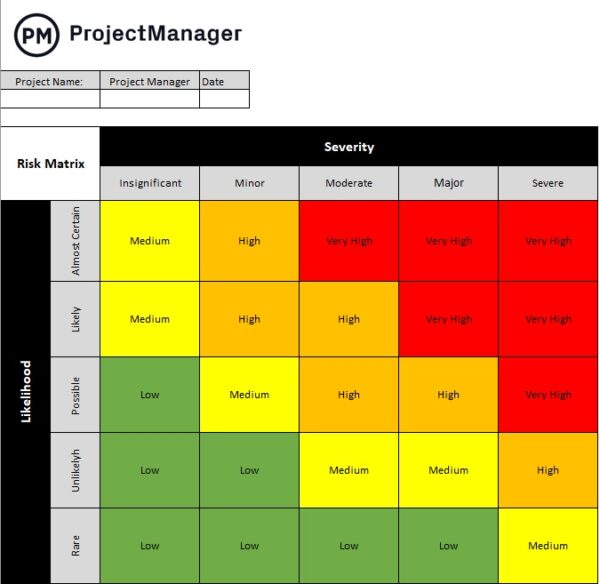
Risk Matrix
A risk matrix helps prioritize schedule risks by comparing their likelihood and potential impact. By visualizing severity, teams can distinguish minor timing issues from risks that threaten critical milestones, guiding focused mitigation and more effective schedule decision-making.
Free Construction Scheduling Templates
We’ve created dozens of free construction project management templates for Excel, Word, Google Sheets and more. Here are some that can help with schedule risk analysis.
Gantt Chart Template
This Gantt chart template for Excel automates the process of creating a Gantt chart. Simply enter a list of project tasks, their duration and start and end dates and this Excel template will automatically generate a visual project schedule.
Construction Schedule Template
This construction schedule template lets you work with ProjectManager’s online Gantt chart in a real project context. It helps you build a detailed task list, define dependencies, identify the project’s critical path, assign resources and manage scheduling logic in one place.
Construction Scope of Work Template
This construction scope of work template provides a structured way to document project tasks, deliverables, responsibilities and acceptance criteria. By connecting scope definitions to schedule progress and cost tracking, it supports clearer scope baselines and more effective control throughout the construction project.
ProjectManager Is an Award-Winning Construction Scheduling Software
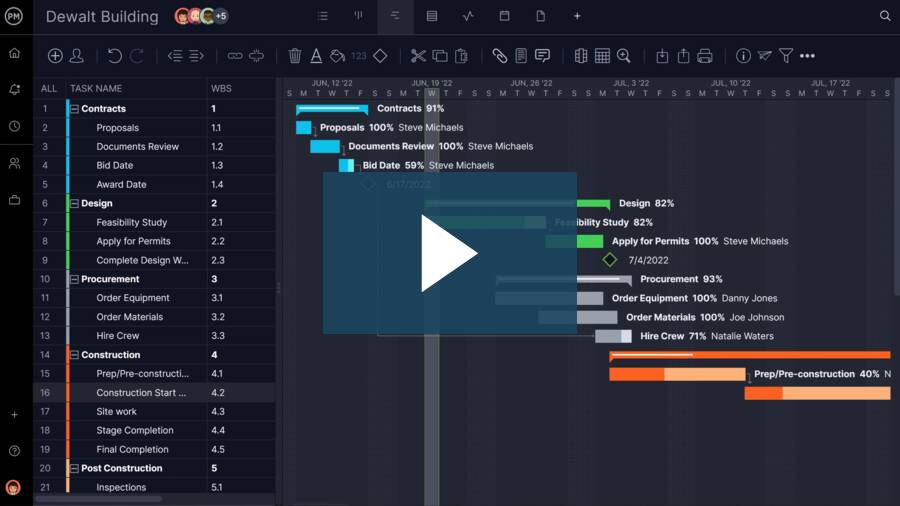
ProjectManager is an award-winning construction project management software equipped with powerful planning, scheduling and tracking features that allow to create detailed construction schedules, establish baselines, identify project risks and compare estimated project timelines and costs against actual project performance to quickly identify delays and cost overruns. Watch the video below to learn more!
Related Construction Project Management Content
Our content library features over 100 construction blogs, templates, ebooks and other types of content to help construction project managers better understand the many moving parts that must be managed to deliver successful construction projects. Here are some of them.
- Making a Construction Schedule
- How to Manage a Construction Project Step by Step
- The Ultimate Guide to Construction Project Management
- Material Takeoff (MTO) in Construction: A Quick How-to Guide
- Quantity Takeoff in Construction: Process, Benefits and More
ProjectManager is online project management software with the tools you need for construction project management. Our features make planning, monitoring and reporting on your project more efficient and effective. Being online means our software is accessible everywhere and at any time. Plus, the data you get is more accurate because it’s updated immediately. Try ProjectManager for free with this 30-day trial offer.
