



Last updated: November 16, 2026
The top Microsoft Planner alternatives for construction are ProjectManager, Planner and Project Plan 3, Procore, Smartsheet, TeamGantt, Contractor Foreman and Fieldwire. ProjectManager is the strongest fit for general contractors and subcontractors who need a construction schedule with all four dependency types, the critical path, baselines and crew workload across jobs, while Planner and Project Plan 3 suits teams that want to stay in Microsoft 365 and Procore suits teams whose main need is RFIs, submittals and drawings. Smartsheet suits teams that want a spreadsheet-style timeline, TeamGantt suits builders who want lookaheads at a flat price, Contractor Foreman suits budget-conscious contractors who want an all-in-one tool and Fieldwire suits field teams who work from drawings.
Microsoft Planner is often the first tool a construction team tries, because it comes with Microsoft 365. Teams then find that the timeline they need, with linked trades, inspection holds and crews moving between jobs, depends on which Planner plan they pay for, and that subcontractors and owners outside the company are hard to bring in.
This guide covers how construction teams use Planner, where it falls short for construction schedules and how seven tools compare on dependencies, critical path, baselines, crew workload, field access, Microsoft Project files and price. For alternatives outside construction, see the best Microsoft Planner alternatives.
ProjectManager is online project management software for construction scheduling. Import your Planner tasks from Excel, link them with all four dependency types and lag, filter for the critical path and see every crew’s hours across all your jobs. Get started with ProjectManager today for free.

How Construction Teams Use Microsoft Planner
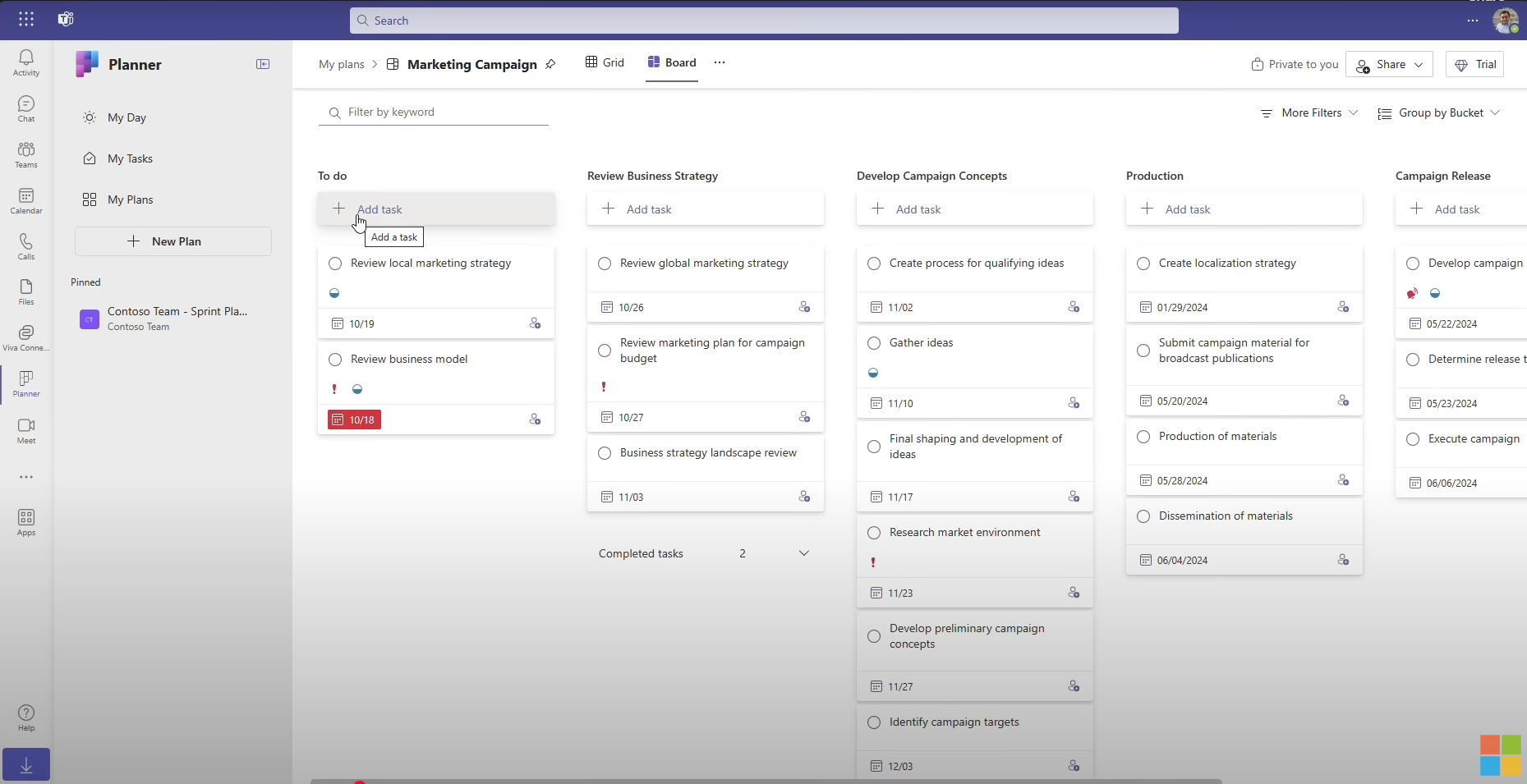
Construction teams use Microsoft Planner to track punch lists, submittal to-dos, permit tasks and job checklists on boards, assign work and share progress in Teams. It’s a sensible place to start: basic Planner is included in Microsoft 365 business, enterprise and education plans, it’s easy to learn, and its Grid, Board, Schedule and Charts views cover day-to-day task tracking. Planner tasks also show up in Teams, Outlook and To Do, so office staff see their work where they already are.
Planner does have scheduling features, but they depend on the plan. Basic Planner has no timeline view and can only view dependencies. Planner Plan 1 ($10/user/month, paid yearly) adds a timeline (Gantt) view with finish-to-start dependencies only, milestones and the People view. All four dependency types, lead and lag, the critical path and baselines need Planner and Project Plan 3 ($30/user/month, paid yearly).
Why Construction Teams Look for Microsoft Planner Alternatives
Construction teams look for Planner alternatives when the schedule becomes the center of the job, when crews move between sites or when people outside the company need the timeline. These are the main reasons:
- Finish-to-start only on Plan 1. Construction schedules need more than one link type. Drywall can start a few days after framing starts, and an inspection hold needs lag, but Plan 1 has finish-to-start links with no lead or lag. When framing slips three days, drywall, electrical rough-in and the inspection only move correctly if the right links are in place.
- Critical path and baselines cost more. Both need Planner and Project Plan 3, at three times the price of Plan 1, and Planner holds only one baseline.
- No view of crews across jobs. The People view shows assignments within one plan, so a framing crew booked on two jobs on the same day doesn’t show up until someone notices.
- Subs and owners are outside your tenant. Guests have to be added to your Microsoft 365 group or tenant, which many subcontractors and owners won’t want to do just to see their dates.
- No MPP files. Planner can’t open MPP files directly and exports to Excel only, so a schedule from an owner or GC who uses Microsoft Project has to be rebuilt.
If your team mainly needs task lists and checklists inside Microsoft 365, Planner may still be enough. If you need a construction schedule, crew planning or easy sharing with subs, the alternatives below are worth comparing.
What to Look for in a Microsoft Planner Alternative for Construction
A good Planner alternative for construction gives you a Gantt chart and timeline that handle real construction logic, shows crews across every job and gets the schedule to the field and to your subs. Check for these features:
- A Gantt chart that handles construction dependencies and lag. Finish-to-start, start-to-start, finish-to-finish and start-to-finish links, plus lag for an inspection hold, concrete cure time or a material lead time. See Gantt chart software for more.
- Critical path. The tool should calculate the critical path from durations and dependencies, so you can see which delays push the finish date. Learn more about the critical path method in construction.
- Baselines. Save the original timeline and compare it with actual progress, both to run the job and to document delays.
- Crew and subcontractor workload across jobs. See each crew’s and sub’s hours across every project, not one plan at a time.
- Mobile field updates. Superintendents and foremen should be able to view the schedule and update progress from a phone or tablet.
- Sharing outside your Microsoft 365 tenant. Check how subcontractors and owners can see their dates, and whether they need a paid seat or an account in your tenant.
- MPP import and export. Owners and GCs often send Microsoft Project files, so check whether the tool opens MPP files and can send them back. It should also import Planner’s Excel export.
- Pricing. Compare per-user, flat and volume-based pricing, and remember that basic Planner may already be included in your Microsoft 365 plan.
Microsoft Planner Alternatives for Construction Compared
| Tool | Best for | Dependency types and lag | Critical path | Baselines | Cross-job workload | Mobile field updates | MPP import/export | Starting price |
|---|---|---|---|---|---|---|---|---|
| ProjectManager | GCs and subs leaving Planner who need construction scheduling and crew workload across jobs | All four types with lag (Team plan and above) | Yes, critical path filter | Yes, with variance reports | Workload page across all projects (Business) | iOS and Android apps | Imports and exports MPP | $15/user/month (Team), $28/user/month (Business), billed annually |
| Planner and Project Plan 3 | Construction teams that want to stay in Microsoft 365 | All four types with lead and lag | Yes | One in Planner; up to 11 in Project desktop | No; People view within one plan | Planner iOS and Android apps; Project desktop is Windows-only | Native MPP in Project desktop; Planner can’t open MPP | $30/user/month, paid yearly |
| Procore | GCs whose main need is RFIs, submittals and drawings | All four types with lag in Procore Scheduling | Yes | Automatic version snapshots | Per project | iOS and Android apps; user guide lists Scheduling actions as web-only | Imports MPP as a read-only schedule | Quote only, based on annual construction volume |
| Smartsheet | Teams that want a spreadsheet-style timeline | All four types with lag | Yes, Pro and above | One per sheet, Business and above | Paid Resource Management add-on | iOS and Android apps; Gantt view only in reports | Imports MPP; exports Microsoft Project XML | Pro $9/member/month, billed annually |
| TeamGantt | Builders who want lookaheads and sub confirmations at a flat price | All four types with lag and lead (advanced dependencies on Business and above) | Yes, all paid plans | Business and Builder Edition | Workload management (Business and above) | iOS and Android apps; list view on iOS | Imports MPP (no resources); exports to Microsoft Project format | $59/month flat (Base); Builder Edition from $199/month |
| Contractor Foreman | Budget-conscious contractors who want an all-in-one tool | All four types with lead and lag (Plus and above) | Yes | Yes, per task | Crew schedule (Plus and above) | iPhone, iPad and Android apps | Microsoft Project import and export (XML-based) | $49/month for the company (Basic, billed annually); Gantt scheduling from $166/month (Plus) |
| Fieldwire | Field teams who work from drawings, tasks and punch lists | Related tasks that don’t move each other’s dates | Not documented | Not documented | Manpower per project | iPhone, iPad and Android apps | No native MPP import | Free plan; Pro $39/user/month, billed annually |
Prices are list prices as of November 2026 and change often. For comparison, Planner Plan 1 costs $10/user/month, paid yearly, and basic Planner is included in Microsoft 365 business plans such as Business Basic ($7/user/month) and Business Standard with Copilot ($23.50/user/month).
7 Best Microsoft Planner Alternatives for Construction
1. ProjectManager
ProjectManager is the strongest Microsoft Planner alternative for most construction teams that have outgrown Planner’s tasks and need a real construction schedule. Its Gantt chart links tasks with all four dependency types and lag on the Team plan, so when framing slips three days, drywall, electrical rough-in and the inspection move with it, and the inspection hold keeps its lag. A critical path filter shows which tasks set the finish date, and baselines with variance reports show how far the timeline has drifted.
Where Planner shows assignments one plan at a time, ProjectManager’s workload page shows each person’s hours across all projects on the Business plan, so a crew booked on two jobs shows up before it costs a day. Equipment and subcontractors can be added as resources with no license cost, a subcontractor outside your company can view the schedule as a free read-only guest without joining your Microsoft 365 tenant, and superintendents update progress from the iOS and Android apps. ProjectManager imports Excel, CSV, MPP and Microsoft Project XML files and exports MPP, lossless for schedule data, for owners and GCs who use Microsoft Project. It also integrates with Microsoft Teams, and its ChatGPT and Claude integrations are included on every plan at no extra cost, while Copilot in Planner is a $21–$30/user/month add-on. For a feature-by-feature comparison, see Microsoft Planner vs. ProjectManager.
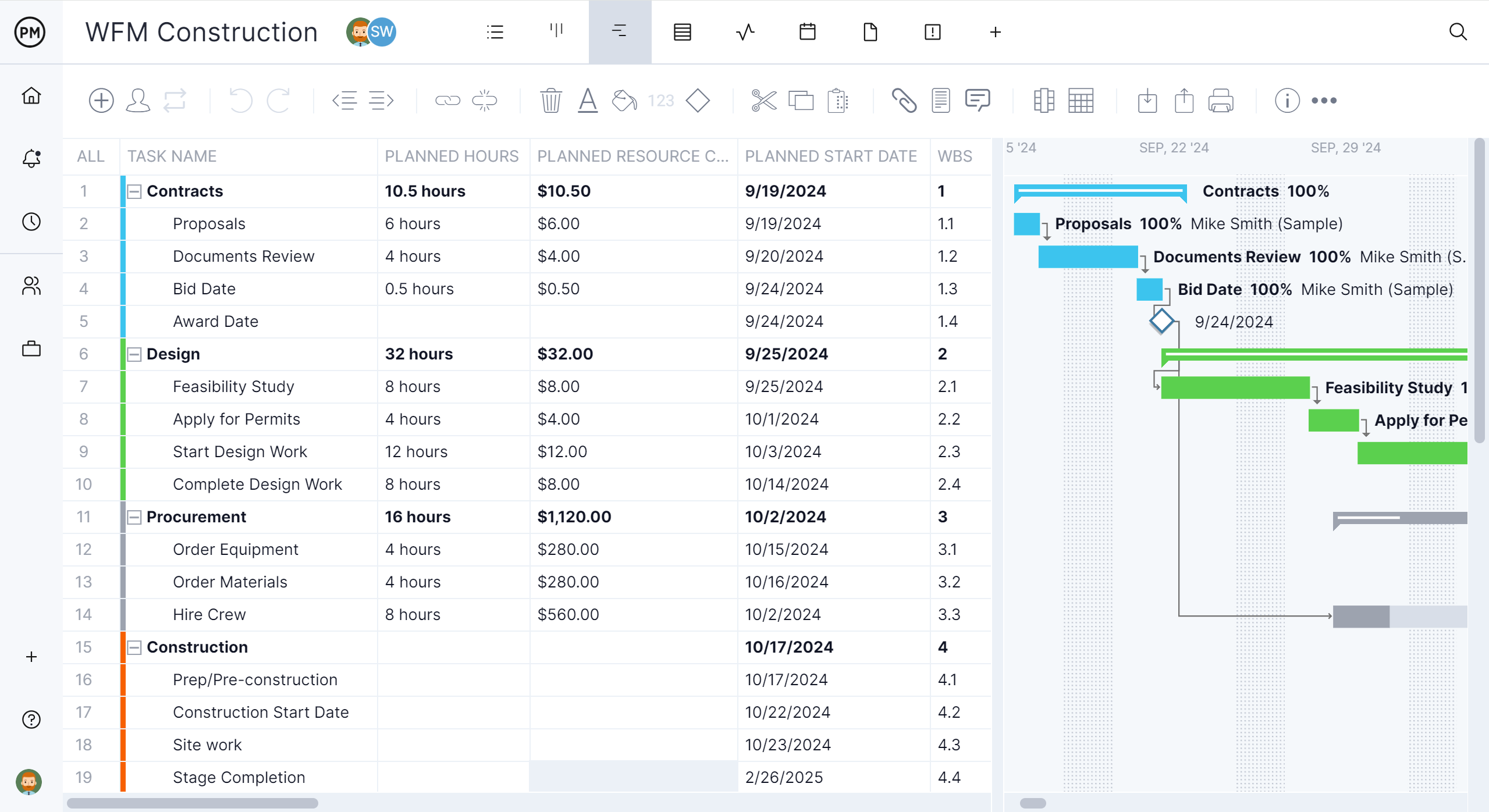
Best for: General contractors and subcontractors leaving Planner who need construction scheduling with critical path and baselines, crew workload across jobs and easy sharing with subs and owners.
Key features
- Gantt chart with finish-to-start, start-to-start, finish-to-finish and start-to-finish dependencies, plus lag
- Critical path filter, baselines and variance reports
- Workload page showing hours across all projects (Business plan and above)
- Equipment and subcontractors as resources with no license cost, and free read-only guests
- Import of Excel, CSV, MPP and Microsoft Project XML files, and export to MPP, XML, Excel and CSV
- Microsoft Teams integration, plus ChatGPT and Claude integrations on all plans at no extra cost
Pros
- All four dependency types, critical path and baselines on the Team plan
- Subs and owners can view schedules without joining your Microsoft 365 tenant
- MPP import and export, lossless for schedule data
Cons
- No RFI, submittal or drawing management, so teams that need those keep a document tool alongside it
- No desktop app or offline mode
- The workload page needs the Business plan, and the Team plan is limited to 10 users and 20 projects
Pricing: Team $15/user/month, Business $28/user/month (billed annually), Enterprise by quote. 30-day free trial.
2. Planner and Project Plan 3
Planner and Project Plan 3 is Microsoft’s own upgrade path, and it suits construction teams that want to stay in Microsoft 365 and Teams. It adds all four dependency types with lead and lag, the critical path, baselines, task history and the Assignments view to Planner, and it includes the Microsoft Project desktop client. Project desktop calculates the critical path, saves up to 11 baselines and opens the MPP files owners often send.
The trade-offs are cost, platform and reach. Plan 3 costs $30/user/month, three times Plan 1, Microsoft Project desktop runs only on Windows, and Planner’s People view shows workload within one plan rather than across every job. Subcontractors and owners have to be added as guests in your Microsoft 365 tenant, and Copilot is a separate add-on: $30/user/month for enterprise plans, or $21/user/month (Copilot Business) for organizations of up to 300 users. For more Microsoft options, see the best Microsoft Project alternatives for construction.
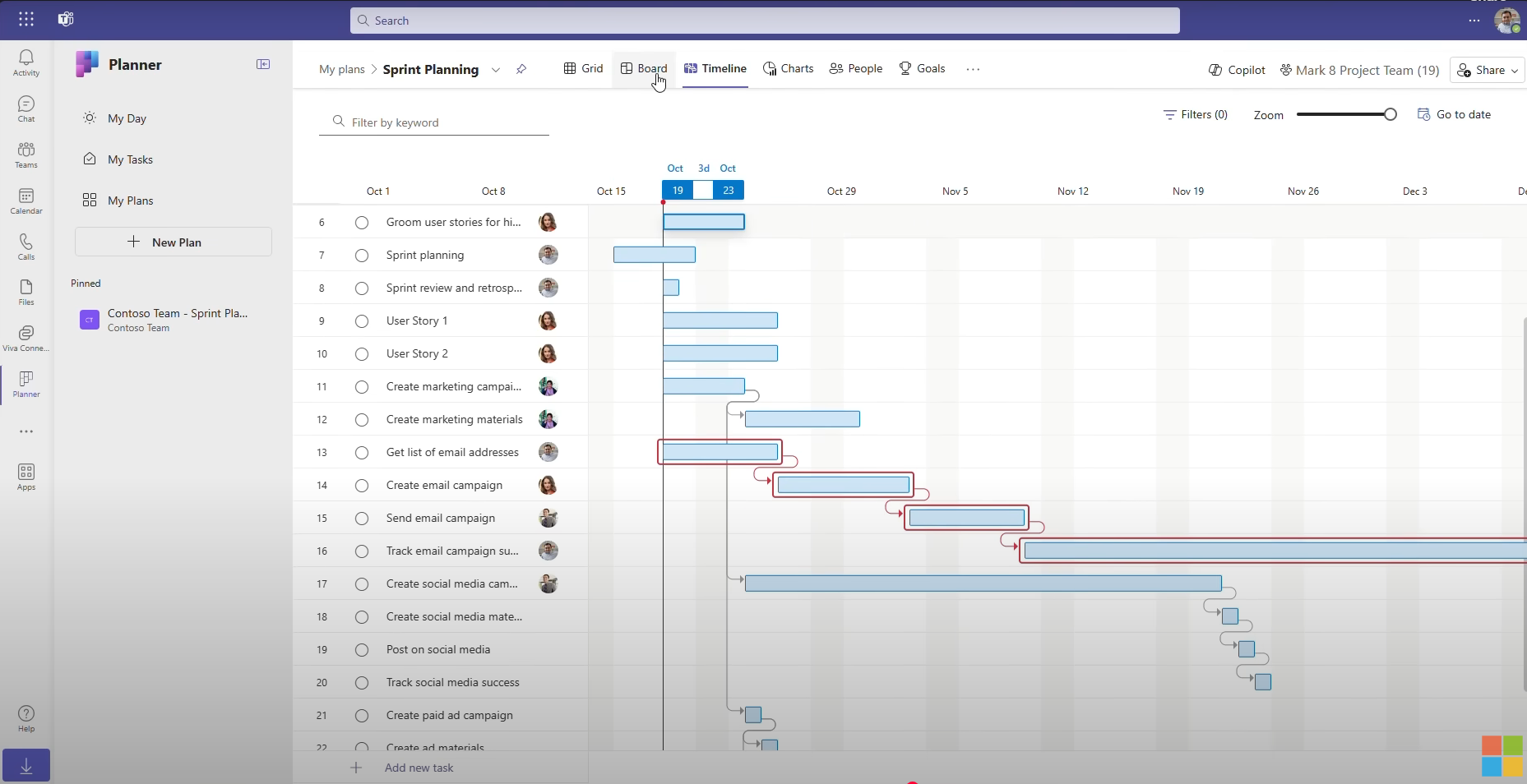
Best for: Construction teams that want to stay in Microsoft 365 and Teams and need critical path, baselines and Microsoft Project desktop on Windows.
Key features
- Planner timeline with all four dependency types, lead and lag
- Critical path, baselines, task history and the Assignments view
- Microsoft Project desktop client with up to 11 baselines
- Opens and saves MPP files in Project desktop
Pros
- Stays inside Microsoft 365, Teams and your existing tenant
- Familiar Planner interface for office staff
- The standard file format for many owners and schedulers
Cons
- $30/user/month, and Microsoft Project desktop runs only on Windows
- No workload view across jobs
- Subs and owners need guest access in your tenant, and Copilot costs extra
Pricing: Planner and Project Plan 3 costs $30/user/month, paid yearly, and includes the Project desktop client. Planner Plan 1 costs $10/user/month, paid yearly. Planner and Project Plan 5 is no longer sold to new customers.
3. Procore
Procore is the better fit for construction teams whose main need is documents and field coordination rather than scheduling. It includes dedicated tools for RFIs, submittals and drawings, along with budgets, quality and safety, and Procore Scheduling, generally available since February 2026, adds schedules with all four dependency types and lag, the critical path and lookaheads.
For teams leaving Planner mainly over scheduling, there are trade-offs. Schedules imported from Microsoft Project or Primavera P6 stay read-only, Procore’s user guide lists Scheduling actions as web-only, and pricing is based on annual construction volume. For more options, see the best Procore alternatives.
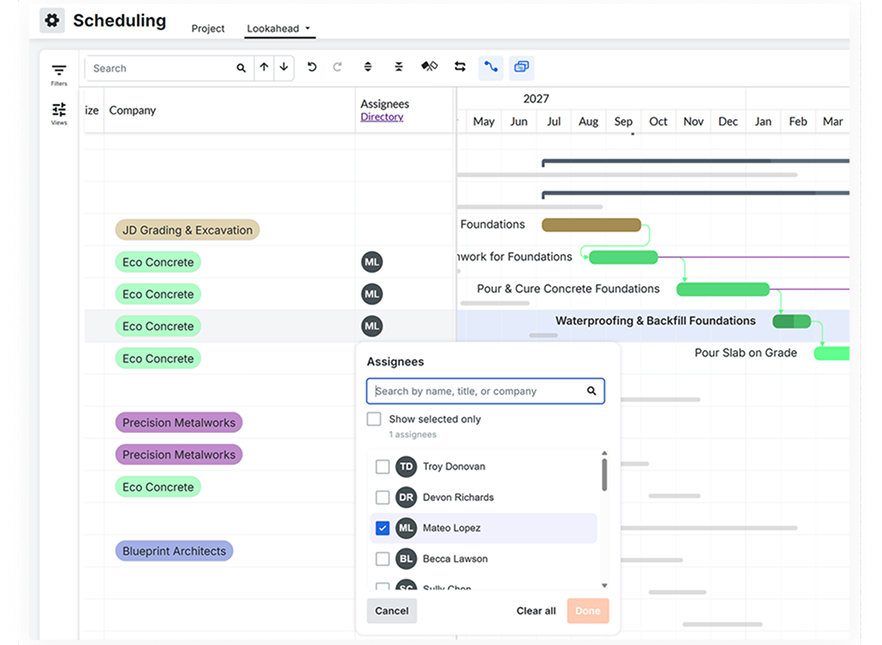
Best for: General contractors whose main need is managing RFIs, submittals and drawings in one platform with the schedule.
Key features
- RFIs, submittals and drawing management
- Procore Scheduling with all four dependency types, lag, critical path and lookaheads
- Budgets, quality and safety tools
- Import of XER and MPP files as read-only schedules
Pros
- Dedicated construction document tools
- No charge for adding users
- Widely used by general contractors and owners
Cons
- Imported schedules stay read-only
- Procore’s user guide lists Scheduling actions as web-only
- Pricing is based on annual construction volume and can be high for smaller contractors
Pricing: By quote, as an annual fee based on the products you choose and your annual construction volume. No charge for additional users.
4. Smartsheet
Smartsheet is a spreadsheet-style work management platform with real scheduling. Its Gantt view supports all four dependency types with lag, highlights the critical path on the Pro plan and above and offers one baseline per sheet on the Business plan and above. It imports MPP files directly, and free Contributors can view and comment on shared sheets, while free external Guests on Business and above can also edit, which helps when subs need to update their own dates.
The gaps for construction are crews and the field. Full resource planning is a paid add-on, and on the mobile app the Gantt view is available only in reports. For more, see the best Smartsheet alternatives for construction.
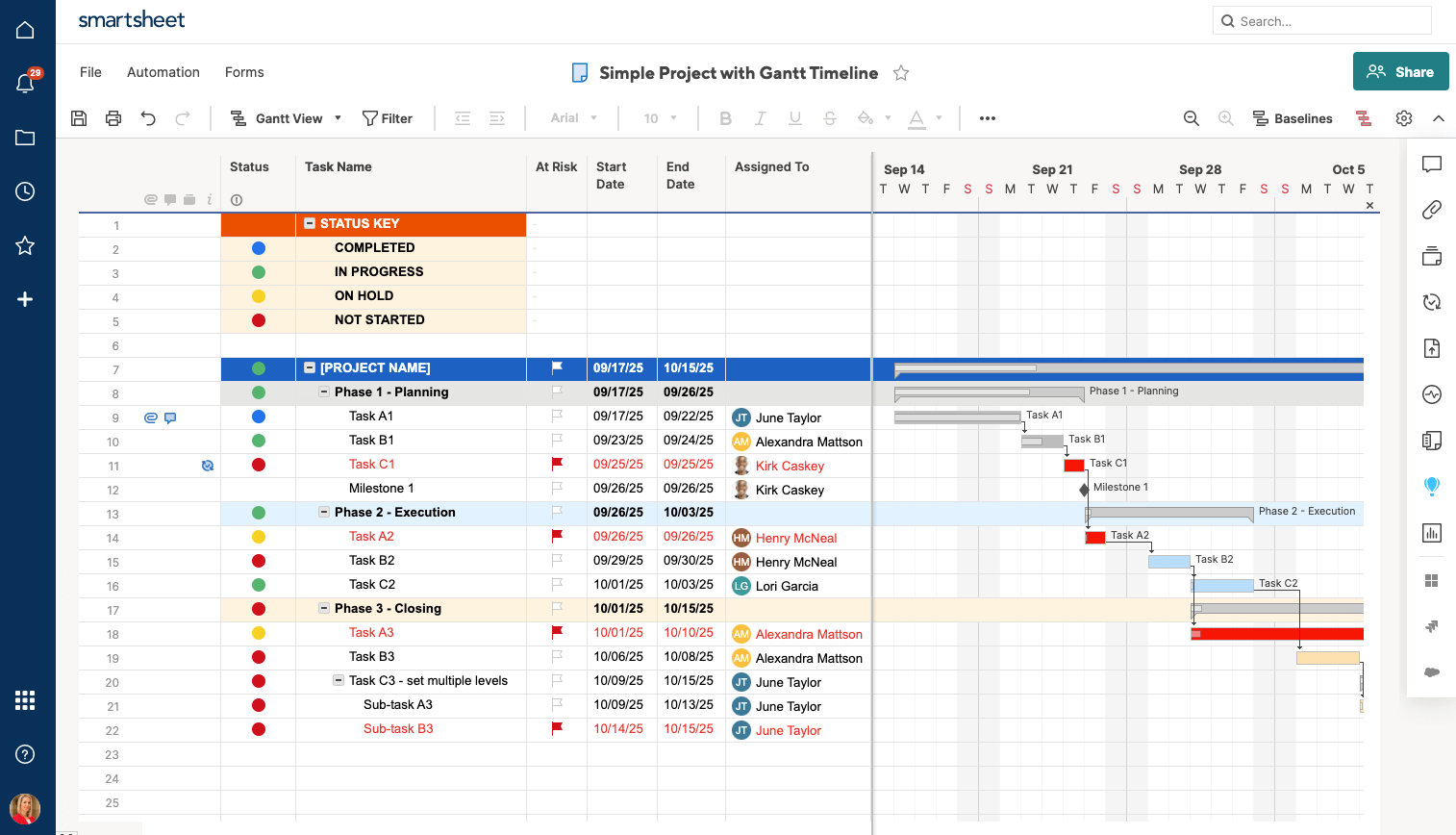
Best for: Construction teams that want a spreadsheet-style timeline with dependencies and critical path, and don’t need crew workload across jobs.
Key features
- Gantt view with all four dependency types and lag
- Critical path (Pro and above) and one baseline per sheet (Business and above)
- Direct import of MPP, Excel and CSV files
- Free Contributors and, on Business and above, free external Guests
Pros
- Critical path from the $9 Pro plan
- Opens MPP files without Microsoft Project
- 30-day free trial
Cons
- Full resource planning is a paid add-on
- Gantt view on mobile only in reports
- Exports Microsoft Project XML, not MPP, and holds one baseline per sheet
Pricing: Pro $9/member/month billed annually ($12 monthly), Business $19/member/month billed annually ($24 monthly), Enterprise by quote. 30-day free trial.
5. TeamGantt
TeamGantt is Gantt chart software with a construction plan, Builder Edition. Its drag-and-drop Gantt chart includes the critical path on every paid plan, and the Business plan adds advanced dependencies, baselines and workload management. Builder Edition adds lookahead schedules and lets subcontractors confirm schedule changes.
TeamGantt charges a flat monthly fee per account rather than per seat, with a cap on projects: Base allows 5, Business includes 5 and allows up to 20, and Builder Edition starts with 10. It imports MPP files without resources or assignments, and its iOS app shows projects as a list, not a Gantt chart.
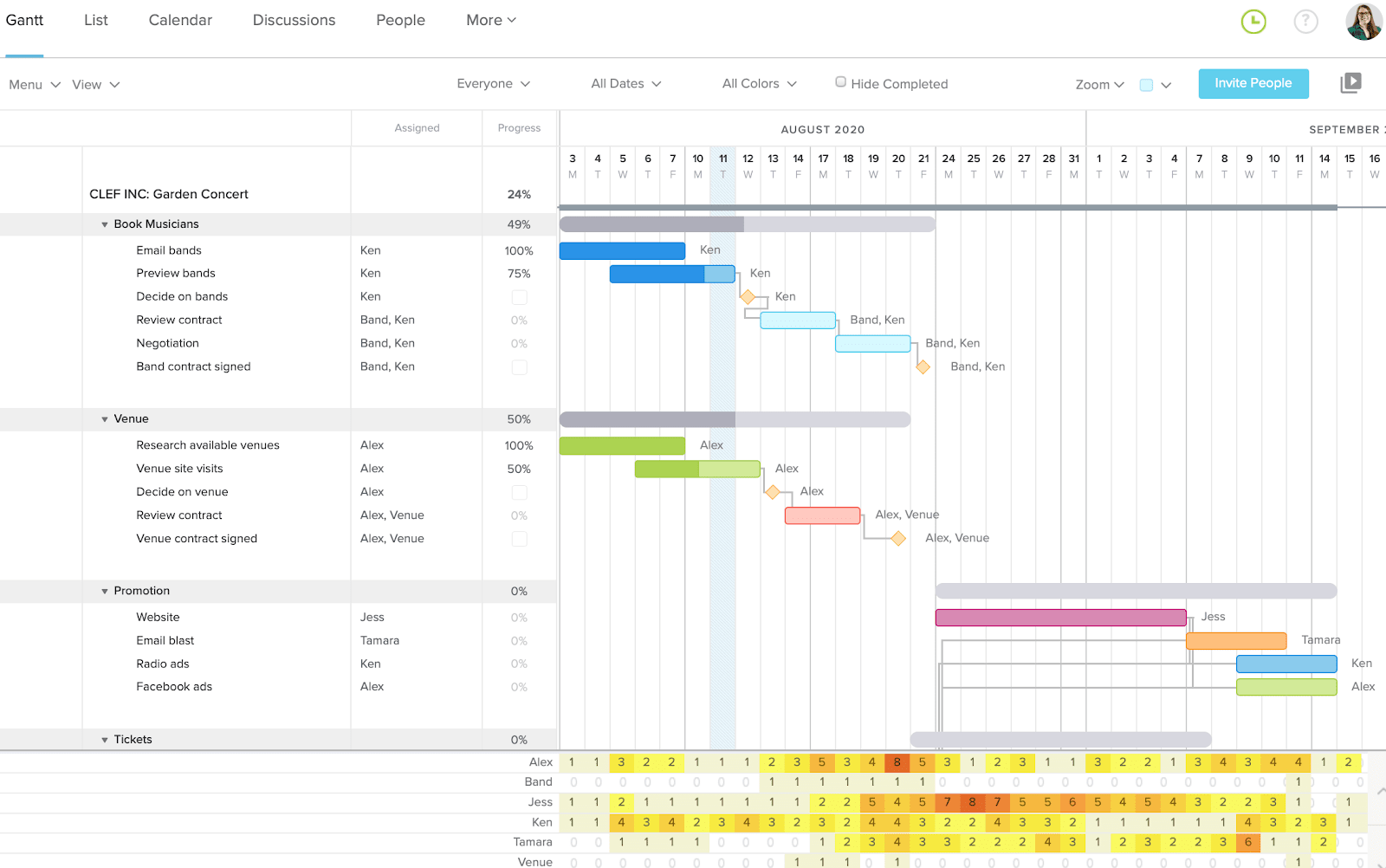
Best for: Builders and small contractors who want a simple Gantt chart with lookaheads and subcontractor confirmations at a flat price.
Key features
- All four dependency types with lag and lead (advanced dependencies on Business and above)
- Critical path on all paid plans; baselines on Business and Builder Edition
- Lookahead schedules and subcontractor schedule confirmation (Builder Edition)
- Import of MPP and CSV files
Pros
- Flat pricing with unlimited users on Business and Builder Edition
- Lookaheads and sub confirmations built for construction
- Free Personal plan for one user and one project
Cons
- Every plan caps projects
- Baselines, workload and advanced dependencies need the Business plan
- The iOS app shows a list view only, and the free trial requires a credit card
Pricing: Base $59/month; Business from $120/month; Builder Edition from $199/month. Save 20% with yearly billing. 14-day free trial.
6. Contractor Foreman
Contractor Foreman is an all-in-one construction management tool priced per company rather than per seat. Its Gantt chart supports all four dependency types with lead and lag, tracks the critical path, shows baselines and can link tasks across projects so a delay on one job updates related tasks on another, and it adds a crew schedule, estimates, change orders and a client portal depending on the plan.
The Gantt chart and crew schedule start on the Plus plan, linked tasks only move when Auto Scheduling is turned on, and its help center doesn’t describe warnings when a crew is double-booked.
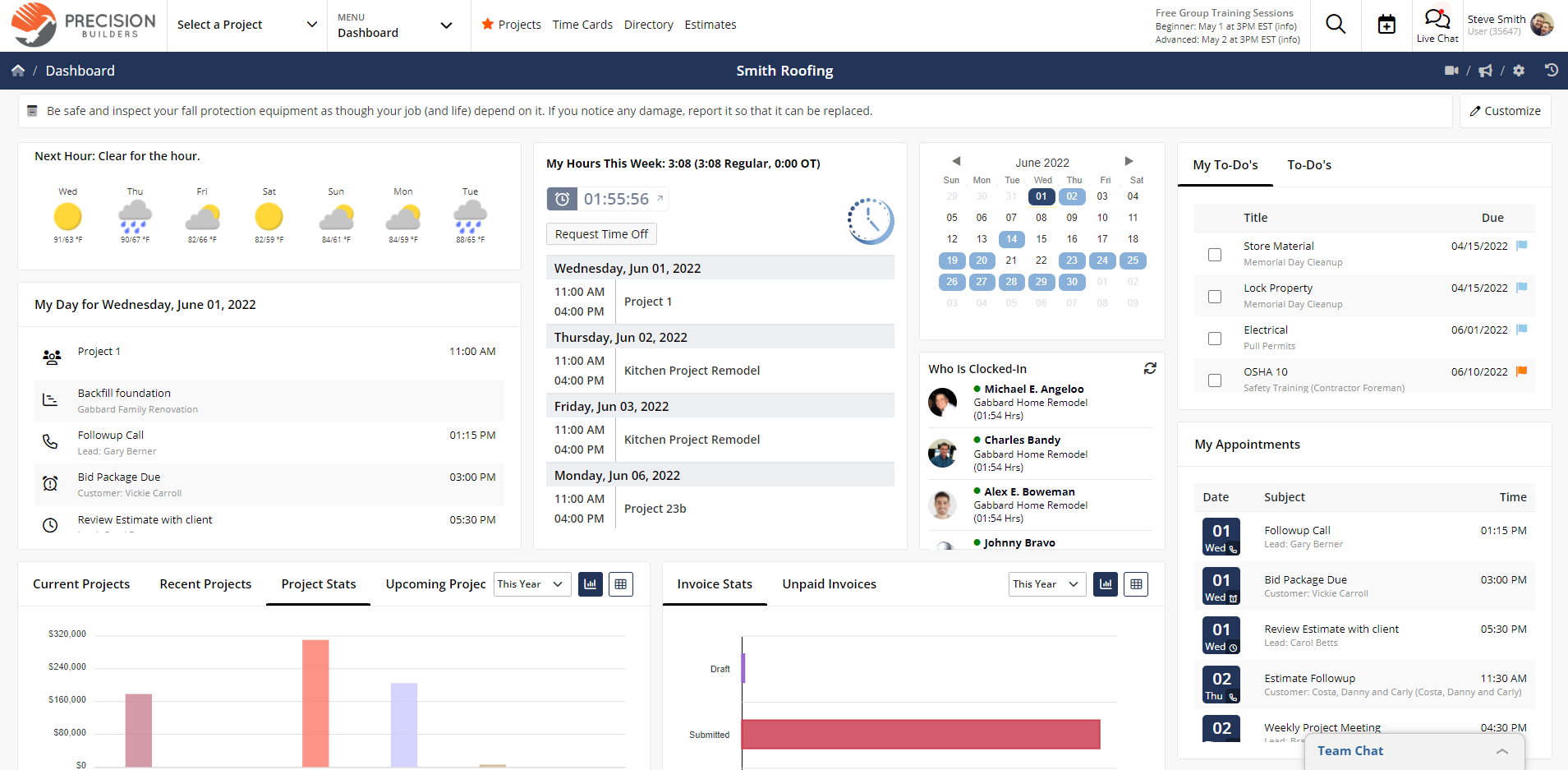
Best for: Budget-conscious contractors who want Gantt scheduling and basic construction workflows in one tool at a published company price.
Key features
- All four dependency types with lead and lag, and task links across projects (Plus and above)
- Critical path and per-task baselines
- Crew schedule (Plus and above) and client portal (Pro and Unlimited)
- Microsoft Project import and export, and iPhone, iPad and Android apps
Pros
- Flat company pricing within each plan’s user limit
- Scheduling depth close to dedicated scheduling tools
- 30-day free trial
Cons
- The Basic and Standard plans have no Gantt scheduling
- Dependencies don’t move dates unless Auto Scheduling is on
- No documented double-booking warnings
Pricing: Basic $49/month (1 user), Standard $105/month (up to 3 users), Plus $166/month (up to 8 users), Pro $221/month (up to 15 users) and Unlimited $332/month, all billed annually. 30-day free trial.
7. Fieldwire
Fieldwire is the better fit for field teams whose main need is working from drawings rather than scheduling. Crews view plans, manage tasks and run punch lists from a phone or tablet, and the free Basic plan covers up to 5 users and 3 projects. For teams that used Planner mostly for punch lists and field tasks, that may be the closer match.
Fieldwire has a Gantt view of tasks with a manpower graph, but its “related tasks” aren’t dependency types: Fieldwire’s own scheduling guide says changing a task’s dates doesn’t automatically move related tasks, and it doesn’t document baselines or a calculated critical path. Teams often pair it with a scheduling tool for the master schedule.
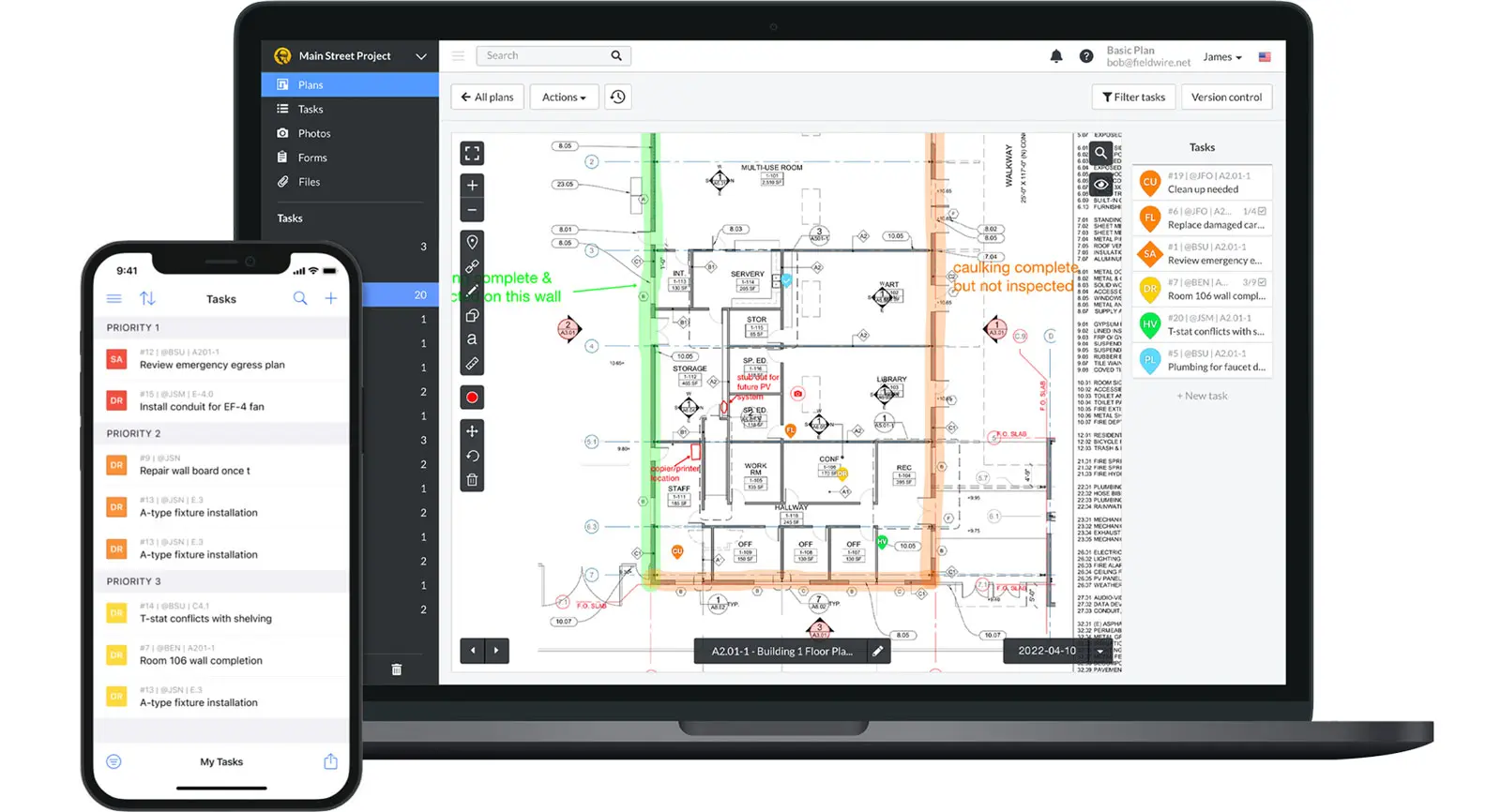
Best for: Superintendents and field teams who work from drawings and need tasks and punch lists on phones and tablets.
Key features
- Tasks and punch lists tied to drawings
- Gantt view of tasks with a manpower graph
- Task import from spreadsheets
- iPhone, iPad and Android apps
Pros
- Built for field work from drawings
- Free plan for small teams
- Same project in the browser and on mobile
Cons
- Related tasks don’t move each other’s dates
- No documented baselines or calculated critical path
- No native MPP import
Pricing: Basic free (up to 5 users, 3 projects); Pro $39, Business $64 and Business Plus $89 per user per month, billed annually.
How to Move a Construction Schedule From Planner to ProjectManager
To move a construction schedule from Microsoft Planner to ProjectManager, export the plan to Excel, set up a project with matching working days, import and map the file, then link dependencies, add lag and set a baseline. Planner exports plans to Excel only, so plan to check the schedule logic after importing.
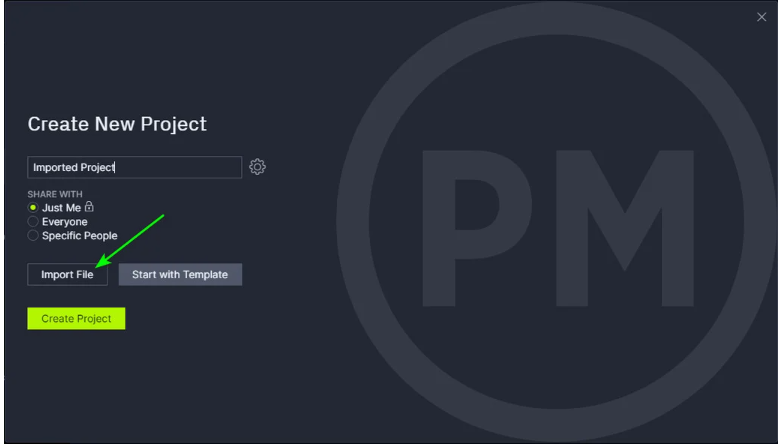
- Export from Planner. Open the plan in Planner and export it to Excel.
- Set working days first. In ProjectManager, click the + button and choose Project, then set your working days to match the job, such as a five-day or six-day work week. Working days are hard to change once the project exists, and global holidays can’t be added to existing projects.
- Import the file. Choose Import File when creating the project, or click the import icon on the Gantt ribbon of an existing project. Click select file, upload your Excel file and click next.
- Map the columns. Map each column, such as task name, assignee, start and due date, to the matching Gantt column, then click import.
- Re-link dependencies and add lag. Link tasks with the right dependency types, so drywall follows framing and the inspection follows electrical rough-in, then add lag for inspection holds, concrete cure times and material lead times.
- Filter for the critical path. Turn on the critical path filter and check that it shows the tasks that drive the finish date.
- Set a baseline. Once the schedule is right, set a baseline in Gantt settings so you can track variance from the start of the job.
File attachments and tags don’t come over in an Excel import, so download any files you need from Planner separately.
Want to see your schedule in ProjectManager? Start a free 30-day trial, import your Planner export and turn on the critical path filter. Get started with ProjectManager today for free.
Microsoft Planner Alternatives for Construction FAQ
Is Microsoft Planner good for construction?
Microsoft Planner works well for construction task lists, punch lists and checklists, especially for teams already on Microsoft 365 and Teams. It’s less suited to construction schedules: Plan 1 has finish-to-start dependencies only, critical path and baselines need Planner and Project Plan 3, and there’s no view of crews across jobs. ProjectManager, online project management software with Gantt charts, critical path, baselines and workload management across projects, includes all four dependency types, critical path and baselines on its Team plan and crew workload across jobs on its Business plan.
Does Microsoft Planner have critical path?
Yes, but only with Planner and Project Plan 3, at $30 per user per month paid yearly, which also includes the Microsoft Project desktop client for Windows. Basic Planner and Planner Plan 1 don’t include the critical path or baselines. ProjectManager includes a critical path filter on its Gantt chart, along with baselines and variance reports, on the Team plan at $15 per user per month billed annually.
Can Planner handle construction schedule dependencies?
Partly. Planner Plan 1 links tasks finish-to-start only, with no lead or lag, so it can’t model drywall starting a few days after framing starts or an inspection hold. Planner and Project Plan 3 adds all four dependency types with lead and lag. ProjectManager supports finish-to-start, start-to-start, finish-to-finish and start-to-finish dependencies with lag on the Team plan, so the inspection keeps its hold when framing slips.
What do contractors use instead of Microsoft Planner?
Contractors who mainly need scheduling and crew visibility across jobs often move to ProjectManager, while those whose main need is RFIs, submittals and drawings tend to choose Procore. Teams that want to stay in Microsoft 365 upgrade to Planner and Project Plan 3, and field teams working from drawings and punch lists use Fieldwire. For alternatives outside construction, see the best Microsoft Planner alternatives.
Can I share a Planner schedule with subcontractors?
Yes, but they need to be added as guests to your Microsoft 365 group or tenant, and guest limits vary by environment. Many subs and owners would rather not join another company’s tenant just to see their dates. In ProjectManager, subcontractors and owners can view shared projects as free read-only guests on the Team and Business plans, and subs can also be added as resources with no license cost.
Related Content
- 8 Best Microsoft Planner Alternatives (2026)
- Best Microsoft Project Alternatives for Construction (2026)
- Microsoft Planner vs. ProjectManager
- Best monday.com Alternatives for Construction (2026)
- Best Smartsheet Alternatives for Construction (2026)
- Best Construction Gantt Chart Software (2026)
- 15 Best Construction Scheduling Software for 2026 (Free & Paid)
- 11 Best Procore Alternatives of 2026 (Free + Paid)
