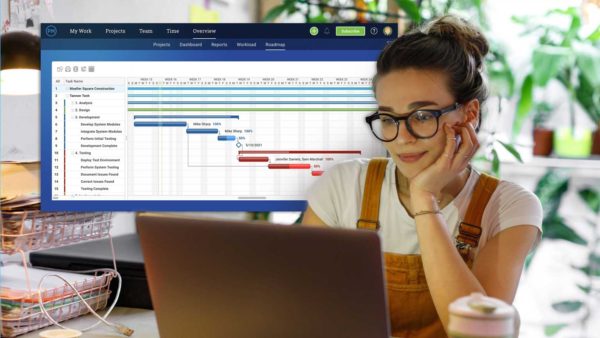
Projects are made up of a large number of tasks, and keeping track of those tasks is a primary role of a project manager. Sometimes, the tasks in a project all run smoothly and independently of each other, and there…
Read More
Projects are made up of a large number of tasks, and keeping track of those tasks is a primary role of a project manager. Sometimes, the tasks in a project all run smoothly and independently of each other, and there…
Read More
There’s never enough time when managing a project. That’s why we make schedules—to try and control time, just enough to get your deliverable by the deadline. Sometimes, however, things go awry. Changes in a project are common of course, but…
Read More
Projects are made up of many moving parts. One of the ways that you can determine if the project is behind or ahead of schedule is called schedule control. Project planning, scheduling and control all go together when managing a…
Read More
Events are projects that must be planned, executed and tracked to be delivered successfully. Therefore, an event schedule is essential to ensure that all related tasks are organized and done within a predetermined timeframe. To have a successful event requires…
Read More
Scheduling a project is done in the planning phase. A project schedule gets into the details, including tasks and subtasks. A master schedule provides a more broad-stroke approach to scheduling, but that doesn’t mean it’s any less important. To understand…
Read More
Projects, whether they’re large or small, are journeys. Project managers are responsible for making sure those journeys go according to plan and to do so, they need to break down projects into phases so they’re easier to manage. A milestone…
Read More
Manufacturing is a complex process. It requires balancing production capacity, inventory levels, material requirements and other aspects to fulfill orders. Once you’ve aligned these project aspects, you need to schedule your production. Creating a master production schedule is crucial in…
Read More
Project management starts with a plan, one that is abstract until it’s executed. However, project execution is blind without a way to measure progress and performance. You first need a project baseline to capture that plan and compare it to…
Read More
Production scheduling is part of the pipeline that starts with sourcing and planning. Is it the most important part? Every part is important! If you don’t have the materials, you can’t manufacture a product. If you don’t have a plan,…
Read More
Have you ever gotten stuck trying to schedule a project? If you’re like most of us, the answer is yes. It’s the project management equivalent of writer’s block, and it can majorly slow down your planning. The good news is…
Read More
Timetables, deliverables, resources and even risks—everything that is involved with a project is wrapped up inside the schedule. Arguably one of the single most important aspects to any well-planned project, your schedule dictates which tasks need to be done when,…
Read More
Project managers are responsible for tasks across every part of a business. They have to schedule work, manage people, manage budgets and wrangle technology—just to name a few. If you had to boil it down and define the core function…
Read More
Timelines allow organizations to estimate how long it will take to execute a project, no matter what industry they’re in. This is done by identifying all the tasks that will be executed, estimating their duration and then determining their start…
Read More