


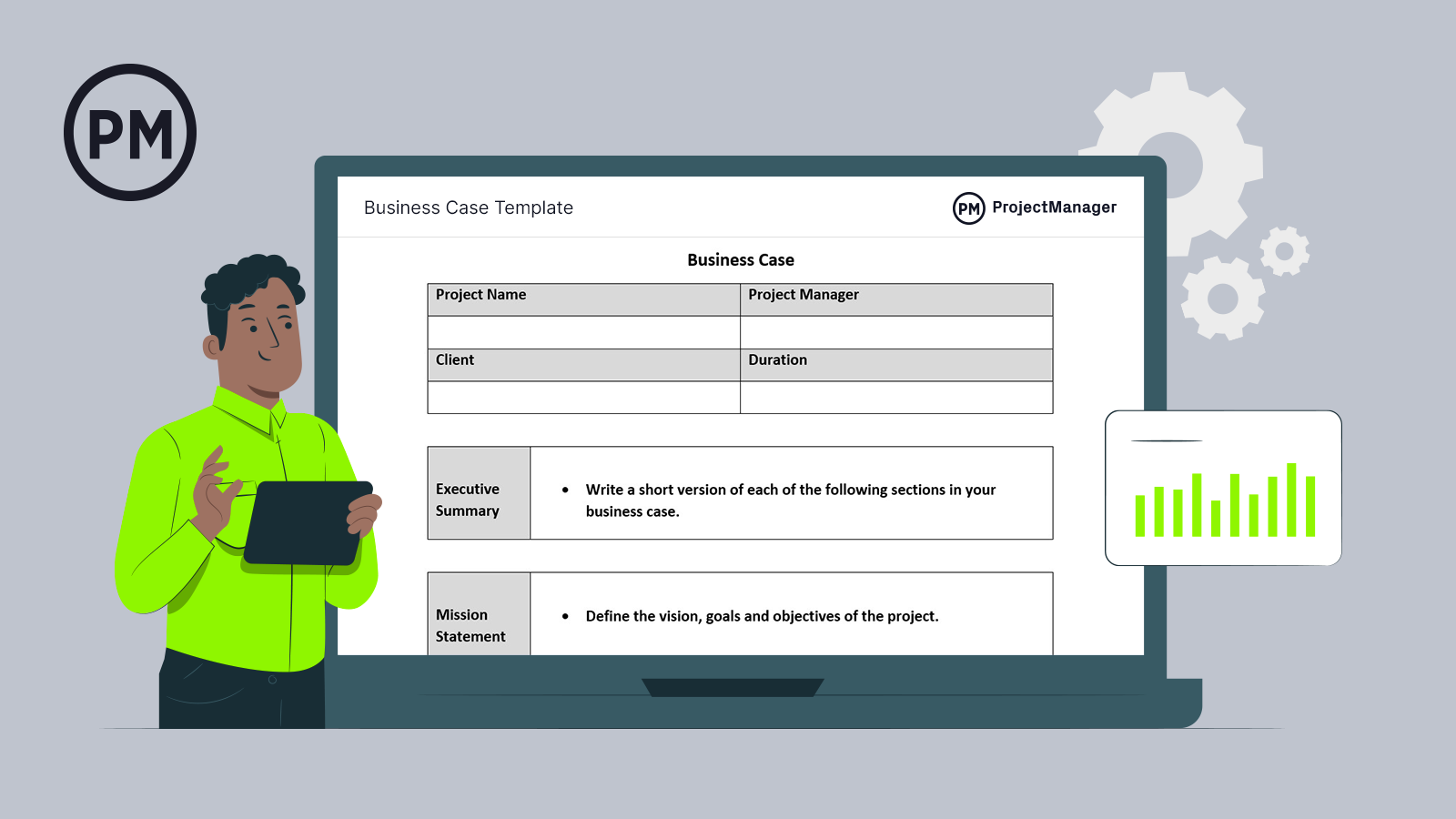
A business case template is a document that helps sell your project. It collects the main points of a project and delivers them in a clear and concise manner. Our free business case template for Word is a great tool to help you gather that important data during the project initiation phase and show the project stakeholders the value and validity of the project.
What Is a Business Case?
The business case is a document used in project management to show that the costs related to the project are worthwhile and there will be a strong return on investment. These documents summarize various aspects of the project including its objective in addition to the costs and benefits that the project will deliver to its stakeholders.
You can think of a business case as the pitch you make to win over the client, customer or stakeholder. It justifies the project by evaluating the benefits, costs and risks while showing why this project’s path is the preferred solution to whatever problem the project is solving or the need it’s addressing. This buy-in is essential for any project to meet its objectives.
A business case provides details that are only outlined in the project proposal of the project. Unlike a project charter, which is a high-level description of the project and its deliverables, the business case is more focused on return on investment and future opportunities. The project charter details the actual project more than the business case, which is about justifying a company’s decision on taking on the project.
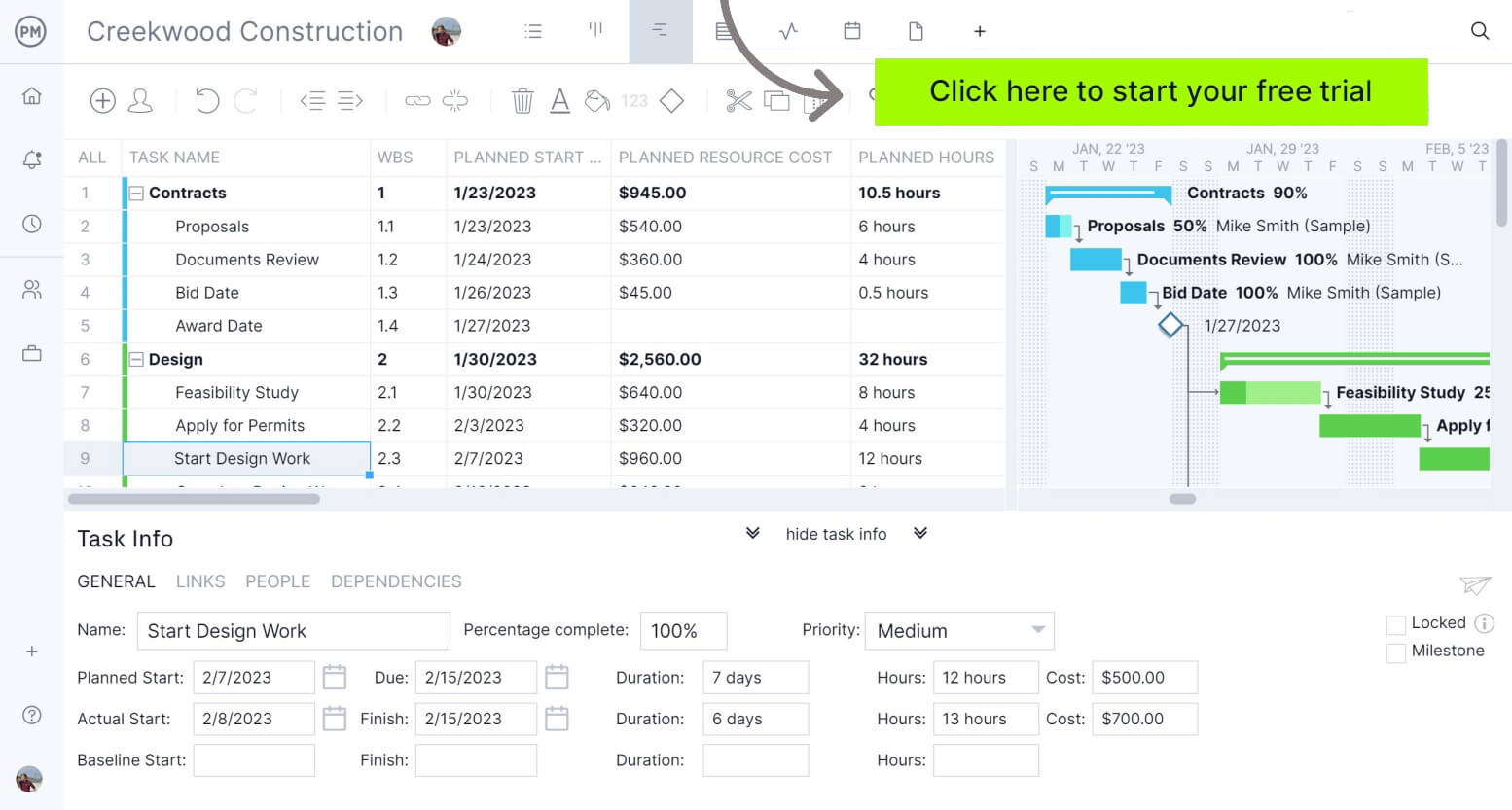
ProjectManager’s Gantt chart helps turn the information gathered from a business case template into a clear, actionable plan by mapping tasks, linking dependencies and creating timelines in one visual platform. It allows teams to schedule work, allocate resources efficiently and set baselines to track performance against the original plan. With real-time updates and automatic progress tracking, decision-makers can quickly identify risks, adjust schedules and keep projects aligned with the strategic goals outlined in the business case. Get started with ProjectManager today for free.
Why You Need a Business Case Template
The main reason why a business case template is so important is that it does the due diligence for stakeholders and proves that the expense is worth the return on their investment. There are many projects that might be in a company’s pipeline with only so many resources to deliver them. It’s crucial to know which project is going to be worthwhile from a financial viewpoint.
A business case acts as a number of different cases. For one, it’s the strategic case, looking to see if the project aligns with the overall company strategy. The economic case explores if the project offers the best value. A commercial case looks at the project through the lens of the market. A financial case sees if the investment is affordable for the company. A management case looks at those who will be involved in the project and whether they can deliver it.
No matter the project, big or small, the business case is a must if only to define the business needs and objectives of the project. Whether you have a long document or capture it all in the span of a single page, the business case template is a great way to align the project team and stakeholders, one of the most important reasons why you need a business case.
How to Use Our Business Case Template for Word
Before requesting funding, resources or executive approval, decision-makers need a clear understanding of why a project should move forward. This business case template for Word walks users through the information required to justify an initiative, compare alternatives, evaluate costs and benefits, identify risks and demonstrate how the proposed work supports broader organizational goals.
Executive Summary
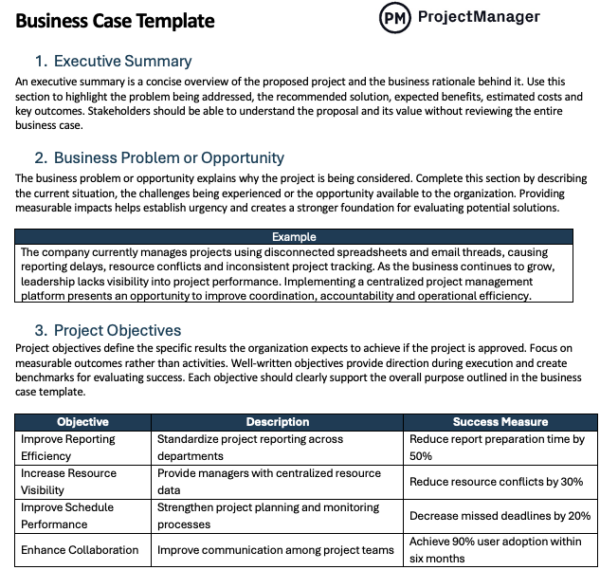
An executive summary is a concise overview of the proposed project and the business rationale behind it. Use this section to highlight the problem being addressed, the recommended solution, expected benefits, estimated costs and key outcomes. Stakeholders should be able to understand the proposal and its value without reviewing the entire business case.
Business Problem or Opportunity
The business problem or opportunity explains why the project is being considered. Complete this section by describing the current situation, the challenges being experienced or the opportunity available to the organization. Providing measurable impacts helps establish urgency and creates a stronger foundation for evaluating potential solutions.
Project Objectives
Project objectives define the specific results the organization expects to achieve if the project is approved. Focus on measurable outcomes rather than activities. Well-written project objectives provide direction during execution and create benchmarks for evaluating success. Each objective should clearly support the overall purpose outlined in the business case template.
| Objective | Description | Success Measure |
| Improve Reporting Efficiency | Standardize project reporting across departments | Reduce report preparation time by 50% |
| Increase Resource Visibility | Provide managers with centralized resource data | Reduce resource conflicts by 30% |
| Improve Schedule Performance | Strengthen project planning and monitoring processes | Decrease missed deadlines by 20% |
| Enhance Collaboration | Improve communication among project teams | Achieve 90% user adoption within six months |
Strategic Alignment
Strategic alignment demonstrates how the proposed project supports organizational priorities and long-term business goals. Rather than focusing on project-level benefits alone, this section connects expected outcomes to broader initiatives such as growth, cost reduction, customer satisfaction or operational improvement. Strong alignment helps decision-makers prioritize investments and allocate resources more confidently.
| Strategic Priority | Project Contribution | Expected Impact |
| Operational Efficiency | Automates project reporting and status tracking | Reduces administrative workload |
| Business Growth | Improves project delivery consistency | Supports scalable operations |
| Customer Satisfaction | Provides better visibility into project progress | Improves client communication |
| Cost Management | Enhances resource planning and utilization | Reduces avoidable project costs |
| Digital Transformation | Replaces manual processes with centralized software | Modernizes project management practices |
Options Analysis
Options analysis compares potential solutions to determine which approach delivers the greatest value to the organization. Complete this section by evaluating alternatives against criteria such as cost, benefits, implementation complexity and risk. Including a “do nothing” option provides a baseline for understanding the consequences of inaction.
| Option | Description | Key Consideration |
| Do Nothing | Continue using spreadsheets and manual processes | No upfront cost but existing issues remain |
| Improve Existing Process | Enhance current spreadsheets and reporting methods | Moderate improvement with limited scalability |
| Implement New Software | Deploy a centralized project management platform | Higher investment with greater long-term benefits |
Cost Estimate
Cost estimates identify the financial investment required to complete the project and sustain the solution after implementation. Populate this section with expected expenses across labor, technology, training, equipment and ongoing support. Accurate estimates help stakeholders assess affordability and compare anticipated costs against projected benefits.
| Cost Category | Description | Estimated Cost |
| Software Licenses | Annual subscription for project management software | $12,000 |
| Implementation Services | System setup, configuration and migration support | $8,000 |
| Training | User onboarding and administrator training | $3,500 |
| Internal Labor | Employee time dedicated to implementation activities | $6,500 |
| Total Estimated Cost | $30,000 |
Benefits Analysis
Benefits analysis explains the value the organization expects to receive after the project is completed. Focus on measurable outcomes whenever possible, including cost savings, productivity gains, revenue growth or operational improvements. Quantifying benefits allows decision-makers to compare expected returns against the investment being requested.
| Benefit | Description | Expected Value |
| Labor Savings | Reduced time spent preparing reports | $15,000 annually |
| Improved Resource Utilization | Fewer scheduling conflicts and idle resources | $10,000 annually |
| Faster Project Delivery | Reduced delays through improved planning | $20,000 annually |
| Higher Customer Retention | Improved service and project visibility | $12,000 annually |
Risk Assessment
Risk assessment identifies events that could negatively affect project success, expected benefits or implementation timelines. Use this section to document potential threats, evaluate their impact and define response strategies. Addressing risks early strengthens planning efforts and helps stakeholders make informed investment decisions.
| Risk | Potential Impact | Mitigation Strategy |
| User Resistance | Low adoption of the new system | Provide training and change management support |
| Budget Overrun | Project exceeds approved funding | Include contingency reserves and monitor spending |
| Implementation Delays | Benefits realization is postponed | Establish milestones and progress reviews |
| Data Migration Issues | Loss or corruption of critical information | Perform testing and maintain backup copies |
Timeline & Milestones
A project timeline establishes when project tasks should start and finish, while milestones identify major achievements reached during execution. Complete this section by listing key activities, assigning planned dates and highlighting important milestones. Organizing work in a structured timeline helps stakeholders monitor progress, coordinate resources and identify potential schedule delays before they affect project outcomes.
| Project Task | Start Date | End Date | Milestone |
| Business Case Approval | Jan 15, 2027 | Jan 15, 2027 | Project Approved |
| Requirements Gathering | Jan 16, 2027 | Jan 31, 2027 | |
| Vendor Evaluation & Selection | Feb 1, 2027 | Feb 10, 2027 | Vendor Selected |
| Solution Configuration | Feb 11, 2027 | Mar 31, 2027 | System Configured |
| Data Migration | Mar 15, 2027 | Apr 5, 2027 | |
| User Acceptance Testing | Apr 6, 2027 | Apr 14, 2027 | Testing Complete |
| User Training | Apr 15, 2027 | Apr 25, 2027 | Users Trained |
| Final Deployment Preparation | Apr 26, 2027 | Apr 30, 2027 | |
| System Go-Live | May 1, 2027 | May 1, 2027 | Go-Live |
| Post-Implementation Review | May 15, 2027 | May 15, 2027 | Project Closed |
Resource Requirements
Successful delivery depends on having the right people, tools and support available throughout the project. Complete this section by identifying the resources needed to execute the work and sustain the solution afterward. Clear resource planning helps prevent delays, budget issues and capacity conflicts during implementation.
| Resource Type | Requirement | Purpose |
| Project Manager | 1 Full-Time Resource | Oversee planning, execution and stakeholder communication |
| Implementation Team | 3 Team Members | Configure and deploy the solution |
| Software Platform | Project Management Software | Support project planning and collaboration |
| Training Resources | Instructor and Training Materials | Prepare users for system adoption |
| Executive Sponsor | 1 Senior Leader | Provide strategic direction and approvals |
Financial Analysis
Financial analysis evaluates whether the expected benefits justify the project’s investment. Populate this section with key financial metrics that help decision-makers assess value, compare alternatives and prioritize funding. Reviewing projected returns alongside estimated costs provides a clearer picture of the project’s overall business viability.
| Financial Metric | Value | Interpretation |
| Total Project Cost | $30,000 | Estimated investment required |
| Annual Benefits | $57,000 | Expected recurring value generated |
| Net Annual Benefit | $27,000 | Benefits minus project costs |
| ROI | 90% | Projected return on investment |
| Payback Period | 6.3 Months | Time required to recover investment |
Assumptions and Constraints
Every business case relies on conditions believed to be true and limitations that may affect execution. Document assumptions to clarify planning expectations and record constraints that could restrict scope, budget, resources or schedules. Identifying both factors helps stakeholders evaluate feasibility and anticipate potential challenges.
| Type | Description | Potential Impact |
| Assumption | Project funding will be approved as requested | Supports planned implementation timeline |
| Assumption | Key stakeholders will participate in workshops | Facilitates requirements gathering and decisions |
| Constraint | Project budget capped at $30,000 | Limits solution and vendor options |
| Constraint | Implementation must be completed within four months | Restricts schedule flexibility |
| Constraint | Internal staff availability is limited | May require external support resources |
Success Criteria
Success criteria define the measurable standards used to determine whether the project achieved its intended outcomes. Rather than focusing on project activities, this section identifies the results stakeholders expect after implementation. Clear success criteria establish accountability, support performance evaluation and provide objective benchmarks for measuring project value.
| Success Criterion | Measurement Method | Target Result |
| User Adoption | Percentage of employees actively using the system | 90% adoption within six months |
| Reporting Efficiency | Average time required to prepare project reports | 50% reduction in reporting time |
| Schedule Performance | Percentage of projects completed on time | 20% improvement in on-time delivery |
| Resource Utilization | Number of resource conflicts reported | 30% reduction in conflicts |
| Stakeholder Satisfaction | Post-implementation survey results | Average satisfaction score of 4.5/5 |
How ProjectManager Helps Turn a Business Case Into a Project
ProjectManager is project management software that helps you turn a business case into a project. We have the tools you need to plan better and monitor your execution so you deliver your project on time and within budget. A business case is what convinces your stakeholders that the project is worthwhile.
Create Detailed Plans on Robust Gantt
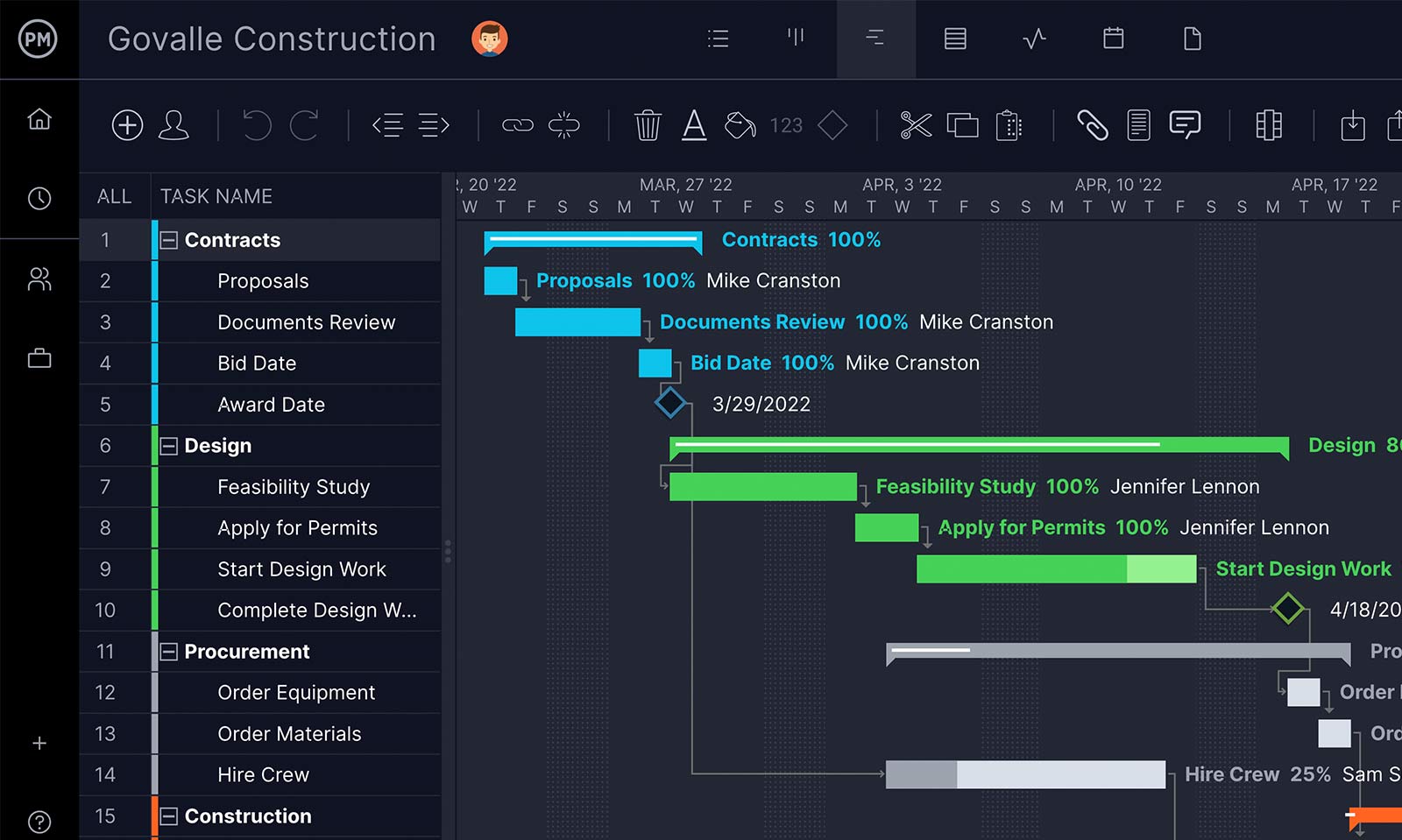
The project plan is how you’re going to get from the idea to the reality. Now that you’ve outlined that path in your business case, use our interactive Gantt chart to stay organized. You can organize tasks, link dependencies to avoid bottlenecks and set milestones to track progress. Our tool goes even further by allowing you to filter for the critical path without time-consuming calculations. Once you set the baseline, you can then generate variance reports to see if your actual progress is aligned with your planned progress.
Monitor Progress and Performance With Real-Time Dashboards
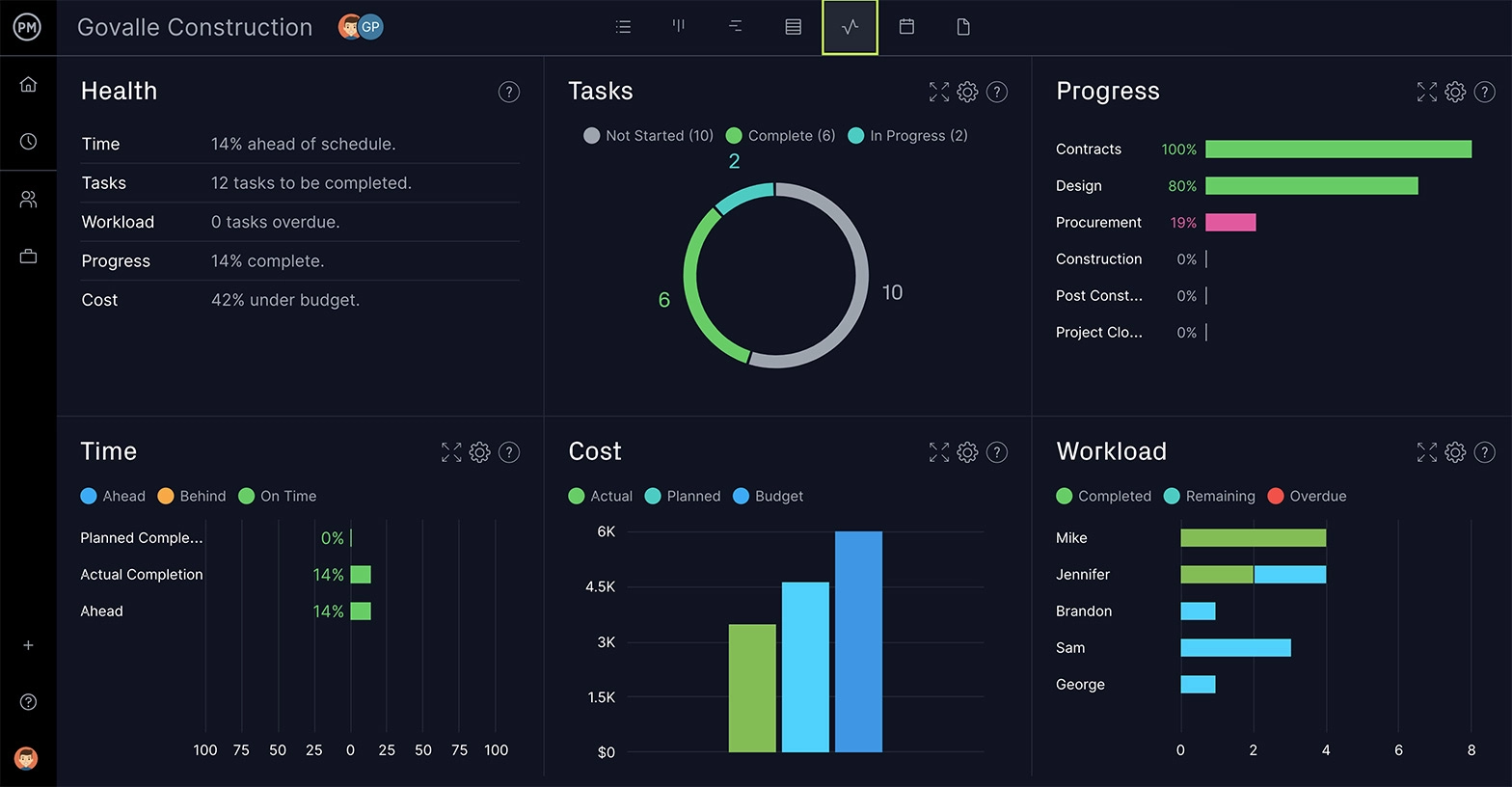
In order to meet the expectations set by your business case and keep your stakeholders updated, you need to have an eye on your project to see things as they happen. Our real-time dashboard automatically collects and calculates six project metrics and displays them in colorful graphs that are easy to digest. Unlike lightweight tools, there’s no setup required. We also have real-time reports that dive deeper into the data, which can be filtered to show only what you want to see and shared with stakeholders to manage their expectations.
Other Templates to Help Build a Business Case
The business case template is a powerful tool to win over your stakeholders. ProjectManager is not the software that will make the business case a reality. But we’re also an online hub for all things project management, including dozens of free project management templates you can download as you’re building your business case. Here are a few.
Executive Summary Template
Part of any business case is the executive summary. If you need help composing this overview, our free executive summary template for Word is what you should download. It’s all here, everything you’ll need to collect the main points and write a powerful and direct executive summary to sway your stakeholders.
SWOT Analysis Template
When developing a strategic plan for your business case, our free SWOT analysis template for Word helps you map the internal and external factors of influence. SWOT stands for strengths, weaknesses, opportunities and threats. This free template download can help you see your project in a bigger context.
Estimate Template
Another important part of a business case is the financial appraisal. What you need is to make an accurate forecast of your project’s costs. Our free estimate template for Excel helps you identify all the project costs related to labor, materials and more to show your stakeholders why their investment is going to give them a greater return.
Related Content
ProjectManager is also a great place to read about project management. We publish multiple blogs a week and have hundreds of tutorial videos, guidebooks, white papers and much more. These assets cover every aspect of managing a project, from initiation to close. Here are some related to making a business case.
- 15 Free Word & Excel Templates for Business
- How to Write a Business Case
- Cost-Benefit Analysis for Projects: A Step-by-Step Guide
- What Is a Project Plan? The Ultimate Guide to Project Planning
- Plantilla de Caso de Negocio para Word
- Modèle d’Analyse de Rentabilité pour Word
- Modelo de Caso de Negócio para Word
ProjectManager is award-winning software that organizes work, monitors progress and reports on performance to keep you productive. Whether you’re managing one project or a program or a portfolio of projects, we have the tools that connect teams across departments or the country. Real-time data helps you make more insightful decisions.Get started with ProjectManager today for free.